How to Inspect Spill Pallets Before They Fail

A spill pallet can look serviceable right up to the point it leaks. A hairline crack beneath a drum, a bowed sump base or rainwater taking up containment capacity may not be obvious during a busy shift. Knowing how to inspect spill pallets gives site teams a practical way to identify these failures before a minor defect becomes a release, clean-up cost or compliance issue.
For warehouses, workshops, fuel-handling areas and chemical stores, inspection is not just about keeping equipment tidy. It confirms that the secondary containment system can still do the job it was purchased for: retaining a leak from the containers stored above it.
Set an inspection frequency that matches the risk
Spill pallets should be visually checked before use, during routine workplace inspections and after any event that could compromise them. The right interval depends on the liquids stored, traffic around the area, exposure to weather and how often drums or IBCs are moved.
A pallet holding sealed, low-use containers inside a protected store may only need a documented weekly or monthly check as part of the site’s inspection program. A pallet in an active workshop, loading area or outdoor fuel store needs closer attention. Inspect it after forklift contact, container handling, a spill, prolonged rain, extreme heat or any suspected impact.
Use a simple inspection record that identifies the pallet location, inspection date, condition, action taken and the person completing the check. This creates accountability and helps reveal repeat problems, such as pallets being struck by forklifts or sumps repeatedly filling with rainwater.
How to inspect spill pallets step by step
Start with the area around the pallet. Look for staining, odours, residue or wet patches on the floor that could indicate a leak from a drum, tap, hose or the pallet itself. Do not assume liquid found outside the bund came from a recent handling task. Trace its source before putting the equipment back into service.
Check the load and container condition first
A spill pallet cannot compensate for poorly managed containers. Confirm every drum, jerry can or IBC is suitable for the liquid, properly closed and positioned securely on the grate or deck. Check for corrosion, dents, bulging, worn labels, damaged bungs and leakage around taps or valves.
Verify the pallet is not overloaded. This means checking both the safe working load and the number, size and total weight of containers against the manufacturer’s stated specifications. A pallet may have enough sump volume but still be unsuitable if its load rating is exceeded. Where an IBC is stored, use a pallet specifically designed and rated for IBC containment rather than adapting a smaller drum pallet.
Also confirm the required containment capacity for a 4-drum spill pallet for the stored liquids and your site’s regulatory obligations. Requirements can vary with the substance, storage arrangement and jurisdiction. The usable sump capacity is what matters, not the original capacity stated on the product specification.
Inspect the sump for liquids and contamination
Remove or lift the grate only where it can be done safely and without destabilising stored containers. Check the sump for standing liquid, sludge, absorbent debris, corrosion products or rubbish. A clean sump makes leaks easier to detect and preserves the available containment volume.
Identify any liquid before removing it. Rainwater may appear harmless, but if it has mixed with oil, fuel or chemicals it must be managed as contaminated waste requiring suitable disposal bags. Never drain a spill pallet to a stormwater system, sewer or surrounding ground simply to restore capacity.
If the sump has collected product, investigate why. The cause may be a leaking container, overfilled drum, faulty decanting practice or damage to the pallet. Emptying the sump without addressing the cause only resets the problem for the next shift.
Examine the pallet body closely
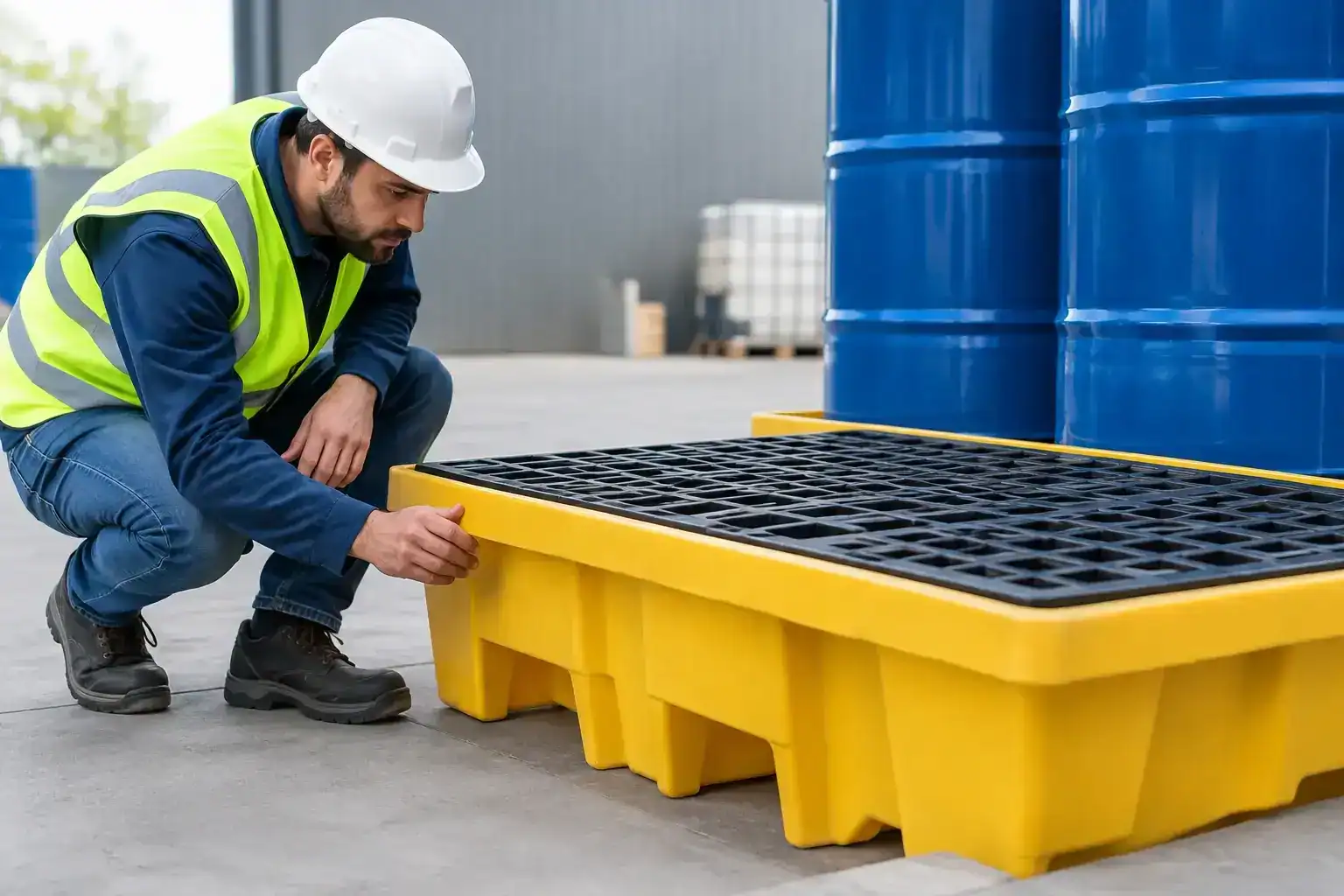
Clean enough of the outside surface to make defects visible, then inspect the base, walls, corners, forklift pockets and moulded supports. Look for cracking, splits, gouges, punctures, whitening or stress marks in polyethylene, as well as distortion, sagging and UV degradation.
Pay particular attention to the underside. Damage often occurs where a pallet has been dragged across concrete, placed on uneven ground or contacted by forklift tynes. If access is difficult, inspect before loading or when the pallet is empty. Do not rely on a quick check of the visible top edge.
A small crack can worsen under the weight of full drums and temperature changes. If there is any doubt about the integrity of the containment area, isolate the pallet from use and transfer containers to suitable secondary containment. Repair may not be appropriate, particularly where chemical compatibility or original containment capacity cannot be verified.
Check grates, supports and access points
The grate must sit flat and be fully supported. Look for broken ribs, excessive flexing, missing sections and poor engagement with the pallet body. A damaged grate can make container handling unsafe even when the sump itself remains intact.
Where a spill pallet has removable grates, drain plugs, dispensing shelves or connecting sections, confirm each component is fitted correctly and free of damage. Drain plugs should be secure and sealed. They are not a routine drainage point. If a plug is loose, worn or incompatible with the stored substance, take the pallet out of service until it is resolved.
Assess the location, not only the pallet
A sound spill pallet can still be ineffective if it is positioned badly. It should sit on a stable, level surface that supports the full load. An uneven floor can twist the base, reduce stability and concentrate weight on one section of the sump.
Keep it away from vehicle routes unless the area has adequate physical protection. Bollards, barriers or a revised layout may be needed where forklifts, pallet jacks and utes operate nearby. Allow enough clearance to access containers safely without climbing onto the pallet or stretching over drums.
For outdoor storage, inspect more often and plan for rainfall. A covered storage area can reduce rainwater management and UV exposure, but it must not create poor ventilation or other hazards for the materials being stored. Compatibility and dangerous goods segregation still apply.
Know when a spill pallet must be removed from service
A pallet should be isolated immediately if it has a crack, hole, distorted sump, failed grate support, damaged drain fitting or signs of chemical attack. The same applies where its contents exceed the rated load, the sump capacity has been reduced by liquid or debris, or a significant impact has occurred.
Do not place an undamaged pallet underneath a leaking or failed pallet as a permanent fix. It can be a short-term emergency measure while containers are made safe, but the defective unit still needs to be assessed, cleaned and replaced where required.
When selecting a replacement, match it to the chemical, container type, load and operating conditions. Polyethylene pallets suit many common oils, fuels and chemicals, but compatibility should always be checked for the specific substance. Steel containment may be more suitable in some applications, while it brings different corrosion and chemical-resistance considerations.
Make inspections part of normal site control
The most effective inspections are brief, regular and backed by action. Include spill pallets in pre-start checks where they sit in active work areas, and in formal housekeeping or environmental inspections for storage zones. Train staff to report damage early rather than continuing to use compromised containment because it is still holding liquid.
Keep absorbents and suitable spill response equipment close enough to manage a leak promptly, without blocking access to the pallet. For sites managing several liquid types, clear labels and segregated storage reduce the chance of placing incompatible materials in the same containment area.
A spill pallet is a passive control until it is needed. Treating inspection as a routine operational task keeps its capacity, structure and placement ready for the moment a container fails. If your existing equipment is damaged or unsuitable, explore our 2-drum spill pallet, 4-drum spill pallet or IBC spill pallet to find the appropriate replacement.