100 Litre – Flammable Liquid Storage Cabinet Guide

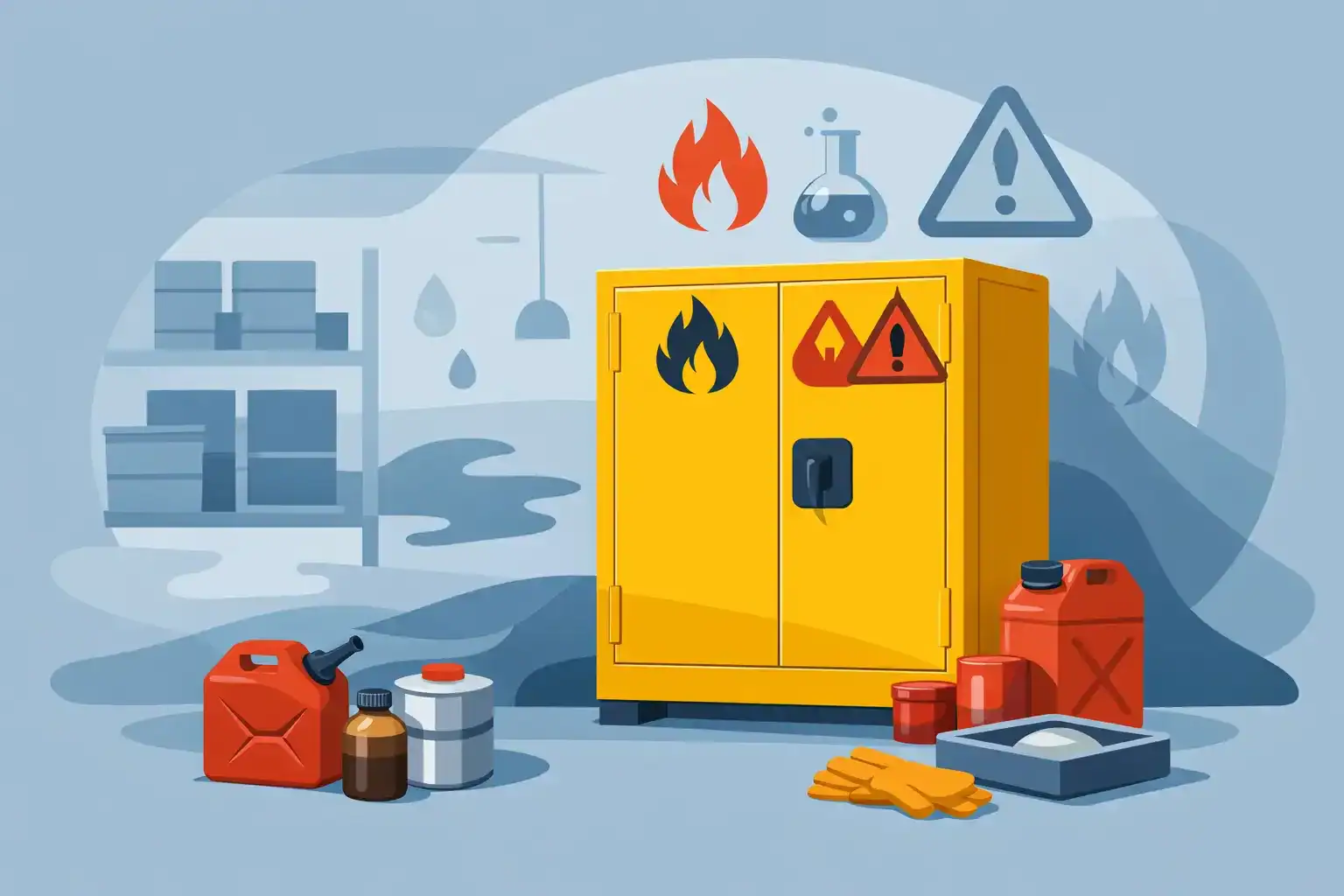
A 100L flammable liquids storage cabinet that is too small gets overfilled. One that is too large often ends up in the wrong spot and underused. That is why a 100 Litre flammable cabinet is a common fit for workshops, warehouses, maintenance areas and smaller decanting points – it sits in the practical middle ground between bench-top storage and high-capacity hazardous goods cabinets.
For many sites, the question is not whether a cabinet is needed. It is whether this size matches the volume of flammable liquids on hand, the layout of the work area, and the way staff actually use solvents, fuels, paints or cleaning chemicals during a shift. Get that match right and the cabinet becomes part of day-to-day control, not just a compliance item tucked in the corner.
Where a 100 Litre flammable cabinet makes sense
A 100 Litre unit usually suits workplaces storing moderate quantities of Class 3 flammable liquids close to the point of use. That includes automotive workshops, manufacturing lines, plant rooms, laboratories, maintenance stores and service vehicles depots. It is often large enough to hold regularly accessed containers without forcing operators to spread stock across multiple unprotected locations.
This size is also useful when a full-height, larger-capacity cabinet would create more problems than it solves. In tighter work areas, floor space matters. Buyers often need enough internal room for several containers, but still want a cabinet that can sit near operations without disrupting access ways, equipment movement or emergency egress.
The key point is volume control. A 100 Litre flammable cabinet is not there to hold every flammable liquid on site. It is there to safely contain a defined working quantity in a controlled location. Bulk storage and point-of-use storage are not the same thing, and treating them as the same can lead to poor layout decisions.
What buyers should check before choosing a 100 Litre flammable cabinet
Capacity is only the starting point. In practice, the right cabinet depends on container type, handling frequency and where the cabinet will be installed. A site storing small tins and bottles has a very different requirement from one handling 20 litre drums or jerry cans.
Internal layout matters more than many buyers expect. Shelf adjustability affects how efficiently space is used and whether containers can be stored upright with enough clearance for safe handling. If staff are constantly shifting containers just to reach one product at the back, the cabinet may be the wrong configuration even if the stated volume looks suitable on paper.
Door style also affects usability. Manual close doors can suit lower-traffic areas where staff need straightforward access and visibility. Self-closing designs can be a better fit where the cabinet is used frequently and the risk of doors being left ajar is higher. It depends on site discipline, traffic levels and the controls already in place.
Then there is placement. A cabinet installed too far from the task encourages temporary bench storage and other shortcuts. Put it too close to congested work zones, though, and it may create handling issues. Good cabinet selection includes thinking about workflow, not just checking a specification sheet.
Compliance is about more than having a cabinet
A flammable storage cabinet helps support safer storage and hazardous chemical management, but compliance does not stop at the purchase. The cabinet has to be suitable for the goods stored, correctly labelled, used as intended and positioned within a broader site safety system.
That means considering segregation from incompatible substances, ignition source control, ventilation requirements where applicable, spill preparedness and clear staff procedures. A compliant cabinet in a poorly managed area still leaves gaps. Many incidents happen not because the equipment was missing, but because the surrounding controls were weak or ignored.
For procurement teams and safety managers, this is where product certainty matters. Cabinet construction, design intent and fit-for-purpose use all affect whether the storage solution will hold up under normal workplace conditions. A low-cost option that does not match the site’s actual risks can become expensive very quickly.
100 Litre flammable cabinet size versus larger and smaller options
Buyers often compare a 100 Litre flammable cabinet against 160 Litre and 250 Litre models. The right choice comes down to stock profile and growth, not just current container count.
A smaller cabinet can work well for low-volume maintenance chemicals or tightly controlled issue points. The trade-off is that it fills quickly, especially when part-used containers accumulate. Once staff start storing products on top of the cabinet or nearby shelves, the original safety intent is undermined.
A larger cabinet gives more headroom and can reduce the risk of overflow. The trade-off is footprint, weight and, in some cases, a tendency to centralise storage too far from actual use areas. That can lead to more decanting, more manual handling and more movement of flammable liquids across the site.
In that context, 100 Litre units often suit businesses that need a practical working capacity without stepping into a larger cabinet than the area really supports. For many operations, it is the size that balances storage discipline with accessible use.
Practical features that make a difference on site
Two cabinets can have the same nominal capacity and perform very differently in daily use. Construction quality, door hardware and shelf load support all influence durability. So does finish quality in environments where cabinets are exposed to knocks, grime and regular opening throughout the day.
Look closely at sump design and spill containment at the base of the unit. Minor leaks from damaged or poorly sealed containers are not rare in industrial settings. A cabinet should support containment at the point of storage, not just keep containers behind a locked door.
Locking is another factor, but it should be viewed realistically. A lock helps control access and reduce casual interference. It does not replace chemical management procedures, training or supervision. The best cabinet is one that supports the way the site already controls hazardous goods, rather than one expected to solve every storage issue by itself.
Clear labelling and visibility matter as well. In emergencies, staff and responders need to identify hazards quickly. A cabinet that is properly marked and installed in a logical location is easier to manage than one hidden behind stock or squeezed into an unsuitable corner.
Common mistakes when buying this cabinet size
One of the most common mistakes is buying by litres alone. Buyers may estimate total liquid volume correctly but fail to account for the shape and handling needs of the containers. Capacity figures do not tell you whether larger containers will fit comfortably on shelves or whether staff can remove them without awkward lifting.
Another mistake is treating the cabinet as overflow storage for mixed chemicals. Flammable cabinets are designed for a specific storage purpose. They should not become a catch-all for aerosols, corrosives, oxidisers and random maintenance products simply because those items need a home.
There is also a tendency to underestimate future use. If a workshop is adding bays, extending fleet servicing or increasing chemical consumption, a cabinet that fits today may be tight within months. That does not always mean buying larger immediately, but it does mean planning the cabinet into the site’s wider hazardous storage setup.
Finally, some sites buy quality cabinets and then weaken the outcome through poor housekeeping. Containers are left unlabelled, empty tins are kept indefinitely, and spill response gear is nowhere nearby. Safe storage works best when cabinet selection, stock control and spill readiness are treated as one system.
Matching the cabinet to the wider safety setup
A cabinet should not be purchased in isolation. If flammable liquids are handled on site, think about the surrounding equipment and procedures. That may include absorbents for minor leaks, spill kits for larger incidents, PPE for decanting tasks, and clear separation between storage and ignition sources.
This is especially relevant in maintenance workshops, fuel handling areas and manufacturing sites where small spills are more likely to happen during transfer and use than during static storage. A cabinet reduces one part of the risk. It does not remove the need for practical spill response and routine inspection.
For buyers managing multiple locations, standardising cabinet size across similar work areas can also simplify procurement and training. If the same 100 Litre format suits several sites, stock handling and storage expectations become easier to communicate and audit. That kind of consistency is often more valuable than chasing minor cost savings on mixed cabinet types.
Spillmaster works with buyers who need that sort of certainty – practical products that match real workplace demands, not just catalogue descriptions.
Is a 100 Litre flammable cabinet the right choice?
If your site needs controlled storage for a moderate working volume of flammable liquids, this size is often a strong fit. It suits operations that need more than minimal storage but do not want to overcommit floor space or push flammable goods into one oversized central cabinet.
The best buying decision comes from looking at the actual containers in use, how often they are handled, where they are used and how the storage point fits into the rest of your safety controls. When those factors line up, a 100 Litre flammable cabinet does exactly what it should – helps keep flammable liquids contained, accessible and managed with less guesswork.
Before you choose, walk the area, check the containers, and think about how staff will use it on a normal day, not just during an audit. If 100 litres is not the right fit, compare the full flammable liquids storage cabinet range and our cabinet sizing guide.