Chemical Spill Kit Requirements at Work

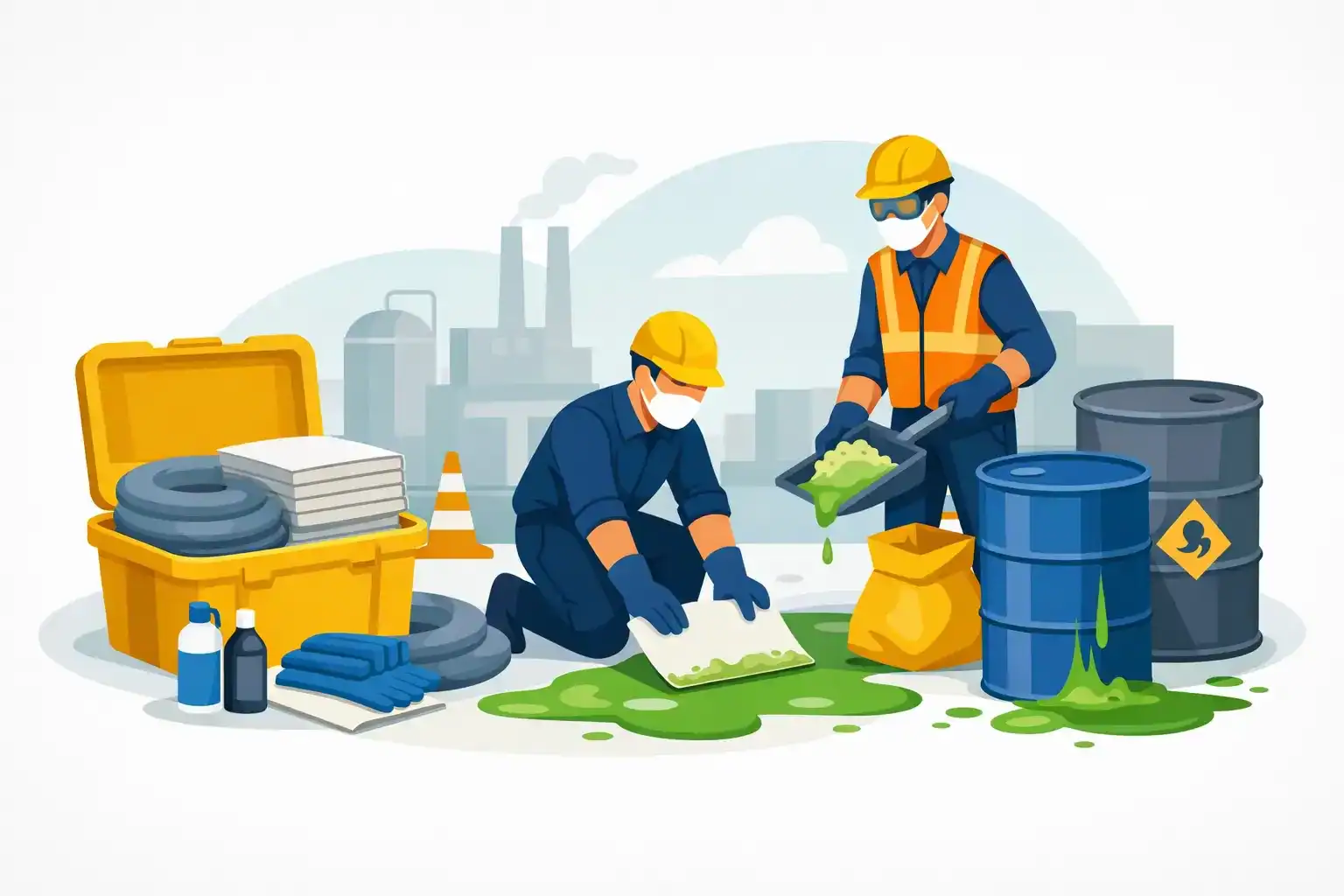
A leaking drum in a warehouse rarely gives you much warning. When it happens, the difference between a controlled cleanup and a reportable incident often comes down to whether your spill response setup was specified properly in the first place. That is why chemical spill kit requirements matter – not as a box-ticking exercise, but as a practical control that protects people, stock, drains, and site operations.
For most workplaces, the right answer is not simply to buy from a spill kit range and place the selected kit near a doorway. Chemical spill response needs to match the substances on site, the way they are stored and handled, the likely spill size, and the people expected to respond. For the broader kit-selection framework, see How to Select a Spill Kit. A kit that works well for oils or coolants may be the wrong choice for corrosives, solvents, or mixed hazardous liquids.
What chemical spill kit requirements actually mean
When buyers ask about chemical spill kit requirements, they are usually asking two things at once. First, what does the law or site standard expect? Second, what does the workplace need in real terms to respond safely and effectively?
Those are related, but not identical. Regulations and workplace safety obligations generally require businesses to identify hazardous risks, provide suitable emergency equipment, train workers, and maintain safe systems of work. In practice, that means your spill kit needs to be fit for purpose. It has to suit the chemicals present, be accessible to likely spill locations, and contain enough compatible absorbents and PPE to manage a realistic incident.
A generic absorbent kit is not automatically compliant just because it is labeled as a spill kit. If the site handles acids, caustics, aggressive cleaning chemicals, or mixed liquid hazards, the absorbent media and protective equipment need to be selected for that environment.
Start with the chemical hazard, not the kit size
The most common buying mistake is choosing based on capacity alone. A 75 litre, 200 litre, or 350 litre spill kit sounds straightforward, but size is only one part of the decision.
Start with the substance. Ask whether the liquid is corrosive, toxic, flammable, reactive, or harmful to skin and eyes. Then look at where and how it is used. A decanting area, chemical store, maintenance bay, and loading dock may all need different coverage because the spill profile changes with the task.
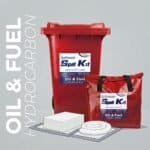
This is where chemical kits differ from oil-only or general-purpose kits. Chemical spill kits are typically built with absorbents designed to handle a wider range of aggressive liquids. They are often color-coded for quick identification and paired with PPE that supports safer response. If your site has several hazard classes, one kit type may not cover every scenario. Sometimes the right setup is a combination of local kits and larger central response equipment.
Core contents that usually form part of chemical spill kit requirements
The exact contents depend on the risk assessment, but a chemical spill kit usually needs more than absorbent pads in a bag. A workable kit is built around containment, absorption, disposal, and worker protection.
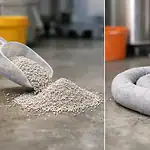
Absorbent pads, socks, and pillows are the core cleanup materials. Pads handle surface pickup, socks help stop the spread and protect drains or walkways, and pillows are useful where liquid pools quickly. Disposal bags and ties are also standard because contaminated absorbents need controlled collection after use.
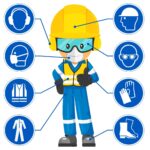
PPE matters just as much. Depending on the chemical, that may include chemical-resistant gloves, goggles, face protection, coveralls, and sometimes respiratory protection if vapors are an issue. The right PPE cannot be assumed. It has to match the SDS and the site procedure. A spill kit that lacks suitable PPE may leave workers with cleanup materials they cannot safely use.
Many sites also include a scoop, brush, drain cover, caution signage, and clear response instructions. Those extras are not padding. They make the kit easier to use under pressure and reduce the chance of a messy or unsafe response.
Placement and access are part of compliance
A well-stocked kit is no help if it is stored too far from the hazard or blocked behind pallets. One of the most overlooked chemical spill kit requirements is placement.
Spill kits should be positioned close to credible spill points such as chemical storage areas, transfer stations, workshop process areas, loading zones, and waste accumulation points. Access needs to stay clear at all times. In larger facilities, relying on one central kit can be unrealistic. If a spill can spread to a drain or traffic lane before the responder reaches the kit, the coverage is probably too thin.
Visibility matters too. Clearly marked kits support faster response, especially for contractors, new staff, and after-hours teams. If your operation runs across multiple buildings or outdoor areas, weather protection and mobility may also matter. A wheeled bin kit may be more practical than a shelf-stored bag in a busy industrial setting.
How much absorbent capacity do you really need?
There is no single universal rule, because it depends on container sizes, transfer volumes, and worst-case credible incidents. Still, your site should be able to justify the quantity on hand.
A sensible approach is to size kits around the largest likely spill in a given area, not the total inventory stored on site. For example, if staff decant from 60 litre drums but a full 1000-litre IBC is securely bundled and rarely moved, the immediate response kit near the decant point may be sized for a drum-scale event. The larger storage area may need additional containment controls rather than only a bigger spill kit.
This is where buyers should avoid over-simplifying. Bigger is not always better if the kit becomes too expensive to place where it is needed, but undersized kits create a false sense of readiness. The best result is usually a layered setup: local kits for first response, plus secondary containment and backup stock for larger events.
Training is not optional
Even the right equipment can fail if workers do not know when to use it, what they are dealing with, or when to stop and escalate. Chemical spill kit requirements should always be tied to training.
Responders need to know how to identify the substance, review the SDS, put on the correct PPE, isolate the area, protect drains, contain the spill, collect waste, and report the incident. They also need to understand the limits of first response. Some chemical spills should not be handled by general site staff at all, especially where there is inhalation risk, fire risk, violent reactivity, or unknown substances.
A short spill response briefing during induction is rarely enough on its own. Refresher training and practical drills make a real difference, particularly in warehouses, workshops, manufacturing areas, and transport yards where shift turnover is common.
Inspection, replenishment, and documentation
A spill kit only stays compliant if it remains ready for use. That makes inspection and replenishment part of the requirement, not an admin extra.
Check kits on a scheduled basis for missing absorbents, damaged PPE, broken seals, and poor storage conditions. Refill immediately after use, even if only part of the kit was deployed. Expired or degraded PPE should be replaced, and any site-specific instruction sheet should stay legible and current.
Documentation helps prove the system is being maintained. Inspection tags, checklists, and restocking records are useful for internal audits and external scrutiny. They also help procurement teams avoid the common problem of buying new kits while half-used ones sit unrefilled across the site.
Matching the kit to the work environment
Not every workplace needs the same setup, even when they all handle chemicals. A transport operator may need mobile kits in vehicles and loading areas. A manufacturing plant may need station-based kits at process lines and chemical stores. A marine or fuel-handling site may need additional controls where spills could reach water, stormwater, or sensitive ground.
This is why a narrow product category focus matters. Buyers need to match absorbent type, kit format, and refill strategy to the operational risk, not just the purchase budget. In many cases, keeping standardized refill components across multiple kits also makes maintenance easier and controls long-term cost.
Common gaps that create risk
Most spill kit problems are predictable. The wrong absorbent type is a frequent issue, followed by missing PPE, poor placement, and inadequate capacity. Another common gap is assuming that bundled storage removes the need for a nearby response kit. Bunding reduces spread, but it does not replace the need for prompt cleanup and worker protection.
There is also the issue of mixed inventories. Sites that store acids next to general maintenance chemicals or solvents need to think carefully about compatibility and response procedures. One spill kit type may not be enough if the chemical hazards differ substantially.
Buying with compliance in mind
When specifying kits, procurement and safety teams should look beyond headline capacity and price. The real question is: Does this kit support a safe, credible first response in the exact area where it will be used?
That means checking absorbent compatibility, PPE inclusion, container format, visibility, refill availability, and whether the contents align with site procedures. At Spillmaster, we focus on these practical selection points because we know you need equipment that performs under real workplace conditions, not just products that look good on a checklist.
If your current setup cannot answer a simple question – what spill, in this area, can this kit safely handle – it is time to review it. The right spill kit is not the biggest one on the shelf. It is the one your team can reach quickly, use safely, and trust when a chemical release interrupts the workday.