How to Choose a Spill Kit That Fits


A spill kit that is too small, stocked with the wrong absorbents, or stored in the wrong area is not much use when fuel hits the floor or a drum starts leaking. If you are working out how to choose spill kit options for a warehouse, workshop, plant, or mobile crew, the right answer starts with the actual spill risk on site – not just the cheapest kit on the shelf. For the complete selection process, see our How to Select a Spill Kit guide.
The best spill kit is the one your team can reach quickly, use confidently, and rely on to contain the materials you handle every day. That means matching the kit to the liquid, the likely spill volume, the work environment, and your compliance obligations.
How to choose spill kit types for your site
Most buying mistakes happen at the first step. A buyer knows they need a spill kit, but chooses by container size alone instead of absorbent type. That creates problems fast, because not every kit is designed for the same liquid.
General purpose spill kits are intended for mixed non-hazardous liquids used in many facilities, such as coolants, paints, solvents, and water-based fluids. They are often a practical fit for maintenance areas and workshops where the spill profile is broad. But they are not the default answer for every site.
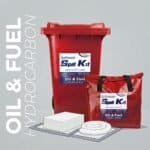
Oil and fuel spill kits are designed to absorb hydrocarbons while repelling water. That matters in transport yards, marine settings, washdown areas, and outdoor work zones where rainwater or surface water is part of the environment. If diesel, hydraulic oil, petrol, or lubricants are the main concern, this category is usually the right place to start.
Chemical spill kits are for aggressive or hazardous liquids, including acids, caustics, and unknown chemicals. These kits are typically the safest choice when the consequence of using the wrong absorbent is high. If your team handles corrosives or mixed chemical inventories, it is usually better to specify for the worst credible risk rather than the most common minor spill.
If your site stores more than one liquid class, it depends on where those materials are used and how isolated those areas are. In some facilities, one kit type per area is the most practical setup. In others, multiple specialized kits reduce confusion and improve response.
Start with the liquids you actually handle
To choose well, look at your site register, SDS information, storage areas, transfer points, and maintenance activity. The main question is simple: what is most likely to spill here?
A warehouse with forklifts, battery charging, and small oil volumes has a different requirement than a refueling point, chemical dosing area, or marine berth. The right kit follows the liquid and the task. If you are buying for multiple locations, avoid assuming one standard kit will suit all of them.
It also helps to consider whether the spill risk comes from routine handling or from storage failure. A small workshop may only need rapid response to minor drips and decanting accidents. A facility with drums, IBCs, or bulk tanks may need kits that can support a larger first response while secondary containment measures do the rest.
Size matters, but bigger is not always better
Once you have the right kit type, capacity becomes the next decision. Buyers often jump straight to large wheeled kits because they look comprehensive. Sometimes that is the right call. Sometimes it just means paying for absorbents that are awkward to store and slow to deploy.
A spill kit should be sized to the most likely spill event, not the most extreme theoretical disaster. For example, if the common risk is a leaking hydraulic line or a small fuel transfer spill, a compact kit near the point of use may be more effective than one large kit stored across the yard. On the other hand, if you handle drums, IBCs, or mobile fuel tanks, larger capacities become easier to justify.
Think in terms of first-response realism. How much liquid could be released before isolation occurs? How quickly can staff access shut-off points? Are there drains nearby? Does the spill spread across smooth concrete, rough outdoor surfaces, or into water?
A practical approach is to match kit size to both spill volume and response time. Fast access can offset some capacity requirements for minor incidents. Delayed access usually means you need more absorbent material and better containment tools.
Placement is part of selection
A well-specified spill kit still fails if it is stored where nobody can get to it quickly. This is why placement should be decided at the same time as product selection.
High-risk locations usually need dedicated kits nearby, especially around fuel storage, chemical handling points, loading docks, workshops, waste storage, and vehicle service areas. Mobile operations may need vehicle spill kits so drivers or field teams can respond immediately. Marine and outdoor operations often need kits designed for weather exposure and water-related spill conditions.
If a spill can reasonably happen in more than one area, multiple smaller kits may outperform one central unit. That is not overbuying. It is often the more reliable way to reduce spread, protect drains, and support quick containment.
How to choose spill kit contents
Not all kits with the same capacity contain the same mix of components. That matters because absorbency volume on paper does not tell you how easy the kit will be to use in a real incident.
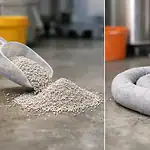
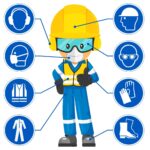
A useful spill kit usually includes a balanced mix of pads, socks or booms, disposal bags, and PPE. Pads help with cleanup and recovery. Socks and booms help contain and direct the spill before it spreads. PPE supports safe handling, especially where the liquid presents skin or eye hazards.
The right content mix depends on the site. A smooth indoor floor may rely heavily on pads and socks. Outdoor or drain-risk areas may need stronger emphasis on booms and containment accessories. Chemical environments may require more careful PPE selection and disposal planning.
Refill availability should also factor into your choice. A spill kit is not a one-time purchase. If refills are hard to source or the contents are overly specialized for a common-use area, replenishment becomes slower and more expensive than it needs to be.
Compliance is not separate from practicality
For most buyers, compliance is one reason to buy from the spill kit range, but operational suitability is what determines whether it works when needed. The two are connected.
A compliant spill response setup generally means more than simply having a kit on site. It means the kit is appropriate to the hazards present, accessible to staff, and supported by training, inspection, and replenishment. If the wrong kit is placed in the wrong area, you may still be exposed from a safety and environmental standpoint even though a purchase was made.
This is where specialist supply matters. A category-focused supplier can help buyers match kit type to risk profile rather than forcing a generic product into every use case. For many businesses, that reduces both compliance uncertainty and avoidable overspend.
Common mistakes buyers make
The most common mistake is choosing a general purpose kit for fuel or chemical risks because it seems more versatile. In practice, that usually creates gaps. The second is underestimating likely spill volume, especially near drums, waste oil storage, and transfer areas.
Another frequent issue is treating the spill kit as a tick-box item. It gets purchased once, then left unchecked until contents are missing, damaged, or expired. A spill kit only stays fit for purpose if it is inspected and refilled after use.
There is also a placement problem on many sites. Kits are often stored in a central storeroom for safekeeping, which defeats the purpose. Spill response equipment needs to be visible and close to the hazard.
A practical buying approach for most sites
If you need a straightforward way to decide, start by separating your site into risk zones. Identify the liquids used in each area, estimate the most credible spill size, and decide whether the area needs a fixed or mobile kit. Then choose the absorbent category first, capacity second, and content mix third.
For many commercial sites, that leads to a combination rather than a single solution. You may need a larger wheeled kit for the main operational area, smaller satellite kits near transfer points, and vehicle kits for mobile staff. That is often a better setup than relying on one oversized unit to cover everything.
If procurement is a factor, standardizing by risk area can make reordering easier. It also helps with training, because staff learn which kit belongs to which hazard. Spillmaster buyers often find this approach simplifies both purchasing and ongoing compliance checks.
Choose for the spill you expect at 2 p.m. on a busy day
The right spill kit is not the one with the biggest label or the broadest claims. It is the one that matches your liquids, your layout, your people, and your response reality.
When you choose based on actual site conditions, the decision becomes clearer. Your team gets equipment they can use quickly, management gets better control of risk, and the business avoids paying twice for a kit that looked right but was wrong where it mattered most.