Universal Absorbent Rolls Explained

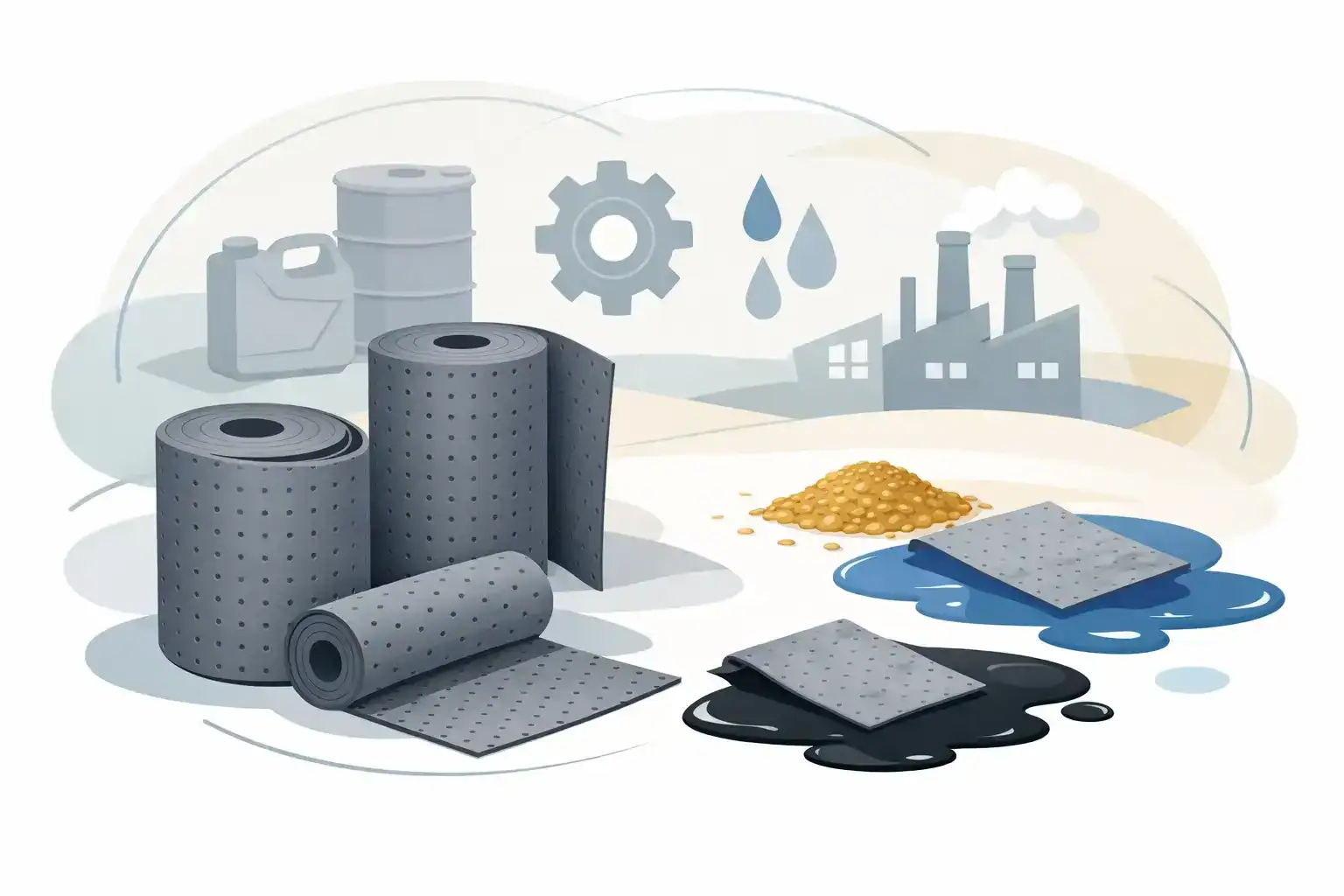
A leaking drum rarely gives you much warning. In most facilities, the first response has to be fast, controlled, and practical. That is where universal absorbent rolls earn their place. They give teams a ready-to-deploy absorbent format for covering larger floor areas, lining work zones, wiping down equipment, and controlling everyday spills before they spread.
For buyers responsible for safety, maintenance, or environmental compliance, the value is straightforward. A roll can be cut to size, positioned where spills are likely, and replaced as needed without opening a full spill kit for minor incidents. That flexibility makes it a standard consumable in workshops, warehouses, loading areas, maintenance bays, and general industrial operations.
What universal absorbent rolls are designed to do
Universal absorbent rolls are general-purpose absorbents made to handle a wide range of non-aggressive liquids. In most workplaces, that includes water, coolants, solvents, oils, fuels, and other common fluid leaks. The main advantage is coverage. Unlike pads, which suit smaller spill points, rolls give you continuous absorbent material across benches, walkways, machine perimeters, and service areas.
They are often used in two ways. The first is reactive spill response, where staff pull off the amount needed to contain or absorb a leak. The second is preventive use, where the roll is laid in areas with known drips, overspray, or routine fluid exposure. That preventive role matters because many incidents start as poor housekeeping rather than a major spill event.
Universal does not mean suitable for every chemical. It means broad compatibility for general industrial liquids. If you are dealing with aggressive acids, caustics, or unknown hazardous substances, a dedicated chemical absorbent is the safer choice. That distinction is worth getting right at the purchasing stage, because absorbent mismatch can create both safety and disposal problems.
When universal absorbent rolls are the right choice
The best application for universal absorbent rolls is a mixed-use environment where the spill risk is varied rather than highly specific. Warehouses with forklifts, workshops servicing plant and vehicles, manufacturing lines with lubricants and washdown water, and maintenance areas with intermittent leaks all fit this profile.
They also make sense where spill volumes are usually small to moderate but spread across a wide footprint. A slow hydraulic leak under equipment, tracked fluid near access routes, or repeated drips under decanting points can be managed more efficiently with roll stock than with loose pads alone. In these settings, the ability to cut a custom length reduces waste and keeps replenishment more predictable.
There is also a cost-control benefit. If your team uses premium chemical absorbents for every routine leak, spending can drift upward quickly. Universal rolls help standardize response for day-to-day incidents while preserving specialist absorbents for genuine hazardous applications. That is a practical procurement decision, not just a product preference.
How to choose the right universal absorbent rolls
Selecting the right roll comes down to liquid type, traffic level, coverage area, and expected saturation rate. Buyers often focus first on price per roll, but that can be misleading. A cheaper roll that tears easily or saturates too quickly can cost more in labor, changeouts, and product consumption.
Weight and absorbency capacity
Lightweight rolls are useful for wipe-up tasks, light drips, and short-term lining of benches or shelves. They are easier to handle and often cheaper upfront, but they are not the best fit for heavy leak points or busy work areas.
Medium and heavy-weight rolls are more suited to ongoing drip zones, maintenance work, and larger spill coverage. They hold more liquid and generally stand up better in use. The trade-off is higher unit cost and more bulk in storage. For many industrial sites, the right answer is not one type only. It is a mix of lighter rolls for routine housekeeping and heavier rolls for operational spill risk.
Roll width and length
Wider rolls are effective for covering aisles, workstations, and larger floor sections. Narrower rolls work well around machinery, along production edges, or inside tighter maintenance spaces. A roll that is too wide for the application often leads to unnecessary waste, especially if teams are tearing off excess material just to make it fit.
Longer rolls reduce reorder frequency, which helps in higher-use sites. The trade-off is handling. Large rolls can be harder to move quickly during an incident if they are stored poorly or used by one person in a confined area.
Perforated vs non-perforated format
Perforated rolls allow faster tear-off and more controlled usage. That usually improves stock discipline because staff use only what they need. Non-perforated rolls can provide more flexibility for custom sizing, but they may slow response slightly if cutting tools are not immediately available.
Surface durability
If the roll will be used in walkways or around active maintenance zones, durability matters. Some absorbents are better suited to contact, foot traffic, or repeated repositioning. If the material breaks down too quickly, it can create housekeeping issues of its own. Product certainty matters more here than buying on unit price alone.
Where universal absorbent rolls fit in a spill control plan
Universal absorbent rolls are not a replacement for a complete spill response setup. They are one component in a broader control system that should also include spill kits, socks or booms, disposal bags, PPE, and clear response procedures.
Their role is strongest at the front line. They support immediate action before a spill migrates into drains, traffic paths, or sensitive work areas. They also reduce unnecessary use of larger emergency kits for routine incidents. For many sites, that improves both readiness and replenishment efficiency.
In practical terms, rolls should be positioned close to known risk points. That could mean near loading docks, under fluid transfer areas, in plant rooms, beside maintenance benches, or in mobile service vehicles. If absorbents are stored too far from the problem, response slows and small spills become bigger cleanups.
Common buying mistakes
One of the most common mistakes is treating all absorbent rolls as interchangeable. They are not. Material quality, absorption rate, durability, and suitability for the liquid type all affect performance. If you buy on price alone, you may end up with product that staff avoid using because it does not hold up in real conditions.
Another issue is underestimating volume. Many facilities buy a small amount for compliance optics rather than actual use. Then, when a recurring leak or housekeeping issue appears, stock runs out and the team improvises with unsuitable materials. That creates avoidable risk.
There is also the question of disposal. Once used, universal absorbent rolls take on the characteristics of the liquid absorbed. A roll used on water-based coolant is a different waste stream from one saturated with fuel or solvent. Purchasing decisions should account for the downstream handling requirements, not just the cleanup itself.
Universal absorbent rolls vs pads and socks
Rolls are best when coverage and flexibility matter. Pads are often better for quick grab-and-place response on isolated spills or wipe tasks. Socks are designed more for containment, especially around drains, machine bases, or spill edges.
Most well-prepared sites use all three. The choice is less about which product is best overall and more about which format solves the immediate problem with the least delay and waste. A good buyer looks at the operating environment, not just the catalog category.
Stocking for real use, not just compliance
If a site sees regular minor leaks, universal absorbent rolls should be treated as a working consumable, not an emergency-only line item. That means reviewing usage patterns, placing stock where incidents happen, and matching the roll grade to the task.
For multi-area operations, standardizing core absorbent products can also help with staff familiarity and replenishment control. Teams respond faster when they know exactly what is available and how it should be used. Spillmaster customers often take this approach because it supports simpler purchasing and more predictable site readiness.
Universal absorbent rolls do a straightforward job, but they do it in a way that supports cleaner floors, faster response, and better day-to-day spill control. If you choose the right grade, store them where leaks actually happen, and use them as part of a broader response plan, they become one of the most practical products on site. The real advantage is not just absorption. It is keeping small fluid problems from turning into safety, environmental, and compliance issues.