Battery Acid Spill Neutralizer: Choosing the Right One

A battery acid spill neutraliser is not simply an absorbent with a different label. For a lead-acid battery incident, it is the component that helps make sulphuric acid safer to collect, contain and dispose of. Choosing the wrong material, or treating every battery spill as the same hazard, can leave workers exposed and create a larger compliance issue than the original leak.
For workshops, warehouses, transport depots, marine operations and battery charging areas, the right response starts before a spill occurs. A suitable neutraliser, compatible PPE and a documented procedure should be located close to where batteries are stored, charged, changed or serviced.
What a battery acid spill neutraliser does
Flooded lead-acid batteries contain sulphuric acid. When a battery case cracks, a terminal connection fails, or electrolyte is expelled during charging, that acid can burn skin and eyes, damage concrete and metal, and enter drains or soil if it is not controlled promptly.
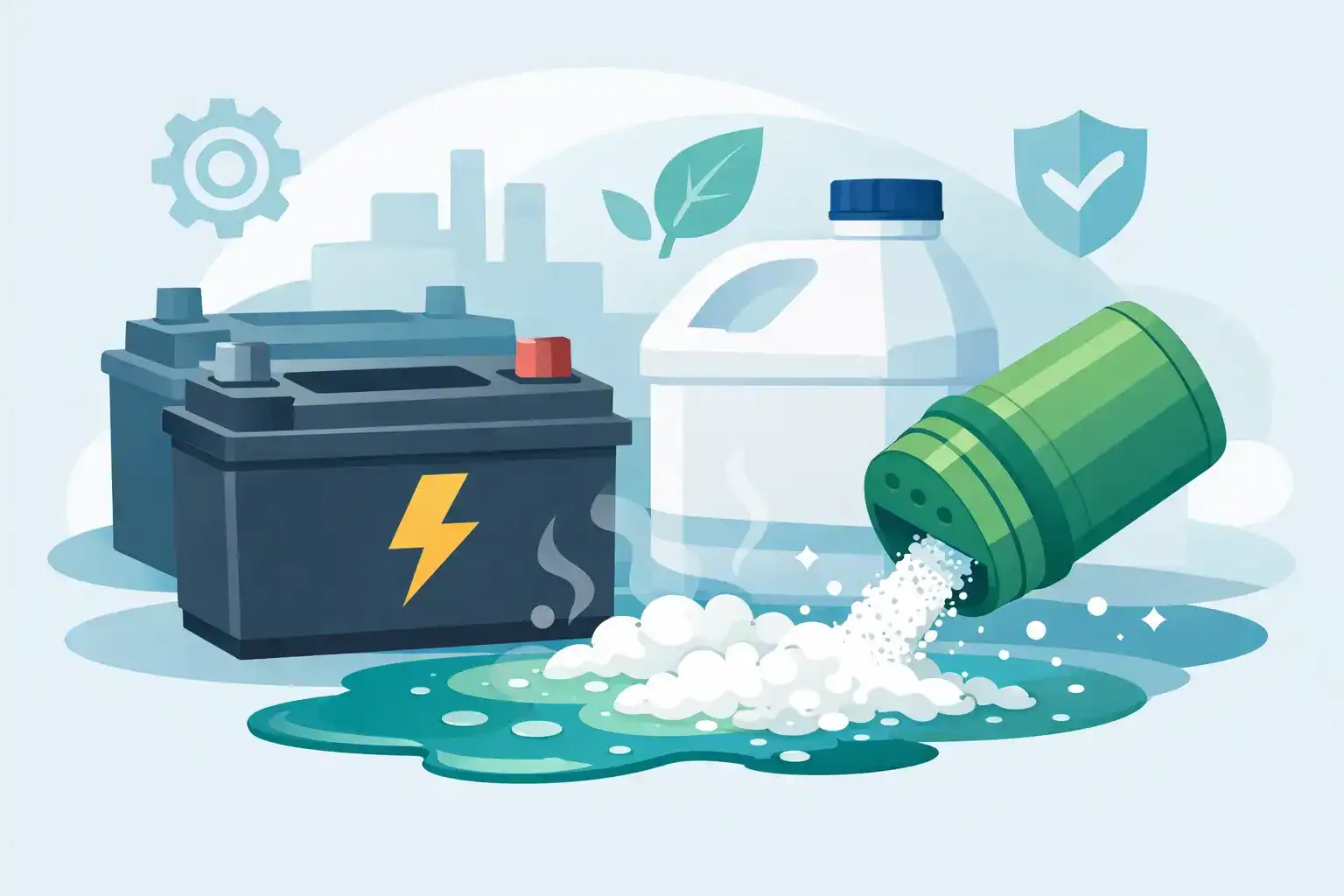
A purpose-made battery acid spill neutraliser is formulated to react with acidic electrolyte and raise its pH towards a safer range. Many products include a colour-change indicator, giving the responder a practical visual check that the acid has been neutralised. Once neutralised, the resulting residue still needs to be collected as hazardous waste. Neutralisation reduces the corrosive hazard; it does not make the material suitable for the general rubbish bin or a drain.
Absorbent pads alone are not a complete response to battery electrolyte. They may soak up liquid, but they do not address acidity. Conversely, neutraliser is not a substitute for containment. On a larger spill, use compatible socks, booms or bunding to stop the liquid reaching drains and protect the spill perimeter while the reaction and collection work is carried out.
Confirm the battery chemistry before responding
The term “battery acid” is often used broadly, but the chemistry matters. The standard acid neutraliser used in lead-acid spill kits is intended for sulphuric acid electrolyte, including conventional automotive, industrial traction and stationary lead-acid batteries.
Do not assume that the same approach applies to every battery type. Lithium-ion battery failures present a fire, heat and toxic fume risk, rather than a routine acid-spill scenario. A damaged, hot, smoking or venting lithium-ion battery requires isolation, evacuation as necessary and action under the site emergency plan. It may require emergency services support. Do not apply an acid neutraliser as a solution to thermal runaway.
Nickel-cadmium and some other battery types can contain alkaline electrolyte. Acid neutralisers are not suitable for alkaline spills. The battery safety data sheet, supplier instructions and your site’s hazardous-substance procedure should identify the electrolyte and the correct response materials. Where the chemistry is unknown, isolate the area and seek competent advice rather than guessing.
How to respond to a lead-acid battery spill
The exact response should follow the safety data sheet and site procedure, but a controlled lead-acid spill response follows a clear sequence. Keep unnecessary people out of the area first. Battery charging locations can also present ignition and electrical hazards, so remove ignition sources where safe to do so and do not touch damaged electrical equipment until it has been isolated by an authorised person.
1. Wear the right PPE
At a minimum, responders need chemical-resistant gloves, safety goggles and appropriate protective clothing. A face shield provides added protection where splashing is possible. Footwear should protect against chemical contact. PPE selection must be based on the spill volume, battery location and site risk assessment, not just what happens to be in the workshop cupboard.
If acid has contacted a person, immediate flushing with clean water takes priority. Use the emergency eyewash or safety shower where required and obtain medical assessment according to your first-aid procedure.
2. Contain the liquid and protect drains
Place compatible absorbent socks or booms around the spill, especially on sloping ground or near pits and drains. Do not wash acid towards a drain with a hose. Even a small amount of electrolyte can create an environmental release and damage drainage infrastructure.
For a leaking battery on a pallet, bench or vehicle tray, use a chemical-resistant tray or temporary bund where practical. If the battery can be safely handled after the immediate hazard is controlled, place it in a suitable acid-resistant containment tray to prevent further leakage.
3. Apply neutraliser carefully
Apply the battery acid spill neutraliser from the outside edge of the spill towards the centre. This approach reduces the chance of spreading liquid across a wider area. Follow the product directions for application rate and contact time. The reaction may fizz, so avoid leaning directly over the spill and do not rush the process.
A colour indicator can help show whether acidic liquid remains. If the neutraliser continues to indicate an acidic condition, apply more material as directed. For a large spill, or where the acid has entered cracks, damaged flooring or inaccessible areas, escalate to a specialist spill response provider rather than relying on a standard kit alone.
4. Collect, clean and manage the waste
Once the reaction is complete, use a scoop, scraper or other compatible tools to collect the neutralised residue and contaminated absorbents. Place waste into a labelled, sealed compatible container. Keep it separate from general waste and arrange disposal through the approved waste stream for your site and jurisdiction.
Clean the affected surface in accordance with the neutraliser instructions and verify that no acidic residue remains. A pH test can provide a more reliable check where required by your procedure. Inspect nearby metalwork, racking, floor coatings and equipment for corrosion or damage. Finally, replenish the spill kit immediately. An incomplete kit is not a spill response plan.
Selecting a neutraliser for your site
The best product depends on the batteries in use, the likely spill size and the work environment. A small maintenance workshop servicing vehicle batteries has different needs from a forklift charging bay with large traction batteries, or a telecommunications site with stationary battery banks.
When selecting equipment, assess four practical points:
- Battery type and electrolyte: Confirm that the neutraliser is specifically suitable for sulphuric acid from lead-acid batteries.
- Capacity: Size the product and spill kit for the largest credible spill, not the minor drips seen during routine maintenance.
- Verification: A colour-indicating neutraliser can help workers identify when treatment is complete, particularly where acid is clear and difficult to see on a floor.
- Pack format and access: Shaker bottles suit quick, localised use. Larger pails or drum-response products may be more appropriate in charging rooms, fleet depots and battery storage areas.
The surrounding equipment matters just as much. A fit-for-purpose battery spill kit should include neutraliser, containment materials, collection tools, waste bags or containers, and PPE suited to the task. Sites with drains nearby may also need drain covers. For high-volume battery operations, bunding and compliant storage arrangements reduce the consequences of a leak before a response team is involved.
Common mistakes that increase risk
The most common error is reaching for a universal absorbent and assuming the job is done. Acid remains corrosive until it is neutralised and verified. Another is using household materials without a controlled procedure. While some alkaline powders can react with acid, workplace response products provide known capacity, instructions and, in some cases, a colour indication. That certainty is valuable when workers need to act quickly and safely.
Overlooking the damaged battery is another problem. Neutralising the floor does not stop a battery from leaking again. Quarantine the battery in appropriate secondary containment, identify it clearly and arrange assessment, recycling or disposal through an approved process.
Training also needs to match the equipment. Staff should know where the kit is located, what it is designed to handle, how to use it and when not to intervene. A short practical drill in the charging area is more useful than a spill kit left sealed in a storeroom.
Keep the response equipment ready
Battery spills are usually manageable when the response is prompt, the chemistry is understood and the correct equipment is within reach. Check battery spill kits during routine workplace inspections, replace used or expired components, and make sure shifts can access them without searching for keys or waiting for a supervisor.
For lead-acid operations, a properly selected neutraliser gives workers a controlled way to turn a corrosive spill into collectable waste. That small piece of preparation protects people, prevents damage and keeps a routine maintenance incident from becoming an avoidable site shutdown.