Best Absorbents for Oil Leaks at Worksites


An oil leak beside a hydraulic press, beneath a parked forklift or along a fuel-transfer hose can move quickly from a housekeeping issue to a slip, fire and environmental risk. The best absorbents for oil leaks are not necessarily the ones with the highest advertised capacity. They are the products that match the liquid, location, likely spill size and the way your team needs to deploy them under pressure.
For most sites, that means keeping more than one absorbent format on hand. Pads are efficient for a contained puddle, socks stop liquid reaching a drain or doorway, and booms are designed for water. Selecting the right combination helps reduce waste, control clean-up costs and support a practical spill response plan.
Start with the oil and the spill environment
Oil is a broad term. It can include hydraulic fluid, engine oil, diesel, lubricating oil, transformer oil and oily water. Before choosing absorbents, identify whether the material is oil only or a mixed liquid. This distinction determines whether an oil-only absorbent or a universal absorbent is the correct choice.
Oil-only absorbents are hydrophobic. They repel water while attracting and retaining hydrocarbons, making them particularly useful for diesel, fuel and oil spills on water or in wet conditions. They are a strong choice around marinas, stormwater systems, wash bays, fuel handling areas and outdoor plant.
Universal absorbents take up oils, coolants, water-based fluids and many non-aggressive chemicals. They suit workshops, warehouses and maintenance areas where the exact liquid may vary. However, they will also absorb rainwater or wash-down water, so they are less economical for oil spills exposed to the weather.
Do not treat absorbent selection as a substitute for checking the safety data sheet. If the leak involves a corrosive, solvent, unknown substance or dangerous goods, confirm chemical compatibility first and use the required PPE. An absorbent that performs well with diesel may not be suitable for a concentrated chemical spill.
Best absorbents for oil leaks by application
Oil-only pads for fast clean-up
Oil-only pads are the workhorse absorbent for routine leaks and small spills. Place them under dripping machinery, beneath vehicles and around service points to capture oil before it spreads. Once a puddle has been contained, pads are also the quickest way to recover the liquid from a smooth sealed surface.
Choose a heavier-weight pad where oil is pooling or where the surface is rough. Lighter pads are useful for preventative placement and wiping down small drips, but they can become saturated quickly in a meaningful release. Perforated pads allow staff to use only the amount required, reducing unnecessary consumption.
Pads work best when the spill is already confined. If oil can travel across a floor, down a ramp or towards a drain, deploy socks or a barrier first. Throwing pads onto a moving spill often uses more material than necessary and can leave the edge of the release uncontrolled.
Rolls for broad coverage and irregular surfaces
Absorbent rolls provide continuous coverage for long runs beneath machinery, along workbenches or across larger spill areas. They are useful in maintenance bays and manufacturing lines where leaks are recurring or where staff need to cut absorbent to a specific size.
A roll can be more cost-effective than individual pads for high-volume use, but it should be stored clean and dry and positioned where workers can access it without crossing the spill area. For planned maintenance, laying a length of oil-only roll beneath hoses, filters and hydraulic connections can prevent a minor release becoming a clean-up job.
Socks for containment at the source
Absorbent socks are designed to surround, divert and contain liquid. Use them to form a ring around a spill, block a doorway, protect a drain entrance or create a barrier at the base of equipment. Their value is control, not just absorption.
For a hydraulic oil leak under fixed plant, place a sock around the outside of the affected area before applying pads inside the perimeter. In a workshop, a sock positioned across a roller door can stop oil tracking into an external hardstand during rain. Keep several lengths available because a single short sock is rarely enough to secure a large area.
Socks should sit in firm contact with the surface. Gaps around corners, uneven concrete or cable trenches allow oil to bypass the barrier. On poor surfaces, overlap the socks and inspect the perimeter while clean-up is underway.
Pillows for persistent leaks and sumps
Absorbent pillows hold more liquid than pads and are suited to concentrated, ongoing leaks. They can be positioned in drip trays, beneath leaking valves, inside bunded areas and in shallow sumps where oil is collecting. Their compact shape means they can also be placed around awkward equipment where a pad will not stay in position.
Pillows are not intended to replace repairs. They provide interim control while maintenance is arranged, but a repeated need to change saturated pillows is a clear signal that the source needs attention. Record the issue and prevent the leak from becoming normalised through routine clean-up.
Booms for oil on water
Oil-only booms are purpose-built for containing and recovering hydrocarbons on water. They float, repel water and help hold oil in a manageable area for recovery with pads, sweeps or skimmers. They are relevant for marine operations, ports, stormwater ponds, drainage channels and waterfront fuel handling.
Booms must be deployed early and anchored or connected correctly. In moving water, poor placement can allow oil to pass underneath or around the ends. Keep the expected flow direction, tides, access points and recovery equipment in mind when planning for waterborne spills. A boom alone contains the oil; it does not complete the clean-up.
Granular absorbents: useful, but not always first choice
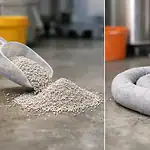
Granular absorbents can be practical for oil spills on rough concrete, cracked surfaces and outdoor ground where pads cannot make full contact. They are also helpful for small leaks around tyres, uneven plant bases and areas with loose debris.
Their trade-off is clean-up time. Granules need to be spread, allowed to absorb, swept up and disposed of. They can also be tracked through a site if the spill area is not controlled. On smooth workshop floors, pads and socks are usually cleaner, faster and easier to manage. Granules remain a worthwhile secondary option for uneven surfaces and minor outdoor releases.
Choose capacity based on credible spill scenarios
Absorbent capacity figures are useful for comparing products, but field conditions affect performance. Rain, debris, uneven ground, wind and mixed fluids can all increase the amount required. Procurement based only on the smallest likely leak can leave a site underprepared when a hose fails or a drum is punctured.
Consider the largest credible release in each area. A vehicle workshop may need enough material for a sump or hydraulic line failure, while a fuel store may need capacity for the contents released before isolation can occur. Also consider travel paths: oil reaching a drain, traffic lane or external boundary can require far more socks and pads than the liquid volume alone suggests.
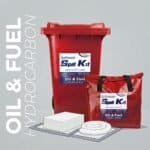
Spill kits should be positioned close to the risk, clearly identified and checked after every use. A kit with missing socks, saturated pads or no disposal bags is not a dependable control. For repeat-use locations, keeping refill absorbents beside the kit helps maintain readiness without replacing the entire unit.
Deployment and disposal matter as much as the product
A capable response follows a simple order: protect people, stop the source where it is safe, prevent the spill spreading, recover the liquid and manage the waste. Isolate ignition sources for flammable liquids, keep vehicles and foot traffic away, and use suitable gloves and other PPE before handling contaminated materials.
Used absorbents can be hazardous waste, particularly when saturated with fuel, oil or a regulated substance. Place them in suitable labelled containers or disposal bags, keep them secure from rain, and arrange disposal in line with the substance, local requirements and your site procedures. Never place contaminated absorbents in general rubbish unless you have confirmed that this is permitted.
The right absorbent is the one your team can reach, recognise and use correctly before oil reaches a drain, waterway or busy footpath. Build your stock around the spills your operation can realistically face, then inspect it often enough that it will perform when the leak is no longer minor.