Choosing Industrial Spill Kits for Your Site

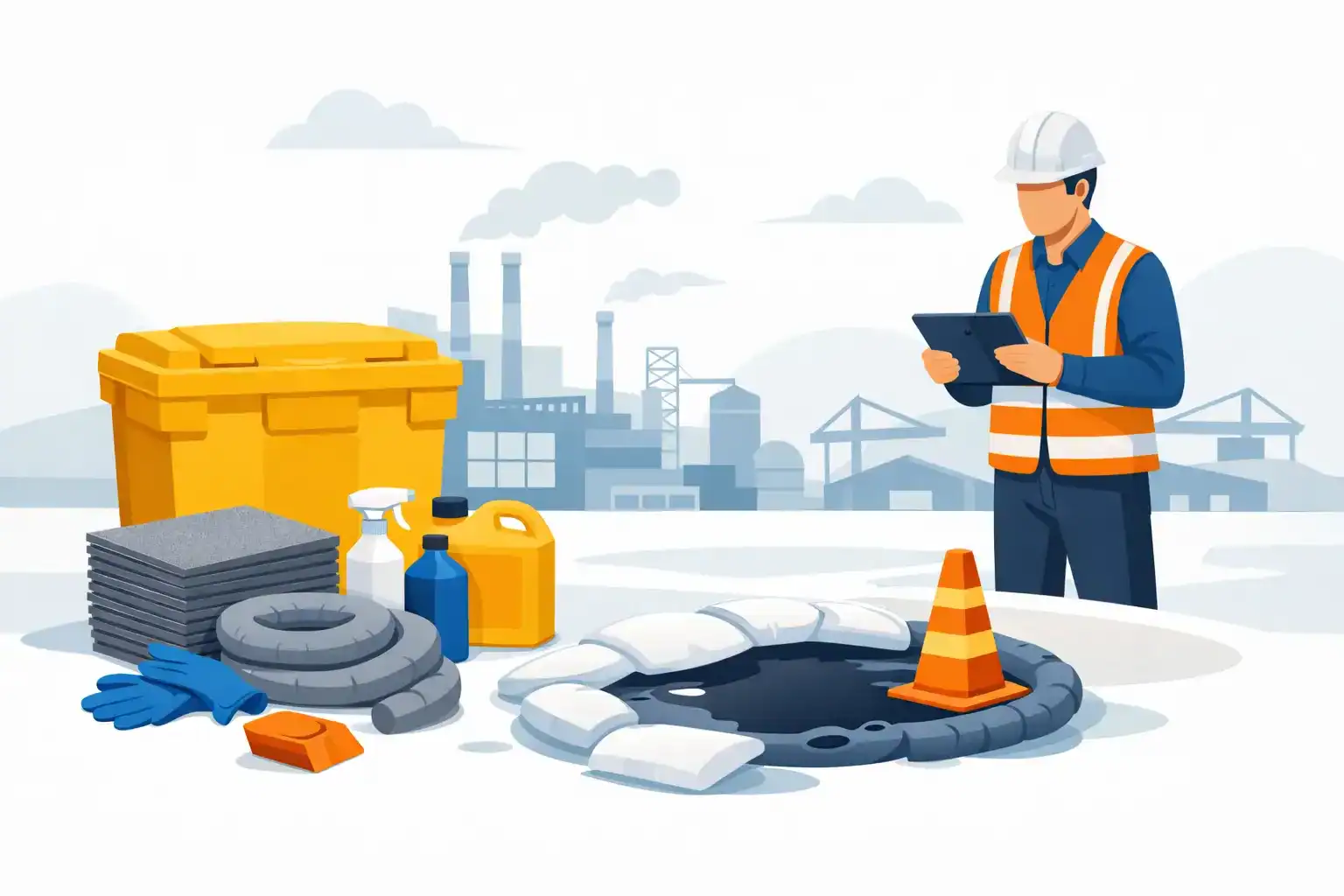
A leaking drum, split hydraulic hose or overturned container can turn into a costly incident quickly. Industrial spill kits give your team the equipment to contain, absorb and manage a release before it reaches drains, stock, machinery or neighbouring areas. The right kit is not simply the largest one available. It must match the liquids on site, the likely spill volume and the conditions your workers will face when responding.
Start with the liquid, not the kit size
The first selection question is straightforward: what could spill here? A general-purpose kit may suit mixed workshop fluids, coolants and many non-aggressive liquids. It is not automatically suitable for every chemical in a warehouse, laboratory, plant room or processing area.
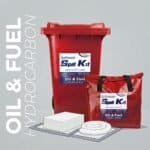
Oil and fuel spill kits use hydrophobic absorbents that repel water while taking up hydrocarbons. They are the practical choice around diesel storage, marine operations, vehicle yards, refuelling points and equipment with hydraulic systems. Because they float, oil-only pads and booms can also be used on water where appropriate.
Chemical spill kits are designed for hazardous liquids, including acids, caustics and solvents. Their absorbents and response components are selected for broader chemical compatibility, but the kit does not replace a site-specific chemical assessment. Always check the safety data sheet, understand the hazards of the substance and confirm the supplied equipment is appropriate for the chemical involved.
General-purpose kits are often a sensible fit for warehouses, workshops and maintenance areas where the primary risks are oils, water-based liquids, coolants and mild chemicals. They offer useful everyday coverage, but using one on an unknown or incompatible hazardous substance can expose responders to unnecessary risk.
A workplace with several spill risks may need more than one type of kit. This is often preferable to relying on a single large kit marked for general use. Clear placement and clear labelling help a worker make the correct choice under pressure.
Match industrial spill kits to the spill scenario
Capacity matters, but it should be based on credible incidents rather than a rough estimate. Look at the largest container handled in an area, the volume held in a line or hose, and the amount that could escape before isolation. A 20-litre kit may be adequate beside a small dispensing bench; it is unlikely to be sufficient near drums, IBCs, bulk tanks or loading zones.
Absorbency ratings are a guide to the total volume a kit can absorb in controlled conditions. In practice, the usable capacity can be reduced by uneven surfaces, rain, debris, poor access and the need to build a containment barrier first. Allow a margin rather than selecting to the exact calculated spill volume.
The response setting also changes what belongs in the kit. A compact carry bag is useful in a service vehicle or where a technician needs to take supplies to an incident. A wheelie bin kit suits larger workshops, warehouses and outdoor areas because it is visible, mobile and has room for substantial absorbent stock. Cabinet, locker or wall-mounted kits can work well where equipment needs protection from dust, weather or unauthorized removal.
For higher-risk locations, assess the full response sequence. The kit needs to help workers stop the spread, protect drains, absorb the liquid and collect contaminated material for disposal. Absorbent socks or booms are particularly useful for surrounding a spill, while drain covers, plugs or mats can prevent liquid entering stormwater before clean-up begins.
Place kits where the response starts
A spill kit locked away in a distant store is of limited value during the first few minutes of an incident. Position kits close to the hazard, along realistic travel routes and at points where a spill could move towards a drain, doorway or site boundary. Workers should be able to identify the kit without asking a supervisor or searching a storeroom.
Typical placement areas include fuel and chemical stores, decanting stations, loading docks, maintenance bays, plant rooms, waste storage areas and external work zones. Vehicles transporting fuels, oils or chemicals should also carry a suitable mobile response kit.
Avoid placing a kit where the spill is likely to block access to it. For example, if drums are decanted in a bunded bay, locate the kit immediately outside the likely spill footprint rather than behind the drums. Outdoor kits need weather-resistant storage, particularly where absorbents may be damaged by rain or ultraviolet exposure.
Check what is inside before you buy
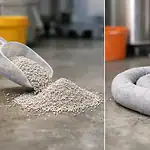
Industrial spill kits are made up of components, not just a stated capacity. The contents should support a controlled response by trained staff and suit the physical layout of the area. A practical kit commonly includes absorbent pads for recovery, socks or booms for containment, disposal bags and ties for contaminated waste, and personal protective equipment such as gloves and goggles.
Some locations require additional tools. A drain protector can be critical near stormwater infrastructure. A scoop, scraper or shovel may be needed to collect used absorbents or contaminated solids. Chemical response areas may require more substantial PPE, but PPE selection must follow the substance hazards and your site procedures rather than the contents of a standard kit alone.
Do not assume every kit has the same component mix because its capacity is similar. Compare the type and number of pads, socks, booms and disposal materials. A kit weighted heavily towards pads may absorb a release well once contained but may provide limited ability to stop liquid spreading across a large floor. Conversely, a kit with strong containment capability may need extra pads for larger clean-ups.
Build spill kit checks into site routines
Buying the kit is only the first step. A depleted, damaged or inaccessible kit can fail at the moment it is needed. Include spill kit inspections in regular housekeeping and safety checks, especially in busy areas where workers may use pads for minor drips and forget to replace them.
Check that the container is intact, clearly labelled and easy to reach. Confirm the kit holds the required response materials, disposal bags and PPE. Remove damaged or contaminated stock, and replace anything used immediately after an incident. Spill kit refills are a practical way to restore capacity without replacing a serviceable bin, bag or cabinet.
It is also worth recording kit locations, types and capacities on the site plan or emergency equipment register. This makes it easier to identify gaps when operations change, new chemicals arrive or storage areas are rearranged.
Train for the decision, not just the clean-up
Workers need to know when they can safely respond and when they must isolate the area and escalate. A spill kit is not a substitute for emergency services, specialist clean-up contractors or a hazardous materials response where there is fire risk, toxic vapor, an unknown substance, a large release or exposure risk.
Training should cover the site alarm and reporting process, safe approach, basic containment, drain protection, PPE use and waste handling. Use realistic examples from the workplace, such as a leaking forklift battery, a diesel delivery hose failure or a damaged chemical container. Short, practical refreshers generally give teams more confidence than a procedure left unread in a folder.
Compliance depends on the whole system
Appropriate industrial spill kits support a broader approach to workplace safety and environmental protection. They work alongside safe chemical storage, bunding, labelling, safety data sheets, maintenance, incident procedures and training. The exact obligations can vary by state, territory, industry and substance, so site managers should align equipment and procedures with applicable work health and safety, environmental and dangerous goods requirements.
For many sites, the most effective improvement is not a more complicated response plan. It is making the correct kit visible, stocked and suited to the hazards that workers manage every day. Review your risks before the next delivery, maintenance task or wet-weather event creates the spill you need to control.