A Practical Guide to Fuel Spill Response

A fuel spill beside a bowser, in a workshop bay or across a warehouse loading area can become a fire, exposure and environmental incident in minutes. This guide to fuel spill response sets out the practical actions worksite teams should take to control the immediate risk, protect drains and soil, and return the area to service only when it is safe to do so.
The right response depends on the fuel, volume, location and whether the release has reached a drain, waterway or unsealed ground. A few litres of diesel on sealed concrete can often be managed by trained site personnel with suitable equipment. Petrol vapour, a damaged tank, a spill entering stormwater, or any situation involving fire risk needs prompt escalation under the site’s emergency plan.
Start with people, ignition sources and the spill source
Before reaching for absorbent, assess whether the area is safe to enter. Petrol, diesel, kerosene, aviation fuels and similar hydrocarbons present different hazards, but all require a controlled response. Petrol is particularly volatile and its vapours can travel to an ignition source well beyond the visible liquid.
Raise the alarm according to site procedure and keep non-essential people clear. Do not start vehicles, operate electrical equipment or use tools that may create a spark near a flammable fuel spill. Stop hot work in the area. If it can be done without putting anyone at risk, turn off pumps, close valves, upright a fallen drum or place a temporary plug in a leaking container.
Do not attempt to stop a leak from a damaged tank, pressurised line or vehicle if the source cannot be safely isolated. Move to a safe distance and involve emergency services or the appropriate specialist contractor. Staff should never be expected to improvise beyond their training, available PPE and spill response plan.
Assess the spill before committing to clean-up
A quick assessment determines whether the incident is within the capability of the site spill team. Identify the fuel from its label, delivery documentation, Safety Data Sheet (SDS) or container markings. Estimate the quantity released, check the direction of flow and identify vulnerable areas, particularly stormwater pits, sumps, drains, unsealed surfaces and waterways.
Also consider enclosed spaces. Vapours can accumulate in pits, workshops, plant rooms and below-ground areas. A spill that appears modest at ground level may create a more serious atmospheric hazard nearby. Follow the SDS and site risk assessment for respiratory protection, ventilation and entry controls rather than assuming gloves alone are sufficient.
Escalate when the spill is large, the product is unknown, fuel has entered drainage, a waterway or soil, vapours are significant, or there is a risk of fire, injury or off-site impact. Notification obligations vary across Australian states and territories, as well as by site licence and local authority requirements. Your emergency plan should nominate who contacts regulators, property managers, emergency services and environmental advisers.
Contain the fuel before it spreads
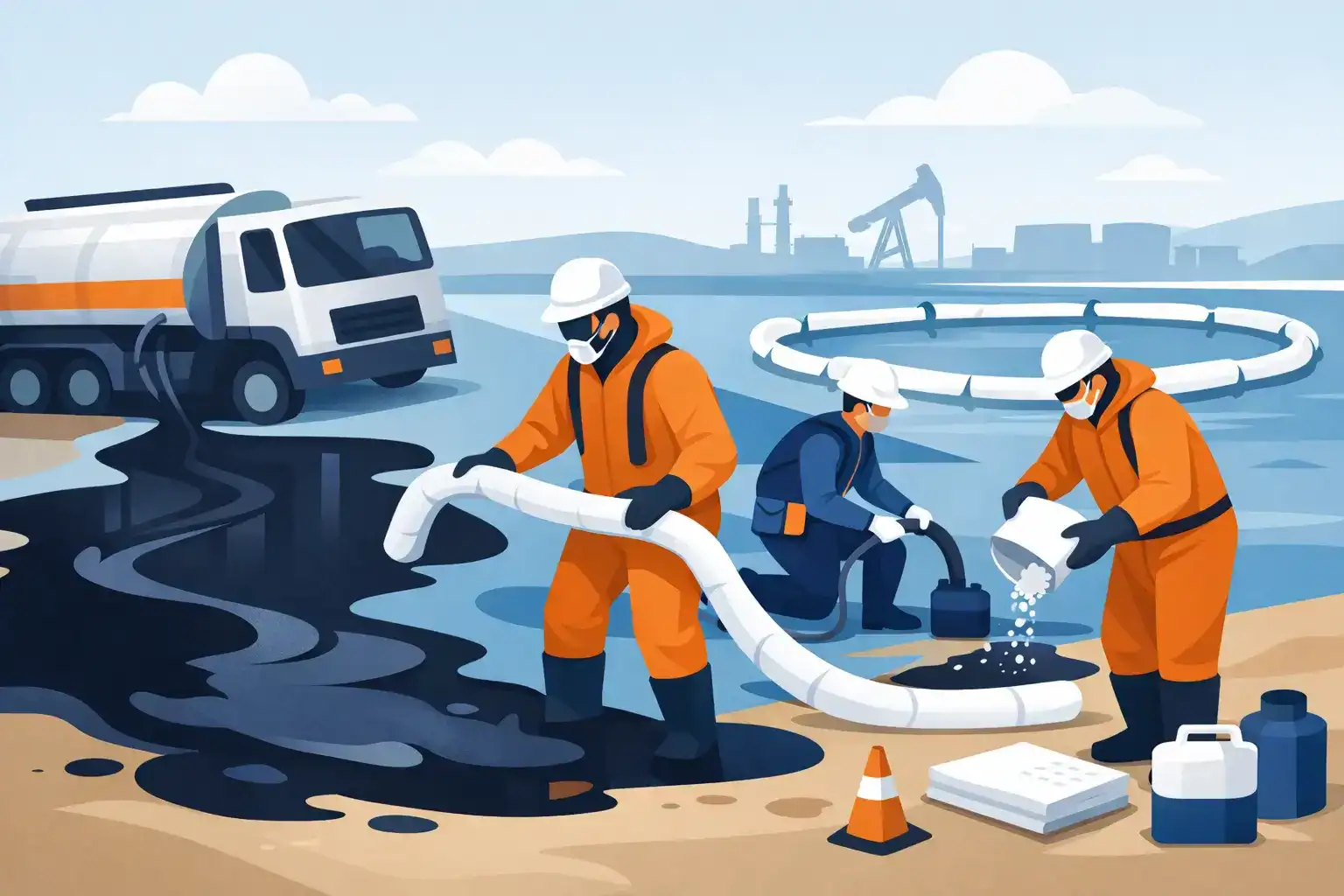
Once the area is controlled and responders are protected, contain the liquid at its outer edge. The priority is to prevent fuel reaching drains, doorways, traffic areas and sensitive ground. Work from the outside of the spill inward where practical, rather than walking through the fuel and spreading it further.
Use drain covers, mats or temporary barriers to protect nearby pits. Place absorbent socks or booms around the perimeter and across likely flow paths. On sloped surfaces, start downhill and create a barrier that redirects the fuel towards a safe collection area. For larger outdoor spills, bunding may be needed to hold the liquid until it can be recovered.
Do not wash fuel into a drain with a hose. Water can spread the contamination, carry hydrocarbons into stormwater systems and increase the size of the affected area. Similarly, avoid using loose materials that are not intended for fuel response if they create dust, cannot be recovered properly or provide inadequate containment.
Choose absorbents for hydrocarbon spills
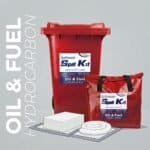
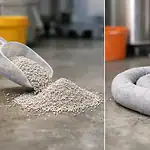
Fuel spills generally call for oil and fuel absorbents designed for hydrocarbons. Pads and rolls are useful for recovering fuel from flat, sealed surfaces. Socks and booms help contain and channel liquid. Pillows can be placed under leaking fittings, vehicles or drums where a concentrated amount needs to be captured.
Marine or oil-only absorbents are often selected because they absorb fuel and oil while repelling water. That makes them particularly useful around wet areas, wharves, boat ramps and stormwater where rainwater may be present. However, the right product still depends on the job. A general-purpose absorbent may be appropriate where the spill is mixed with another compatible workplace liquid, while specialised equipment may be required for chemicals outside a standard fuel spill.
For a spill on soil, gravel or other porous ground, surface absorbents alone may not be enough. The contaminated material may need to be excavated, contained and assessed for disposal. Stop the spread, isolate the area and seek environmental advice where the release is beyond a small, clearly manageable incident.
Use PPE that matches the task
PPE is part of the response, not an afterthought. At minimum, responders need protective gloves suitable for contact with the fuel, safety footwear and eye protection where splashing is possible. Disposable coveralls can help prevent contaminated clothing from being carried into vehicles, offices or amenities.
The SDS should guide glove material, respiratory protection and other specific controls. Nitrile gloves may suit many routine fuel-handling tasks, but glove selection must account for the chemical, exposure duration and likelihood of tearing or immersion. Replace contaminated gloves promptly and keep hands away from the face during clean-up.
High-visibility clothing is also relevant around refuelling zones, loading areas and active workshops. If traffic cannot be safely stopped or separated from the spill, do not proceed with clean-up until the area is controlled. A well-stocked spill kit cannot compensate for poor traffic management.
Recover, package and dispose of contaminated material
After the fuel is contained, use pads, rolls or other suitable absorbents to recover the free liquid. Change saturated material before it becomes difficult to handle or begins to release fuel back onto the surface. A scraper, shovel and compatible collection container may be needed for heavier contamination or contaminated granular material.
Place used absorbents, damaged PPE and contaminated soil into suitable labelled waste bags, drums or other secure containers. Keep waste closed, upright and protected from weather while disposal arrangements are made. Fuel-contaminated material is not ordinary rubbish. Its classification, transport and disposal requirements depend on the fuel, quantity, other contaminants and local rules.
Inspect the area again after the visible fuel is removed. Check drain grates, expansion joints, cracks, vehicle tyres, footwear and nearby equipment. If fuel has entered a drain, do not assume the job is finished because the surface looks clean. Isolate the drainage route where possible and escalate the incident as required.
Clean, inspect and document the incident
A final clean should remove residual slip hazards without creating further contamination. Use only the methods approved by your site procedure and the relevant product guidance. Before reopening the area, confirm there is no strong vapour odour, no remaining free liquid, no unprotected ignition source and no risk of tracking contamination into other work zones.
Record what happened while details are clear: the fuel involved, estimated quantity, time and location, likely cause, controls used, waste produced, notifications made and any follow-up actions. Good records support regulatory reporting where required, but they also identify recurring failures such as poor drum handling, worn hoses, inadequate bunding or spill kits positioned too far from the risk.
Restock the kit immediately. A spill kit with missing socks, saturated pads or no waste bags is not ready for the next incident. Check that replacement absorbents match the fuels handled on site and that equipment is located near refuelling points, chemical stores, loading bays and mobile plant areas rather than locked away in a distant storeroom.
Build a fuel spill response capability before the next release
The most effective response begins before fuel reaches the floor. Review fuel storage and transfer points, make sure containers are labelled and secured, and use bunding or spill pallets where leaks could reach drains or soil. Inspect hoses, fittings, drums and tanks routinely, especially in high-traffic areas where impact damage is likely.
Training should be practical. Teams need to know where kits are kept, who has authority to stop work, how to protect drains, when to call for help and where contaminated waste is held. A short spill drill can expose gaps that a written procedure will not, such as an inaccessible kit, unclear after-hours contacts or insufficient PPE in the response area.
Spillmaster supplies fit-for-purpose fuel and oil spill response equipment, from absorbent pads and booms through to complete spill kits, bunding and storage solutions. Selecting the right configuration comes down to the fuel types, volumes and locations your team manages.
A prepared site does not treat a fuel spill as a cleaning task. It treats it as a controlled safety and environmental response, with the right equipment close by and clear limits on when to escalate.