Choosing a Spill Kit for Service Vehicles

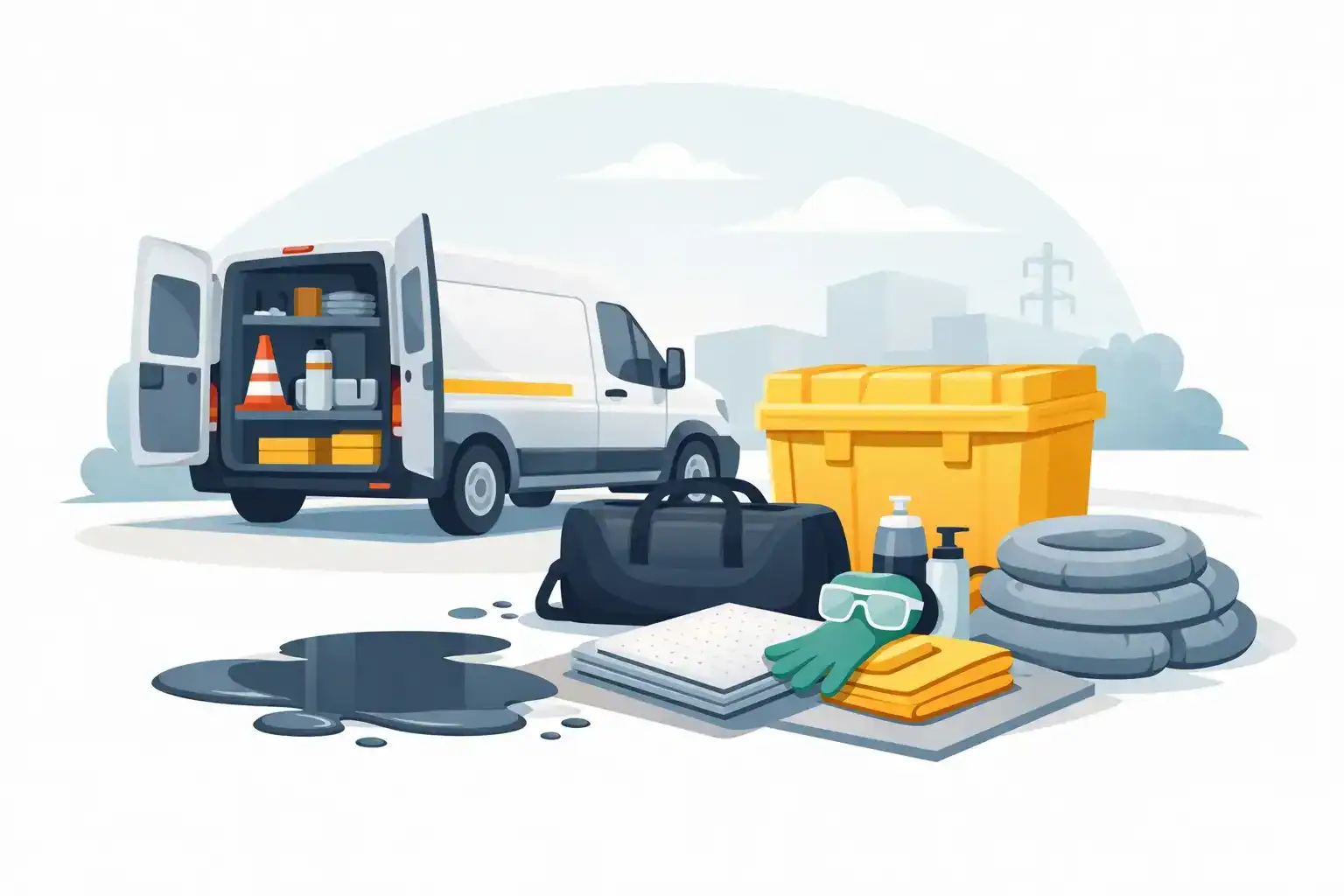
A service vehicle is often the first workplace on scene and the last place a leak is noticed. A loose hydraulic fitting, split fuel line or damaged chemical container can turn a routine call-out into an environmental incident before the crew reaches the depot. The right spill kit for service vehicles gives operators the equipment to contain and recover a spill immediately, rather than relying on improvised materials or a return trip for supplies.
For fleet managers and safety officers, the selection decision is not simply about fitting a kit in the back of a ute or van. It is about matching the kit to the substances carried, the likely spill volume, the work locations and the people who will use it.
Start with the vehicle’s actual spill risks
Service vehicles vary widely. A mobile mechanic may carry oils, coolant, grease, fuels and batteries. A field technician might transport cleaning chemicals, solvents, lubricants or small chemical containers. Marine, fuel-handling and industrial maintenance crews can face higher-consequence spills around drains, waterways, unsealed ground or client premises.
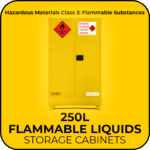
Review what is routinely stored, decanted, used or serviced from the vehicle. Include the substances in equipment reservoirs and tanks, not just containers in the cargo area. Safety data sheets, dangerous goods documentation and site procedures should inform this assessment, particularly where corrosives, flammables or unknown chemicals may be involved.
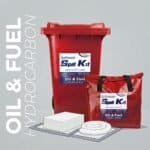
A general-purpose absorbent kit is appropriate for many mixed workplace liquids, including oils, coolants, water-based fluids and many non-aggressive chemicals. It is not automatically suitable for every substance. Chemical spill kits are designed for hazardous chemical response, while oil-only absorbents repel water and absorb hydrocarbons such as fuel, diesel and oil. That makes oil-only products a practical choice for outdoor work, wet ground, stormwater exposure and marine environments.
The trade-off matters. A general-purpose kit can provide useful everyday coverage, but it should not be used as a substitute for a chemical kit where the vehicle carries corrosive or hazardous liquids. Where several credible risks exist, a vehicle may need more than one absorbent type or a tailored kit configuration.
What a spill kit for service vehicles needs to do
A vehicle kit must be compact enough to stay on board, visible enough to find quickly and capable of managing the likely first-response spill. It does not need to replace the larger spill equipment held at a depot, workshop or fixed site. Its job is to give a mobile crew control during the first critical minutes.
A fit-for-purpose kit normally combines four functions:
- Containment, using socks, booms or barriers to stop liquid spreading towards drains, doorways, soil or water.
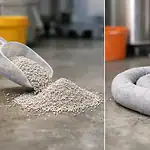
- Absorption, using pads, rolls, pillows or particulate absorbent to recover the released liquid.
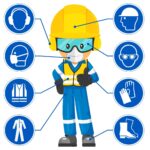
- Personal protection, with gloves and other PPE selected for the material and task.
- Waste collection, using disposal bags, ties and clear instructions to isolate contaminated absorbents for lawful disposal.
Drain protection can be especially valuable for vehicles working at customer sites, car parks, loading areas and workshops. Once a spill enters a stormwater drain, the clean-up becomes more complicated and the consequences can be significantly greater. If crews commonly work near drains, consider carrying drain covers or a compatible containment option alongside the main kit.
Choose capacity based on credible loss, not empty space
Small vehicle spill kits are convenient, but convenience should not drive capacity. Assess the largest credible spill an operator could reasonably contain before support arrives. A minor drip from a hose connection and a failed 20-litre drum are different planning scenarios.
For a light service vehicle carrying small containers and performing low-volume maintenance, a compact kit may be sufficient. Vehicles that carry drums, regularly refuel equipment, service hydraulic plant or operate at remote sites usually need a higher-capacity kit. A larger kit also provides more practical containment materials, which are often used first to protect drains and prevent the spill from spreading.
Capacity figures are useful for comparing kits, but they are not a guarantee that every liquid will absorb at the same rate. Viscosity, surface type, weather and the need to create containment all affect consumption. A kit rated for a given volume can be depleted quickly if operators need to deploy multiple socks around a flowing spill or work across rough, uneven ground.
If a vehicle has limited room, secure a compact first-response kit in an accessible position and carry extra pads, socks or a refill pack in a separate, protected storage compartment. This can be more workable than relying on one oversized kit that is difficult to retrieve or routinely removed to make room for tools.
Select a container that suits field work
The packaging is part of the response system. A soft bag is light, easy to stow and suits vans, utes and smaller vehicles. It is often the best choice where access is tight and crews need to carry the kit from the vehicle to the spill location.
A wheeled bin or larger rigid container offers stronger storage protection and greater capacity. It is better suited to larger service trucks, fuel operations, workshops on wheels and crews that require substantial spill response supplies. The downside is space, weight and the chance that the container is blocked by stock or equipment.
Whichever format is selected, it should be clearly labelled, protected from weather and secured against vehicle movement. A spill kit buried beneath parts, ladders and toolboxes is not readily available when a crew needs it. Check that workers can reach it without climbing into an unsecured tray or moving heavy equipment on the roadside.
Make the contents usable for the people on site
A well-stocked kit can still fail if the crew does not know what is inside or when to escalate. Operators should be able to identify the correct kit type, isolate the source where it is safe to do so, protect nearby drains and use absorbents without creating further exposure.
Training should cover the limits of vehicle-based response. Staff should not attempt to clean up a spill where there is a fire risk, harmful vapour, unknown material, significant chemical exposure or a volume beyond their equipment and training. The right action may be to keep people clear, notify the site representative, contact emergency services or activate the business response procedure.
PPE also needs careful selection. Disposable gloves supplied in a standard kit may be suitable for some oil and maintenance spills but may not provide appropriate chemical resistance for all substances carried. Confirm glove compatibility against the relevant safety data sheet and keep replacement PPE available. Eye protection, protective clothing and respiratory protection depend on the product and risk assessment, not merely on what fits inside the bag.
Inspection and replenishment are part of compliance
A spill kit is consumable safety equipment. Once pads, socks, bags or gloves are used, the kit is no longer ready at its stated capacity. Assign responsibility for inspections and include vehicle kits in regular fleet checks.
A practical inspection confirms the kit is present, accessible, dry, labelled and secured. It should also verify that absorbents have not been used, PPE is intact, disposal bags are available and the contents still suit the substances carried in the vehicle. Changes to the service scope, chemicals, fuel quantities or vehicle fit-out should trigger a new review.
Refills are a cost-effective way to restore a kit after use, provided the outer bag or bin remains serviceable and the refill matches the original response requirement. Do not replace chemical-specific absorbents with general-purpose materials simply because they are on hand. The savings are minor compared with the risk of having the wrong equipment during a hazardous spill.
Build the kit into the way the fleet operates
The strongest vehicle spill response arrangement is the one crews can use under pressure. Place the kit where it is visible, include it in pre-start checks and ensure supervisors know when a spill has occurred so replenishment and waste disposal are not missed. For businesses operating across multiple vehicles, standardising kit types by vehicle risk class makes training, inspections and procurement easier.
Spillmaster supplies vehicle-ready spill response equipment across general-purpose, oil-only and chemical applications, allowing buyers to match kits and refills to the hazards their crews actually face. The appropriate selection should always reflect the vehicle’s load, the work environment and the organisation’s response procedures.
A spill kit should not sit untouched because everyone hopes it will never be needed. It should be positioned, checked and understood well enough that, when a leak occurs on a driveway, worksite or roadside, the crew can act before a small release becomes a larger problem.