Choosing Spill Control Products for Your Site


A leaking drum beside a loading bay, hydraulic oil under a forklift, or a solvent container knocked over in a workshop can become a costly incident within minutes. The right spill control products give workers a clear first response: stop the spread where it is safe to do so, contain the liquid, recover it, and manage the resulting waste correctly. The key is selecting equipment for the substances and conditions on your site, rather than relying on a one-size-fits-all kit.
For operations managers, warehouse supervisors and safety teams, spill readiness is not simply a purchasing task. It is part of protecting people, keeping liquids out of drains and waterways, reducing downtime, and demonstrating that practical controls are in place.
Start with the spill hazards on site
The most suitable products depend on what can spill, where it is stored or used, and the volume that could reasonably be released. A maintenance workshop handling oils and coolants has different requirements from a laboratory using corrosives, while a fuel-handling area needs a different response again.
Review your chemical register, safety data sheets and site risk assessments before specifying equipment. Identify the liquids present, their hazards, package sizes, transfer points, traffic areas and nearby drains. Consider not only a full drum failure but also the smaller, more frequent spills caused by leaking fittings, decanting, damaged containers and plant maintenance.
This assessment should also distinguish between indoor and outdoor areas. Rain, uneven surfaces, wind and stormwater drains make an external spill harder to control. A product that works well on a smooth warehouse floor may not be enough for a yard, marine environment or loading area.
Match absorbents to the liquid
Absorbents are often the first product people think of, but their type matters. General purpose absorbents are commonly used for non-aggressive workplace liquids such as oils, fuels, coolants, water-based fluids and many common chemicals. They are a practical choice for mixed-use workshops and warehouses where several compatible liquids may be encountered.
Oil-only absorbents are designed to take up hydrocarbons while repelling water. They are particularly useful around oil-water separators, drains, marinas, wash bays and external fuel-handling areas. Their ability to float can make them valuable when containing oil on water, but they are not a substitute for assessing whether the product is suitable for the particular substance involved.
Chemical absorbents are intended for hazardous and aggressive liquids, including many acids, alkalis and solvents. Where corrosive chemicals are stored or transferred, chemical-rated pads, socks and spill kits should be readily accessible. Teams should never assume that a general purpose pad is appropriate for every chemical simply because it appears absorbent.
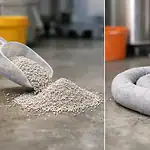
Granular absorbents can be useful on rough ground or for certain workshop applications, but they can create dust, are harder to recover completely and may be less efficient than pads or rolls for routine leaks. Pads, rolls and pillows suit surface recovery. Socks and booms are better for creating a barrier around a spill or protecting a drain. A well-equipped site often needs a combination rather than one format alone.
Choose spill kits by risk, not convenience
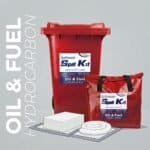
A spill kit should be located where the response is likely to begin, not stored in a distant storeroom. For example, a workshop may need a mobile kit near service bays, while a warehouse may need units near battery charging, chemical storage and dispatch areas. Fuel storage, loading docks and waste areas may each require dedicated equipment.
Kit capacity is also a practical decision. A small kit may be suitable for a vehicle cab, maintenance trolley or low-volume storage point. Larger wheelie bin kits or site response kits are more appropriate where drums, intermediate bulk containers or bulk transfer activities are present. The rated capacity should account for the credible spill volume, not just the amount buyers would prefer to store.
A complete kit generally needs absorbents, containment products, disposal bags, ties, personal protective equipment and clear instructions. However, the contents should reflect the hazards assessed for that location. A chemical spill kit without appropriate gloves and eye protection leaves workers exposed. An oil-only kit placed beside corrosive chemicals creates a different problem.
Keep refills ready
A spill kit that has been used and not replenished is a container, not a control. Establish a simple inspection routine that checks kit contents, signage, access and expiry or condition of PPE. Refill kits promptly after use, and keep replacement pads, socks, bags and gloves available for high-use areas.
Assigning ownership is equally important. If nobody is responsible for checking a kit, missing components are often discovered only during an incident. A monthly inspection can be enough for many locations, although higher-risk areas may need more frequent checks.
Contain the spill before it reaches a drain
Preventing a release from entering stormwater is one of the most important aims of spill response. Drains can carry contaminants beyond the site boundary quickly, particularly during wet weather. Spill socks, drain covers, temporary bunding and booms should be positioned where they can be deployed without delay.
Drain covers work best when workers can safely access the drain before liquid reaches it. They need to suit the surface and be stored clean, flat and close to the hazard. In outdoor locations, a containment boom or absorbent sock can provide a first barrier while the source is isolated and more equipment is brought in.
For fixed storage areas, bunding is a more reliable preventative control than depending solely on emergency response. Bunded pallets, spill pallets, drum bunds and floor bunding contain leaks beneath drums, containers and plant. The correct choice depends on the container type, stored volume, chemical compatibility, forklift access and required containment capacity.
Bunding needs regular attention. Rainwater, debris, damaged grates and incompatible liquids can reduce its effectiveness. Outdoor bunds should be managed so accumulated water is assessed before disposal, rather than released automatically into drains.
Plan for storage, transfer and movement
Many spills happen during ordinary work: moving drums by forklift, pouring from containers, changing oil, refuelling equipment or collecting waste. Controls should follow the material through each stage, not stop at the storage cabinet or pallet.
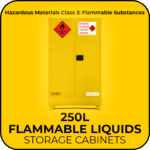
Flammable liquids storage cabinets help segregate and protect compatible flammable products, but they should be part of a broader storage plan that considers ventilation, ignition sources, access, labelling and stock levels. Similarly, a spill pallet below a drum is useful, yet it does not eliminate the need for safe decanting equipment and trained workers.
For transport inside a facility, consider the likely movement path. If a drum trolley passes across a busy warehouse, response supplies should be accessible along that route. Mobile spill kits provide flexibility, while fixed stations offer certainty in known hazard zones. The best arrangement often uses both.
Make equipment usable under pressure
Product selection is only half the job. During a spill, workers need to recognise the substance, raise the alarm where required, wear suitable PPE and know when they should not attempt a response. Unknown substances, strong fumes, fire risk, large releases and situations involving injury may require emergency services or specialist support rather than an in-house clean-up.
Keep instructions concise and site-specific. Workers should know where kits are, what each kit is for, how to protect drains and who to notify. Practical spill drills are more useful than a procedure that sits unread in a folder. They expose simple problems such as blocked kit access, missing disposal bags or staff who do not know which absorbent is compatible.
Waste management should be considered before the incident occurs. Used absorbents, contaminated PPE and recovered liquid may be hazardous waste. They must be packaged, labelled, stored and disposed of according to the substance, local requirements and your waste contractor’s acceptance conditions. Do not place contaminated materials in general rubbish bins because they look like ordinary pads or rags.
Buying spill control products with confidence
When comparing spill control products, focus on substance compatibility, absorption capacity, containment performance, construction quality and practical deployment. The cheapest option can become expensive if it tears during use, does not suit the chemical involved, or leaves a team without enough material to finish the response.
Standardising suitable products across sites can simplify training, replenishment and purchasing. There is still room for site-specific variation: a warehouse may standardise general purpose kits but add oil-only equipment at loading docks and chemical kits in a maintenance room. Clear labels and colour coding help prevent the wrong product being selected in a hurry.
Spillmaster supplies specialist spill control products for workplace containment and environmental protection, including spill bunds, spill pallets, drain protection, barriers and other containment solutions. Selecting the right combination begins with an honest assessment of your risks and ends with equipment that workers can reach, understand and use when it matters.
A spill plan is strongest when it is visible in the workplace: stocked kits near the hazard, protected drains, maintained bunding and people who know their role. Review those controls before the next leak tests them for you.