Forklift Spill Kit Requirements for Safer Warehouses

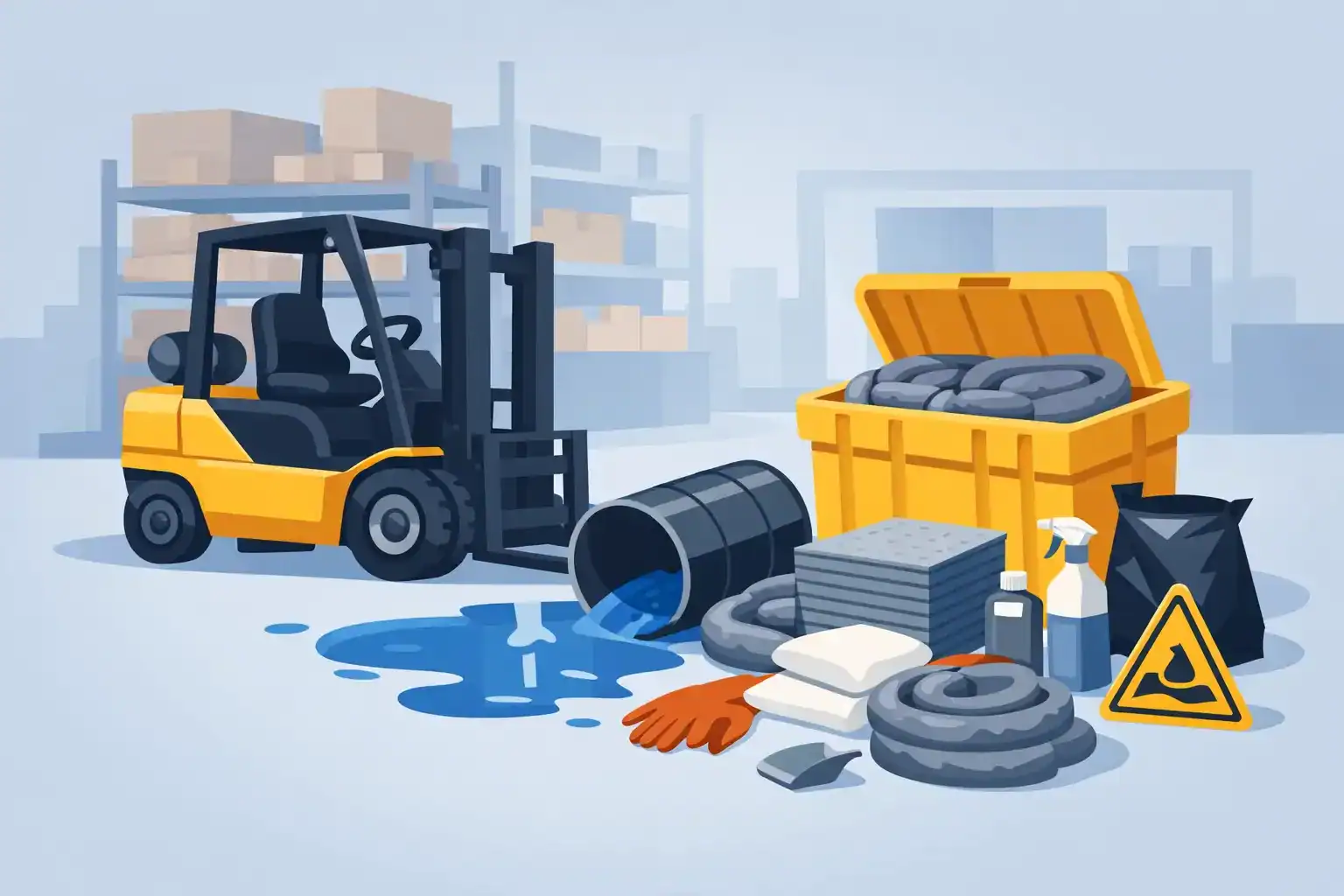
A forklift spill kit is not a general housekeeping item to leave in a store room. It is a first-response resource for leaks that can occur in active traffic areas, battery charging stations, fuel storage points and loading bays. When hydraulic oil reaches a warehouse floor, or battery electrolyte leaks near a charging area, the immediate risk is not only environmental. It can create slip hazards, expose workers to hazardous substances and interrupt operations.
The right kit helps trained workers contain a spill quickly while the site follows its emergency and incident procedures. Choosing from the spill kit range also depends on the forklifts in use, the fluids on site and where the equipment operates. For the broader selection process, see How to Select a Spill Kit. A warehouse running electric counterbalance forklifts has different risks from a yard operating diesel or LPG machines.
What can leak from a forklift?
Forklifts operate under pressure, carry batteries or fuel systems, and travel across surfaces where a small leak can spread rapidly. Hydraulic hoses, seals, fittings and lift cylinders can release hydraulic oil. Internal-combustion forklifts may leak diesel, petrol, engine oil, coolant or LPG-related fluids. Electric forklifts introduce battery hazards, particularly corrosive electrolyte from flooded lead-acid batteries.
A leak may be gradual, such as oil appearing beneath a parked forklift, or sudden, such as a damaged hydraulic hose during a lift. The volume matters, but so does the substance and location. A small oil spill near a roller door can be carried outside by tyres or rainwater. Electrolyte at a battery charging station requires a different response from a routine oil leak on a workshop floor.
This is why one generic set of absorbent pads is not always an adequate response plan. Site managers should identify the substances used on each forklift type, review their safety data sheets and select spill equipment to suit the credible spill scenarios.
Choosing a forklift spill kit by hazard
For most warehouse forklift fleets, a general purpose spill kit is suitable for common non-aggressive liquids such as hydraulic oil, engine oil, coolant, diesel and water-based fluids. These kits commonly include absorbent pads, socks, loose absorbent, disposal bags and personal protective equipment. They are practical where the primary risk is a hydraulic or mechanical fluid leak.
However, general purpose absorbents should not be assumed suitable for every substance. Battery acid and other corrosive chemicals need a chemical spill kit with compatible absorbents and suitable protective equipment. A chemical kit is designed for a wider range of hazardous liquids, but the contents still need to be checked against the chemicals held and used on site.
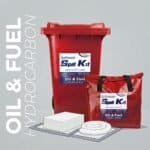
For fuel-handling areas, an oil and fuel spill kit may be the better fit. Oil-only absorbents are designed to absorb hydrocarbons while repelling water, making them useful around outdoor loading areas, drains, wash bays or locations where rainwater may be present. They are not intended for acids, coolants or general chemical spills.
The selection decision comes down to what may be released. A site with battery charging and diesel forklifts may need more than one response option: a chemical spill kit at the charging point and an oil or general purpose kit near maintenance and parking areas. Trying to make one kit cover incompatible hazards creates uncertainty at the exact moment workers need clarity.
Consider the likely spill volume
Kit capacity should reflect the credible worst-case leak, not the smallest drip noticed during a pre-start check. A compact kit may be appropriate for a single forklift operating indoors, while a larger wheeled kit can be more appropriate for a busy distribution centre, fleet workshop or outdoor loading area.
Consider the capacity of hydraulic reservoirs, fuel tanks and battery systems, as well as the risk of several containers or machines being involved. Larger kits also provide more absorbent socks for stopping a spill from reaching drains, doorways and traffic lanes. The aim is not to stock excessive product in every corner of a facility, but to ensure the available response equipment is sufficient for the foreseeable event.
Where to keep forklift spill kits
Spill response equipment must be accessible before a leak spreads. A kit positioned behind racking, inside a locked office or at the far end of a warehouse may meet a purchasing requirement but fail operationally.
Place kits near the areas where forklifts are parked, maintained, fuelled or charged. Battery charging stations should have compatible chemical spill response equipment close by, without obstructing access or creating a trip hazard. Maintenance bays need sufficient absorbents for hydraulic oil and other workshop fluids. Outdoor loading docks, refuelling areas and sites close to stormwater drains need equipment that can contain spills before they leave the hardstand.
Visibility is equally important. Mark the location clearly, keep the kit free from pallets and stock, and make sure all shift teams know where it is. If the site covers multiple buildings or a large yard, several smaller, correctly selected kits may provide a better response than one large kit in a central location.
What a practical forklift spill kit should contain
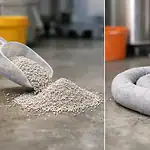
The contents must support a safe sequence: protect the person responding, stop or reduce the source where safe, contain the liquid, absorb it, then package the used materials for disposal. Exact contents vary by kit type and capacity, but useful components generally include absorbent pads for surface clean-up, absorbent socks or booms for containment, loose absorbent for uneven areas, disposal bags and ties, and clear response instructions.
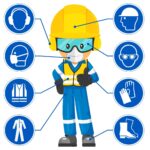
Appropriate PPE is essential. Gloves should be selected for the material involved, while goggles or a face shield may be necessary where splash risk exists, especially near battery electrolyte. Workers should not approach an unknown or hazardous spill with basic gloves simply because they are supplied in a nearby kit. The relevant safety data sheet and site procedure should guide PPE selection and escalation.
Drain protection can also be necessary in warehouses with internal pits, external drains or loading areas exposed to rain. Once liquid enters stormwater infrastructure, the response becomes more complex and may require notification and specialist assistance. Position drain covers or containment products where they can be deployed promptly, provided workers have been trained to use them safely.
A simple response process for forklift leaks
A spill kit supports a procedure; it does not replace one. Workers should understand when they can respond safely and when to isolate the area and call for trained assistance. For example, a minor hydraulic oil leak may be managed by a trained operator using the correct absorbents. A substantial fuel release, unknown chemical, damaged battery, strong fumes or any spill entering a drain should be escalated immediately.
For a manageable spill, isolate the forklift if safe to do so and prevent vehicle or foot traffic from spreading the liquid. Stop the source only where this can be done without exposure or injury. Use socks or absorbent barriers to contain the spill, beginning on the downhill side or around drains, then apply pads or loose absorbent to recover the liquid.
Used absorbents, contaminated PPE and damaged packaging must be collected and disposed of in accordance with the substance involved and local waste requirements. They should not be placed in general rubbish unless the waste assessment confirms this is permitted. Record the incident, inspect the forklift before returning it to service and investigate why the leak occurred.
Inspection, refills and staff readiness
A spill kit is only useful when its contents are present, dry and suitable for the task. Include it in routine workplace inspections alongside fire equipment, first aid resources and forklift pre-start checks. Check that the container is intact, labels remain legible, PPE has not degraded and absorbent stocks have not been used without replacement.
After any response, replenish the kit immediately. Partial kits are a common weakness in busy facilities because used pads and socks are removed but no one owns the refill process. Assign responsibility to a role, maintain a simple stock record and keep compatible spill kit refills available for high-use areas.
Training should be practical. Workers need to know the difference between general purpose, oil-only and chemical absorbents, where kits are located, and when to stop and escalate. A short spill-response drill at a battery charging station or loading bay can expose issues that a written procedure will not, such as blocked access, missing drain protection or uncertainty about waste handling.
Compliance is more than buying a kit
Australian workplaces have duties to manage hazardous chemicals, prevent pollution and provide safe systems of work. The precise requirements vary by state or territory, site activity and the substances stored or handled. A forklift spill kit contributes to that control framework, but it is not a standalone compliance solution.
A sound approach combines equipment selection with chemical registers, safety data sheets, training, maintenance, incident reporting and suitable waste disposal arrangements. Forklift leaks should also feed back into preventative maintenance. Repeated use of absorbents beneath the same machine is a signal to repair the fault, not an acceptable long-term control.
For warehouse and operations teams, the most effective spill kit is the one matched to the fleet, positioned at the point of risk and maintained ready for use. Review the equipment before the next leak tests it.