How to Store Flammable Liquids Safely

A drum of solvent under a workbench, a jerry can beside the roller door, a few aerosols stacked near the switchboard – that is how small storage issues turn into a serious fire risk. If you are working out how to store flammable liquids, the right answer is not just “put them in a cabinet”. It depends on what you are storing, how much you hold onsite, who uses it, and what ignition sources sit nearby.
For most worksites, safe storage comes down to controlling three things at once: vapours, ignition, and spills. Get those right and you are not only reducing the chance of fire, you are also making day-to-day handling safer and supporting compliance obligations across the site.
How to store flammable liquids without creating new risks
Flammable liquids are not all handled the same way in practice. Petrol, acetone, thinners, solvents, fuels, paints and some cleaning products may all be classed as flammable, but the storage setup that suits a workshop may not suit a warehouse, plant room or marine environment. The common mistake is treating every container as if the only issue is leakage. In reality, vapour release and ignition potential matter just as much.
Start with the product itself. Check the safety data sheet and label, confirm the dangerous goods classification, and understand whether you are dealing with small packaged containers, decanted liquids, or bulk volumes. A few litres used occasionally can often be managed with a different storage approach than regular-use stock or reserve fuel supplies. The quantity onsite affects cabinet selection, segregation needs, ventilation considerations and emergency planning.
Location is the next major factor. Flammable liquids should be kept away from heat, sparks, open flames, hot surfaces and any area where mechanical or electrical equipment may become an ignition source. That sounds obvious, but many storage failures happen in mixed-use spaces where convenience wins. A storeroom beside battery charging equipment or a fuel container kept near welding activity is not a storage solution. It is an incident waiting for the right conditions.
Choose storage that matches the hazard
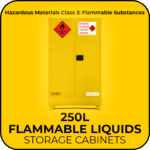
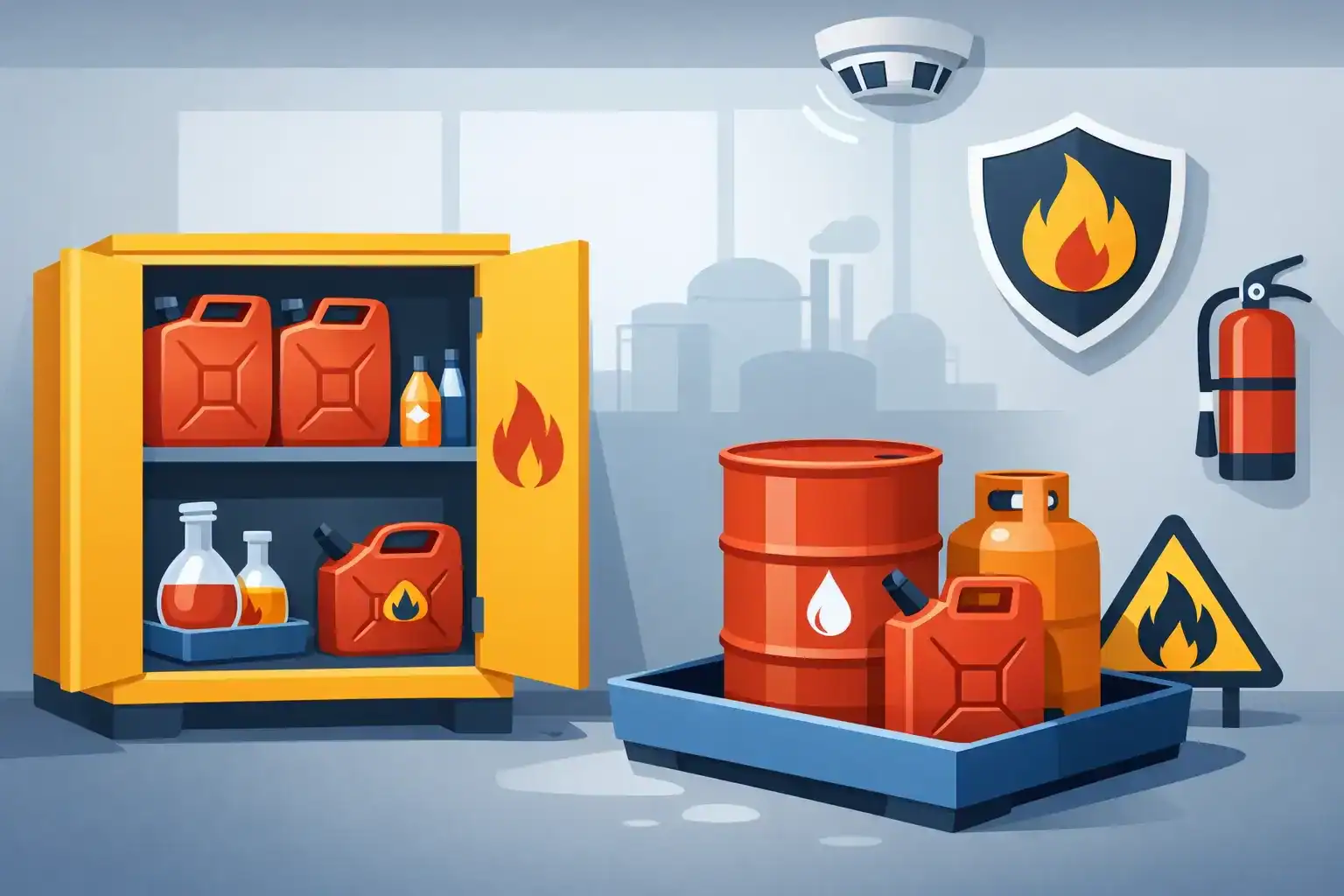
The safest option for many workplaces is a purpose-built flammable liquids storage cabinet. A compliant cabinet is designed to reduce fire exposure, contain spills and keep dangerous goods separated from general operations. It also gives your team one clear, controlled place for storage rather than letting containers spread across benches, shelves and corners of the site.
That said, not every cabinet suits every task. Capacity matters, but so does footprint, door style, shelf configuration and bund sump volume. If staff are accessing products several times a shift, ease of use becomes part of safety. A cabinet that is too small or awkward will often lead to overflow storage outside the unit, which defeats the point.
For larger volumes, indoor cabinet storage may not be enough on its own. You may need dedicated dangerous goods stores, external storage arrangements, spill pallets, bunding or segregated compounds depending on the materials and site layout. This is where buyers need to think beyond the container and look at the whole storage environment. The right setup controls both routine use and the consequences of a leak, container failure or fire event.
Secondary containment is part of that equation. Even sealed containers can fail if they are damaged, overfilled, poorly closed or exposed to rough handling. Bunding, spill pallets and cabinet sumps help keep leaks from spreading into drains, traffic areas or ignition zones. For fuel and chemical handling sites, that containment function is often as important as the cabinet itself.
Segregation matters more than many sites realise
One of the most overlooked parts of how to store flammable liquids is what they are stored beside. Flammables should not simply be grouped with “other chemicals”. Incompatible substances can make a bad situation worse very quickly, whether through reaction, toxic gas generation or escalation during a fire.
Acids, oxidisers and certain corrosives may need to be stored separately from flammable products. General consumables, PPE, absorbents and maintenance stock should also be kept out of flammable liquid storage areas unless they are specifically intended to be there. A cluttered cabinet creates handling issues and increases the chance of damage, spills and incorrect product use.
Segregation also applies to empty containers, waste liquids and decanting practices. Sites often manage full stock carefully but become less disciplined with residue containers, used solvent drums or temporary waste vessels. If it still contains flammable vapours, it still needs to be managed as a fire risk.
Day-to-day handling affects storage safety
Storage is not just about where the product sits overnight. It includes how it is received, opened, decanted, returned and inspected during normal operations. If workers regularly leave containers uncapped, store transfer bottles on benches or keep part-used tins near machinery for convenience, your formal storage system is only doing half the job.
Keep access controlled and practical. Clearly identify who can use the products, where they are returned after use, and what to do with damaged or leaking containers. Good storage areas are labelled, easy to inspect and free of unrelated stock. They should not become a dumping point for paint tins, aerosols, oily rags or waste packaging.
Housekeeping matters here. Flammable liquid storage areas should stay clean, dry and uncluttered. Spills should be cleaned up promptly with suitable absorbents and waste managed correctly. Oily residues, soaked rags and contaminated packaging can contribute to fire load and create extra hazards even when the liquid itself is back in the cabinet.
Ventilation, temperature and ignition control
Flammable vapours can travel further than people expect. That is why simply placing containers in a corner of the shed is not enough. Storage areas need appropriate ventilation and should be positioned to minimise vapour build-up, especially in enclosed or low-lying spaces where vapours may accumulate.
Temperature control is another practical issue. Excessive heat can increase vapour pressure, degrade containers and make products more volatile. Avoid storing flammable liquids in direct sun, near process heat, or in areas with poor thermal control. External storage can be suitable in some cases, but only if the setup protects the product and maintains safe separation from buildings, traffic and ignition sources.
Ignition control goes beyond visible flames. Forklifts, battery chargers, switchgear, static discharge and hot work all need to be considered. If decanting or dispensing is part of the operation, the controls required may be more stringent than for sealed storage alone. This is where a simple site walkthrough often reveals problems that paperwork misses.
Inspection and maintenance are part of compliance
A flammable storage cabinet is not a set-and-forget purchase. Cabinets, bunds, shelves, door closures, labels and sump areas should be checked routinely. Damaged seals, corroded shelves, blocked vents or sump contents left uncleared can compromise the very controls you rely on.
Container condition deserves the same attention. Dented drums, perished caps, illegible labels and makeshift transfer bottles are common warning signs that storage standards are slipping. If workers cannot easily identify contents and hazards, handling mistakes become more likely.
It is also worth checking whether your current storage still matches your actual stockholding. Sites change over time. Product lines expand, temporary supplies become permanent, and what started as minor storage can turn into a higher-risk arrangement without anyone formally reviewing it. Regular audits help catch that drift early.
Training should be practical, not generic
Even a well-designed storage area fails if staff treat it as optional. Training should focus on the products people actually use, the storage controls in place onsite, and the response expected when something goes wrong. Generic inductions are not enough if workers are handling fuels, solvents or other flammable liquids every week.
Staff should know where flammables are stored, what can and cannot be stored together, how to deal with a leaking container, and where spill response equipment is located. They should also understand why shortcuts matter. Leaving a cabinet open for convenience or storing one extra tin outside because the shelf is full may seem minor, but those are exactly the behaviours that undermine compliant storage.
For many buyers, this is where specialist suppliers add value. Spillmaster, for example, focuses on practical categories such as flammable liquids cabinets, spill containment and site safety essentials that help businesses set up storage controls that work in real operating conditions.
The right storage setup is rarely accidental
If you are reviewing how to store flammable liquids, the safest approach is to treat storage as an operational control, not a shelving decision. Look at the product, the quantity, the location, the handling pattern and the spill risk together. A compliant cabinet may be the core of the solution, but it works best when supported by segregation, containment, inspection and clear site rules. For more detail, see our flammable storage cabinet regulations guide and cabinet sizing guide.
A good storage system should make the safe option the easy option. When the cabinet is fit for purpose, the area is well laid out, and staff know exactly what belongs where, you reduce the chance of leaks, vapour exposure and fire risk without slowing the job down. That is the standard worth aiming for on any site that handles flammable liquids.