Choosing Absorbent Booms for Spill Control


A leaking drum near a stormwater grate or a fuel sheen spreading across a hardstand leaves little time for guesswork. Absorbent booms give a spill response team a fast way to surround, stop and collect a liquid before it reaches drains, soil or water. However, a boom only performs as intended when its absorbent media, size and placement match the substance and conditions on site.
For workshops, warehouses, transport yards, marine operations and fuel-handling areas, the aim is straightforward: contain the spill at its source, protect drainage paths and make recovery manageable. Selecting the wrong boom can waste valuable response time, particularly where rain, wind, moving water or incompatible chemicals are involved.
What absorbent booms are designed to do
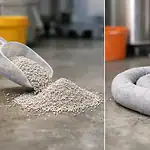
Absorbent booms are long, flexible tubes filled with absorbent material. They are placed around a spill, across the path of a leak or at the entrance to a drain to limit the spread of liquid. Many designs include a durable outer mesh or sleeve, attachment points and internal absorbent fill that holds liquid as it is collected.
On land, booms can be positioned around leaking plant, along a kerb line or in front of stormwater drains. On water, they are commonly connected end to end to create a containment line around oil or fuel. The boom helps concentrate the spill into a smaller area so it can be recovered with suitable pads, pillows, skimmers or other equipment.
A key distinction is that a boom is primarily a containment and absorption tool. It is not a substitute for stopping the source of a leak. Isolate damaged equipment, close valves, upright containers or transfer product where safe to do so. The boom then provides a controlled boundary while the clean-up proceeds.
Choose the boom media for the liquid involved
The most important purchasing decision is the absorbent media. Worksites should not rely on a one-size-fits-all boom where several liquid hazards are present. Review the substances handled on site, their safety data sheets and the likely spill locations before deciding what to stock.
Oil-only booms
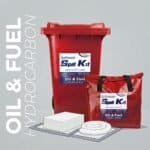
Oil-only absorbent booms are intended for hydrocarbons such as diesel, petrol, lubricants, hydraulic oil and other petroleum-based liquids. Their water-repellent construction allows them to absorb oils while repelling water, making them the practical choice for marine environments, ponds, drainage channels and wet outdoor areas.
This characteristic matters when fuel reaches water. A general-purpose boom may take up water as well as oil, reducing its effective capacity and creating unnecessarily heavy waste. Oil-only booms remain on the surface and target the hydrocarbon layer, which supports more efficient recovery.
General-purpose booms
General-purpose, sometimes called universal, booms are suitable for common non-aggressive workshop and industrial liquids. They can absorb oils, coolants, water-based fluids and many maintenance liquids. They are often useful around machinery, loading areas, warehouses and indoor workspaces where mixed liquid spills are possible.
They are not the right option for every chemical. General-purpose absorbents can be useful for operational spills, but they should not be selected without checking chemical compatibility where corrosives or hazardous substances are involved.
Chemical absorbent booms
Chemical absorbent booms are designed for hazardous chemical response, including many acids, alkalis and unidentified liquids. Their high-visibility colour helps teams identify them as chemical-response equipment rather than general workshop stock.
Compatibility still needs to be verified. “Chemical” is not a blanket approval for every substance. Consult the product information and safety data sheet, particularly for strong oxidisers, reactive materials or products that present inhalation hazards. If a spill produces dangerous vapours or has an unknown reaction risk, isolate the area and follow the site emergency procedure before beginning clean-up.
Size the boom for the site, not just the spill kit shelf
Boom length, diameter and absorbency capacity affect how well a response can be controlled. A small boom may be suitable for placing around a single drum or protecting one drain. A larger diameter boom generally holds more liquid and is better suited to substantial leaks, outdoor areas and waterborne spills.
For fixed risk points, measure the distance that needs to be protected. This could be the perimeter around an above-ground tank, the width of a loading bay or the length of a drain line. Allow extra length for overlaps, corners and connection points. A boom stretched tight across a spill path can leave gaps at the edges, particularly on uneven ground.
For waterways, consider the current, wind and wave action. A boom that performs well in still water can be less effective in moving conditions, where liquid may pass under or around the containment line. Longer runs may require anchors, weighted sections or a deployment plan that positions the boom at an angle to the flow rather than directly across it.
Absorbency ratings also deserve attention. The stated capacity is a guide based on controlled conditions, not a guarantee that every spill will behave the same way. Dust, rainwater, rough surfaces and a fast-moving release can all increase consumption. Holding sufficient replacement booms and absorbent pads near higher-risk areas avoids having containment fail because the first line has reached capacity.
Deploy booms where they will control the spread
The best deployment point is usually between the spill and the place it could cause the most harm. For an indoor oil leak, that may mean laying a boom around the equipment and placing additional protection in front of nearby doorways or drains. For an outdoor fuel spill, protect stormwater entry points early, then build containment around the source.
On smooth concrete, position booms so they sit firmly against the surface and overlap each join. On rough ground, gravel or damaged asphalt, use enough boom to follow the contours. A gap no wider than a finger can still allow liquid to escape under pressure or during rain.
For a waterborne hydrocarbon spill, deploy the boom with the conditions in mind. In calm water, a closed circle around the affected area may be appropriate. In a current, a curved or angled configuration can guide product into a collection area. Avoid handling booms from an unstable edge or vessel without suitable PPE and a safe work method.
Before relying on any boom stock, check four practical points:
- the media suits the liquids handled at the location;
- the boom length and capacity suit the likely spill scale;
- staff can reach it quickly without entering a hazardous area; and
- the site has compatible pads, bags, PPE and disposal arrangements available.
Store booms for fast access and reliable performance
Absorbent booms should be kept close to credible spill risks, not in a distant storeroom that requires a supervisor to unlock. Position them near fuel storage, workshops, chemical handling areas, loading docks, marine operations and drainage-sensitive locations where appropriate.
Keep products dry, protected from direct weather and clearly labelled by absorbent type. Oil-only, general-purpose and chemical products should be easy to distinguish during a response. Packaging that is torn, wet or contaminated should be replaced. A boom that has already absorbed liquid must not be returned to emergency stock.
Consider whether standard spill kits contain enough boom for the risk. A compact kit may be adequate for a minor workshop leak but insufficient for a bulk fuel delivery area or a site with several exposed drains. Supplementary boom packs stored at the point of risk can be more practical than expecting one kit to cover every scenario.
Disposal is part of the response plan
Once used, absorbent booms become contaminated waste. Their disposal requirements depend on the liquid absorbed, local regulations and the waste contractor’s acceptance criteria. Do not place used oil or chemical booms in general rubbish unless the waste stream has been assessed and approved for that purpose.
Bag or containerise used absorbents to prevent further leakage, label them where required and keep them in a secure area pending collection. Record the substance involved and approximate quantity if this supports your site’s environmental or incident reporting process. Where a spill has entered a drain, soil or waterway, escalation and notification obligations may apply under site procedures or relevant authority requirements.
Absorbent booms are a practical control when they are selected before an incident, placed where they can be reached quickly and supported by a clear response process. Stock the type your operation is most likely to need, train staff on where it belongs, and replace used supplies promptly so the next spill does not find the site unprepared.