Why Use Flammable Safety Cabinets at Work?

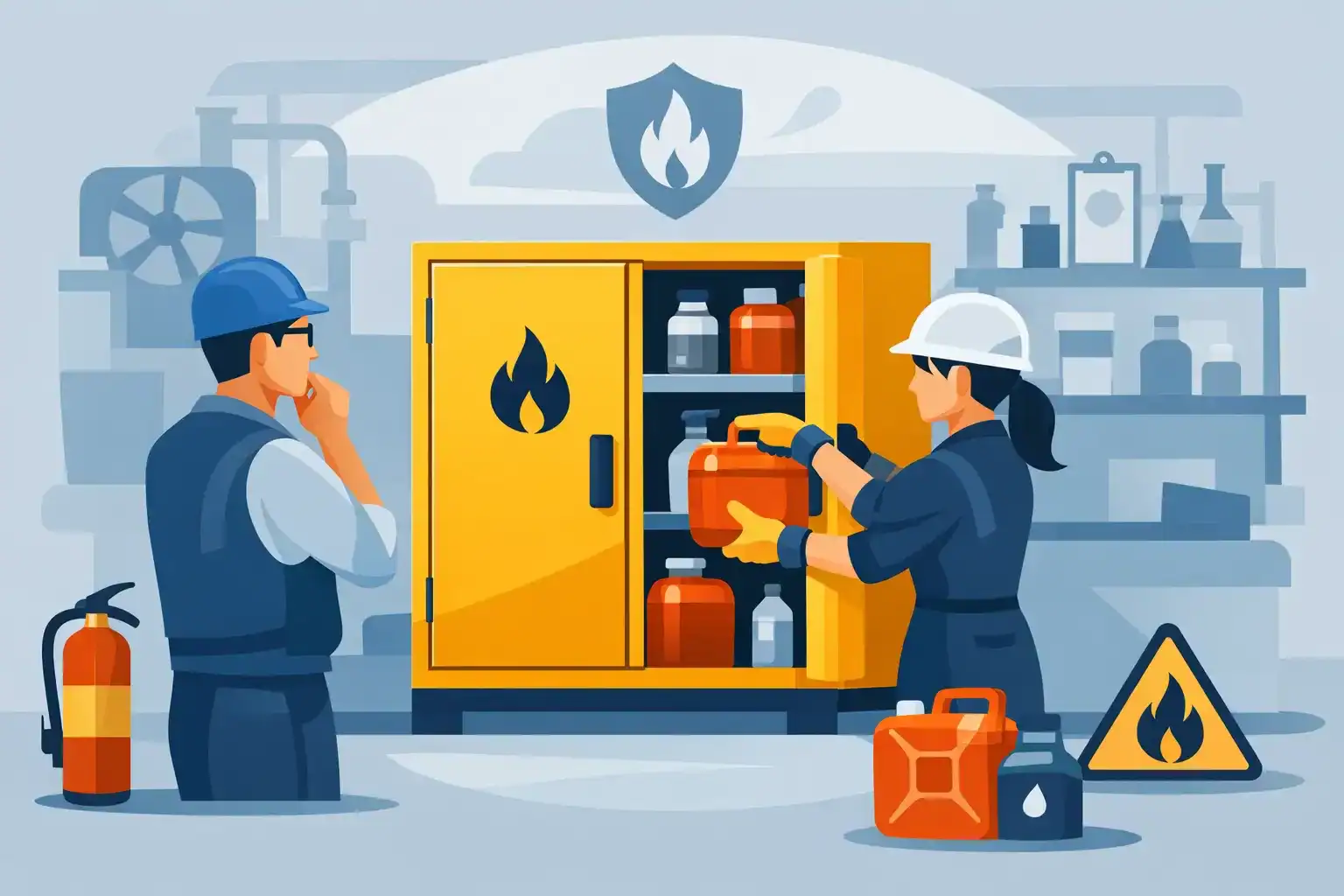
A few litres of solvent on an open workshop shelf can turn a manageable ignition source into a fast-moving workplace emergency. That is the practical answer to why use flammable safety cabinets: they provide a controlled, clearly identified place for storing flammable liquids where they are used, rather than leaving containers exposed in general work areas.
For workshops, warehouses, laboratories, maintenance teams and fuel-handling operations, safe storage is not simply a housekeeping issue. It affects fire risk, worker exposure, emergency response, stock protection and compliance obligations. A fit-for-purpose flammable liquids cabinet helps bring those risks under control without making day-to-day access unnecessarily difficult.
Why use flammable safety cabinets in the workplace?
Flammable liquids release vapours that can ignite well away from the original container. Petrol, thinners, acetone, solvents, paints and some cleaning chemicals all require careful handling because a spark, hot surface, electrical fault or static discharge may be enough to start a fire.
A safety cabinet creates a designated storage point that separates these products from ordinary consumables, ignition sources and traffic areas. It also makes hazardous stock easier to identify during inspections and easier for workers to return after use. When containers are stored wherever space happens to be available, leaks, incompatible storage and unauthorised access become much more likely.
The cabinet itself is designed to delay the impact of external fire and contain a developing incident for a limited period, depending on its construction and fire rating. That time can be critical. It gives people an opportunity to evacuate, allows emergency services to respond and may reduce the chance of fire spreading directly to stored chemicals.
A cabinet is not a guarantee that a fire cannot occur. It is one layer in a broader control system that should also include correct chemical selection, safe decanting practices, ignition control, staff training, spill response equipment and emergency procedures.
Better control of spills and leaks
Small leaks are common in working environments. A cap may not be tightened properly, a container can be knocked over, or a drum tap can drip after use. If flammable products are stored on ordinary shelving, a leak can spread across the floor, enter drains or soak into packaging and other materials.
Quality flammable safety cabinets typically include a liquid-tight sump at the base. This captures a limited volume of leaking liquid and helps stop it from spreading beyond the cabinet. The sump does not remove the need for a spill kit, but it can contain the first stage of an incident and reduce clean-up requirements.
For a site handling solvents or fuels, that containment benefit matters for environmental protection as well as fire safety. Once liquid reaches a drain, soil or stormwater system, a simple warehouse spill can become a reportable environmental problem. Keep compatible absorbents and disposal materials nearby, and ensure workers know what to do before a leak becomes a larger release.
Safer access than improvised storage
There is a reason cabinets are usually positioned close to the point of use but away from direct heat, welding, grinding and vehicle routes. Workers need practical access to chemicals, otherwise they will find workarounds. At the same time, storing cartons of aerosol cans or solvent bottles beside a bench grinder is an obvious risk.
A properly selected cabinet gives a team a workable middle ground. Products can be accessed when required, stock can be secured behind doors, and the storage location can be clearly communicated through induction, signage and site procedures. This is particularly useful across shifts, where a tidy work area can quickly lose control when responsibility is unclear.
Supporting compliance and site inspections
Australian workplaces managing flammable liquids must consider duties under work health and safety laws, dangerous goods requirements, fire safety rules and applicable Australian Standards. The exact requirements vary by state or territory, the type of liquid, quantity stored, building classification and site activity.
AS 1940, the Australian Standard covering the storage and handling of flammable and combustible liquids, is commonly used when assessing storage arrangements. It addresses issues such as quantities, separation distances, cabinet design, ventilation, signage, fire protection and handling practices. Your insurer, local authority, fire engineer or safety adviser may also impose specific requirements.
A flammable safety cabinet can support a compliant storage plan, but buying a cabinet does not automatically make a site compliant. Capacity needs to suit the volume being stored. The cabinet must be appropriate for the substances involved, installed in a suitable location and used as intended. Overfilling shelves, storing incompatible chemicals together or leaving doors propped open defeats much of the purpose.
For inspections, a defined cabinet makes it easier to demonstrate control. An inspector can see where flammable liquids are held, whether containers are labelled, whether a current safety data sheet register is available and whether spill response supplies are accessible. That level of order helps supervisors identify problems before they become a safety incident.
What a suitable cabinet should provide
Not every metal cupboard is suitable for flammable liquids. General storage cabinets may offer security, but they are not necessarily engineered to manage fire exposure or liquid containment. Buyers should assess the product specification rather than relying on appearance alone.
When selecting a cabinet, consider these practical requirements:
- A recognised fire-resistance rating suitable for your risk assessment and workplace requirements.
- A liquid-tight spill sump sized to retain leaks from stored containers.
- Shelves designed for the intended load and compatible chemical use.
- Self-closing or close-fitting doors, depending on the cabinet design and applicable requirements.
- Clear flammable-liquid signage and a lockable arrangement where access needs to be controlled.
- Capacity that allows for current stock, sensible spacing and anticipated operational demand.
Also check the cabinet’s external dimensions, not just its litre capacity. It needs to fit the proposed location without blocking egress paths, access to emergency equipment, electrical panels or forklift routes. A cabinet placed in the wrong location can create a new hazard while solving another. You can also review our flammable storage cabinet regulations guide when assessing the broader storage requirements.
Capacity and quantity are not the same decision
It is tempting to select the largest cabinet available and place every solvent, aerosol and fuel container inside. In practice, larger capacity is not always the safer choice. Storage limits may apply to a work area, and greater quantities in one location can increase consequences if there is a fire.
Start with the amount genuinely required for routine operations. Keep bulk stock in an appropriate dedicated storage area where necessary, then hold only the operational quantity near the point of use. This approach reduces clutter and gives teams a clearer view of what is on hand.
If several departments use flammable liquids, multiple smaller cabinets may be more practical than one central unit. It depends on travel distances, supervision, total quantities and the controls already in place on site.
Installation and use still matter
A cabinet only performs as expected when it is used correctly. Place it on a stable, level surface and follow the manufacturer’s installation instructions, including any anchoring requirements. Do not modify shelves, drill holes for convenience or use the cabinet as a workbench unless its design specifically allows it.
Keep containers closed when not in use, use approved safety containers where appropriate, and inspect the sump and shelves regularly for residue, corrosion or damaged packaging. Empty containers can also contain flammable vapours, so they should not be treated as harmless rubbish.
Ventilation is another area where sites should avoid assumptions. Whether cabinet ventilation is required, permitted or beneficial depends on the cabinet design, the substances stored and the relevant standard or site assessment. Connecting a cabinet to ducting without professional advice may compromise its fire performance. Seek competent guidance where ventilation is being considered.
The same applies to incompatible substances. Flammable liquids should not automatically be stored with oxidisers, corrosives, toxic chemicals or gas cylinders simply because there is room available. Review safety data sheets and segregation requirements before combining products in any storage cabinet.
A practical investment in incident prevention
The cost of a flammable safety cabinet is modest compared with the disruption caused by a workshop fire, environmental release, damaged stock or failed compliance inspection. More importantly, it gives workers a simple, repeatable way to store hazardous liquids properly at the end of each task.
For sites that use flammable products routinely, the right flammable liquids storage cabinet should be treated as core safety equipment alongside spill kits, absorbents and PPE. Select it around the substances, quantities and layout of your operation, then keep it maintained and used as part of normal work practice. Safe storage works best when the correct option is also the easiest option for the team.