Drain Wardens for Fast Spill Containment

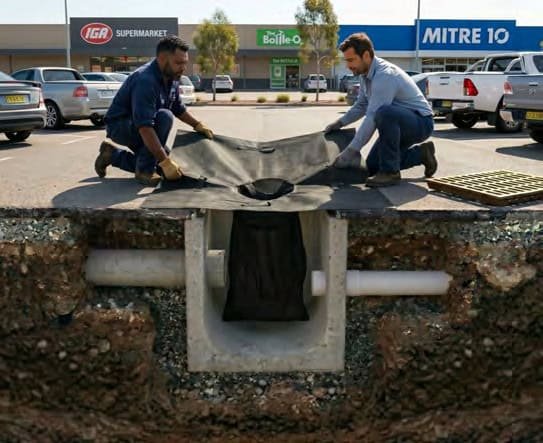
A spill travelling across a workshop floor, loading bay or hardstand can reach a stormwater grate in seconds. Once it enters the drainage system, recovery becomes far more difficult and the potential environmental and compliance consequences increase. Drain wardens give site teams a fast, practical way to isolate exposed drains while the spill is contained and cleaned up.
They are not a substitute for good storage, bunding or spill response planning. They are, however, a critical first-response control for sites where oil, fuel, coolant, chemicals or contaminated water could reach stormwater infrastructure.
What are drain wardens?
Drain wardens are flexible drain covers designed to create a temporary seal over stormwater drains. Most are made from a tacky, non-absorbent polyurethane material that conforms to relatively smooth surfaces and helps prevent liquid from passing through the grate below.
The material grips the surrounding surface without adhesives, allowing the cover to be lifted, cleaned and reused when it remains in serviceable condition. This makes drain wardens well suited to workshops, warehouses, fuel handling areas, transport depots, plant rooms, maintenance bays and outdoor work areas with known drainage points.
A drain warden is a containment control, not an absorbent. It does not remove the spilled liquid or neutralise a hazardous substance. Its job is to buy time: stop the spill entering the drain, establish containment around the source, then recover the product using the appropriate absorbents, drain protection and contaminated waste bags.
Why exposed drains need a response plan
Stormwater systems are generally intended to carry rainwater away from a site. Depending on the location, they may discharge to kerbs, waterways, groundwater systems or other public drainage infrastructure. Oils, fuels, detergents, coolants, paints and many chemicals can create an environmental incident when released to stormwater.
The operational problem is speed. A minor hose failure or knocked container may be manageable on open concrete, but the same spill becomes more complex once it has passed through a grate. Cleaning may require vacuum recovery, drain flushing, specialist contractors or notification under site and environmental procedures.
For this reason, drain protection should be located where it can be reached immediately. Keeping a drain warden in a locked store at the other end of a facility limits its value during the first minutes of a spill. Position protection close to high-risk drains, spill kits, refuelling points and chemical handling areas, with clear instructions for use.
How to use a drain warden during a spill
The first priority is always personal safety. If the substance is unknown, highly hazardous, flammable or producing vapour, workers should follow the site emergency procedure and use suitable PPE. Do not step into liquid or attempt to handle a spill without understanding the risks.
Where it is safe to act, place the drain warden directly over the drain as early as possible. Ensure the cover extends beyond the grate or inlet on all sides and press it into contact with the surrounding surface. The aim is to form continuous contact around the opening, not simply place the cover loosely over the centre of the grate.
Next, stop the source if this can be done safely. Upright the container, close the valve, isolate the pump or use a compatible temporary repair product. Then place absorbent socks, booms or other barriers around the spill to prevent it spreading. Pads, rolls, granules or loose absorbent can be used to recover the liquid, provided they are suited to the material involved.
After clean-up, inspect the drain warden before returning it to storage. Remove contamination in accordance with the substance safety data sheet and your site waste process. A cover that is torn, heavily degraded or unable to sit flat should be replaced rather than relied on for the next incident.
Selecting the right drain protection
The best drain warden is one that properly covers the drain and suits the conditions where it will be deployed. Measure the full opening and allow enough overlap for a reliable seal. A small circular cover may be appropriate for a standard round grate, while a larger square or rectangular mat may be needed for trench drains, kerb inlets or oversized pits.
Surface condition matters. Tacky polyurethane covers perform best on clean, smooth, non-porous surfaces such as sealed concrete. Rough asphalt, damaged concrete, uneven pavers or surfaces with heavy debris can reduce contact and allow liquid to track underneath. In these situations, a drain warden may still form part of the response, but it should be supported by absorbent booms, socks or other barriers and tested within the site’s spill response arrangements.
Chemical compatibility also needs consideration. Many drain covers are intended for short-term contact with common oils, fuels and water-based liquids, but no single product is suitable for every chemical. Check the manufacturer’s information and the relevant safety data sheet where strong solvents, corrosives or aggressive chemicals are present. If a product may soften, swell or react with the substance, choose an alternative containment method.
For sites with several drain types, it is often more practical to standardise a small range of sizes rather than keep one cover for every opening. Map drains across the facility, identify those closest to transfer areas and chemical stores, and assign suitable protection to each risk zone.
Drain wardens work best with other controls
A drain cover is most effective when it sits within a wider spill control system. Bunding reduces the chance of a release spreading beyond a storage area. Spill pallets capture leaks from drums and IBCs. Drip trays manage small leaks beneath equipment. Absorbents recover released liquid. Together, these controls reduce reliance on emergency action alone.
For example, a diesel dispensing area may need a drain warden near the nearest stormwater grate, absorbent socks to divert surface flow, fuel absorbent pads for recovery, and a suitable spill kit located within the work area. The exact combination depends on volumes handled, surface drainage, likely spill types and the time it would take for a spill to reach a drain.
Do not overlook weather. During heavy rain, runoff can move quickly across hardstand areas and may affect how a cover sits over a drain. Water pooling around a drain warden can also make it harder to judge whether the seal is holding. Sites with outdoor operations should account for wet-weather response in their spill plans and inspect stormwater controls regularly.
Inspection, storage and training
Drain wardens require very little maintenance, but they should not be treated as fit-and-forget equipment. Include them in routine spill kit inspections. Check that each cover is present, clean, pliable and free from splits, curled edges or embedded debris. Confirm that workers can access it without moving stock, vehicles or locked equipment.
Store covers flat where possible, away from direct sunlight, excessive heat and sharp objects that could distort or damage the material. If a cover is supplied with protective film or packaging, retain it until use to keep the contact surface clean.
Training should be practical. Teams need to know which drains are stormwater drains, where the protective covers are kept and when to use them. A brief spill drill can quickly reveal problems that are not obvious on paper, such as a drain cover that is the wrong size, a blocked access route or uncertainty over who is authorised to stop a pump.
Common mistakes to avoid
The most common error is waiting until a spill has reached the drain before deploying protection. If a task carries a known risk of release, such as decanting chemicals or servicing hydraulic equipment near a grate, place the drain warden before work begins where appropriate.
Another mistake is assuming every drain leads to the same place. Some sites have separate stormwater, sewer and trade-waste systems, while older facilities may have more complex arrangements. Clearly identify drains and maintain up-to-date site drainage plans so workers can make informed decisions during an incident.
Finally, avoid treating a drain cover as a permanent solution for leaking equipment or poor housekeeping. Repeatedly needing emergency drain protection is a signal to review the source of the problem, improve containment and address maintenance issues.
A drain warden is a simple piece of equipment, but its value lies in being ready at the exact point where a contained spill could become an off-site problem. Choose the right size, keep it accessible, and make its use part of the way your team responds before liquid reaches the grate.