How to Restock a Spill Kit Properly

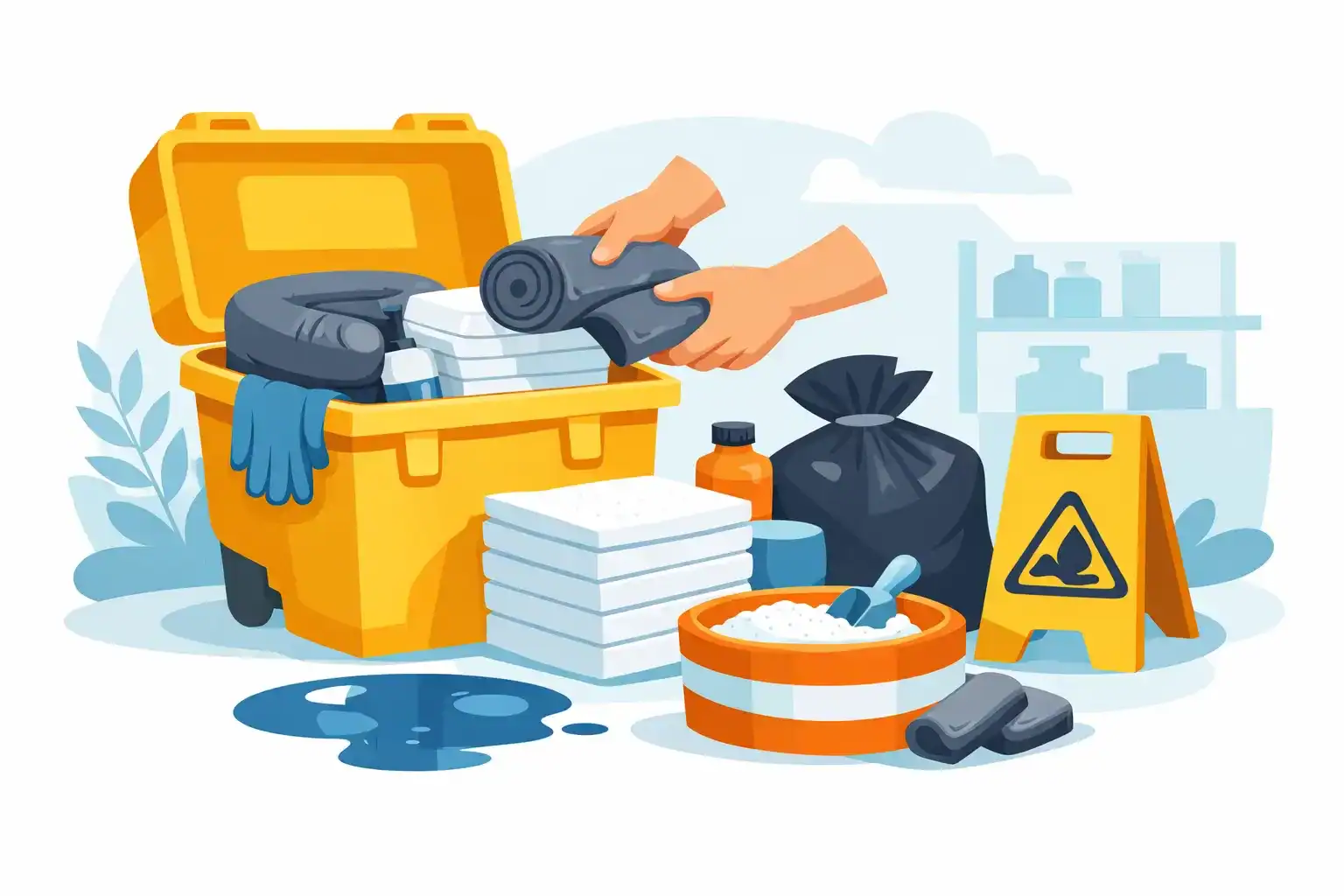
A spill kit that looks full from the outside can still leave your team short when a leak or drum failure happens. Used absorbents get stuffed back in, gloves go missing, disposal bags tear, and suddenly the kit on the floor is not actually ready for use. If you need to know how to restock a spill kit properly, the goal is simple – return it to full operational readiness, not just make it look complete.
For most sites, restocking is not a paperwork exercise. It affects response time, worker safety and whether the kit is fit for the type of spill it was assigned to handle. A workshop kit used on oils and coolants has different refill needs from a chemical spill kit in a warehouse or a marine kit near fuel transfer points. That is why restocking should follow the kit type, the spill risk and what was actually used.
How to restock a spill kit without gaps
The best way to restock a spill kit is to treat it like any other critical safety equipment. Start with the original kit specification, inspect what remains after the incident or drill, replace every used or damaged component, and confirm the contents still match the intended hazard class.
That last point matters. A common mistake is topping up a chemical kit with whatever absorbents are on hand. If the replacement items are not compatible with the liquids stored or handled on site, the kit may no longer be suitable. General purpose absorbents, oil-only absorbents and hazchem absorbents are not interchangeable in every situation.
Before you add anything back in, isolate the used contents that were involved in the spill response. Contaminated absorbent pads, socks, booms, PPE and waste bags should be removed and disposed of according to your site procedure and the nature of the spilled substance. Do not fold dirty items back into the kit to make the numbers look right. A restocked kit must be clean, complete and ready for immediate deployment.
Start with the kit inventory, not guesswork
Every spill kit should have a contents list or standard packing configuration. If yours does not, now is the time to create one. Without an inventory, restocking becomes inconsistent and over time the kit drifts away from its original purpose.
Check the label on the container, the original purchase record or the internal site register. You want to know the absorbent capacity, absorbent type and accessory count. That usually includes pads, rolls, absorbent socks or booms, disposal bags, ties, gloves, goggles and in some cases coveralls or a dustpan and brush.
Capacity is where many sites get caught out. If a 120 litre kit has had half its pads used and both containment socks deployed, it is no longer a 120 litre response kit even if the bin is still there. Restocking means restoring the kit to the stated capacity, not adding a few loose items and hoping it will do.
If the original contents list cannot be confirmed, rebuild the kit based on the risk at that location. Match the absorbents to the likely liquid, include suitable PPE, and make sure there are enough containment components to stop spread before clean-up starts. In practice, that usually means replacing socks and booms first, because they are often the first line of control.
Replace used items with the right refill type
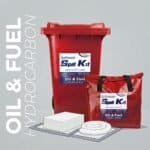
Spill kit refills are easiest to manage when they are bought by kit type. Oil and fuel response kits should be replenished with oil-only absorbents designed to repel water and pick up hydrocarbons. General purpose kits need absorbents suited to mixed workplace liquids such as oils, coolants, solvents and water-based fluids. Chemical kits need products selected for more aggressive or unknown substances, along with PPE that reflects the hazard.
This is not just about convenience. It helps maintain consistency across multiple sites and reduces the chance that the wrong products end up in the wrong bin. For larger operations, standardising refill packs against each kit size can simplify procurement and keep store holdings under control.
There is also a cost judgement to make. If only a few items were used, replacing individual components may be enough. If the kit was heavily deployed, a complete refill pack is often the cleaner option because it resets the contents in one go. It also makes auditing easier.
Check PPE and disposal items closely
Absorbents get most of the attention, but spill kits fail just as often because the support items are missing. Gloves are borrowed for other jobs, waste bags split, goggles crack, and instruction sheets disappear. A kit without the right PPE is not properly restocked.
Inspect gloves for size relevance as well as count. If the kit is in a high-use area, keeping only one glove size may slow response or encourage staff to skip hand protection altogether. Check whether the chemical resistance of the gloves still matches the hazard. The same applies to eye protection and coveralls where required.
Disposal bags and ties need to be replaced whenever they are used, torn or contaminated. If your procedure requires labelled waste bags or specific disposal packaging for dangerous goods, make sure the refill matches that requirement. Restocking should support compliant disposal, not just the initial clean-up.
Inspect the container while you restock
Knowing how to restock a spill kit properly also means checking the bin, bag, wheelie unit or cabinet itself. Hinges break, lids stop sealing, wheels fail and labels fade. If the container is damaged, the contents may deteriorate or the kit may not be clearly identifiable in an emergency.
Look at the condition of the outer container and the internal packing. Wet, dusty or UV-damaged absorbents should be replaced even if they were never used. If a mobile kit no longer moves easily, that is a practical problem during response. If the external label does not clearly state the kit type, there is a real risk of delay or misuse.
This is also the right time to confirm the kit is still in the correct location. Worksites change. Fuel handling gets moved, new chemicals are introduced and traffic patterns shift. A well-stocked spill kit placed too far from the hazard is still a weak control.
Record the restock and reset inspection dates
After the contents are restored, update the inspection tag, checklist or site register. Record what was used, what was replaced and when the kit was returned to service. For compliance-focused sites, this matters as much as the physical refill. It shows that the kit has been checked and maintained rather than assumed to be ready.
The record should also note anything unusual, such as repeated use of the same kit, missing PPE, or a mismatch between the spill type and the absorbents that were originally supplied. Those details help procurement and safety teams decide whether the kit size, type or placement needs to change.
Inspection frequency depends on the environment. High-risk areas such as workshops, loading zones, fuel stores, plant rooms and marine handling points generally need more frequent checks than low-activity storage areas. Monthly may be suitable in one location, while another may justify weekly visual checks with formal recorded inspections at set intervals.
When a partial refill is not enough
Some kits are restocked item by item for years and become a mixed collection of whatever was available at the time. That approach can work in low-use environments, but it often creates inconsistency in fast-moving industrial settings.
If the kit has been deployed multiple times, if products inside are no longer uniform, or if the site hazard has changed, a full reset is usually the better option. Replace the contents to a standard specification, relabel the kit if needed, and make sure staff know what is in it. This is especially relevant after process changes, new chemical storage, or relocation of equipment.
For multi-site businesses, it is worth aligning spill kits and spill kit refills across locations wherever practical. Consistent kit formats make training simpler and reduce delays during reordering. Suppliers that specialise in spill response categories, such as Spillmaster, can also make it easier to source matching refills rather than piecing them together from general industrial stock.
A practical standard for ongoing readiness
A properly restocked spill kit should meet three tests. It must contain the right absorbents for the hazard, the right accessories for safe response and disposal, and the full capacity the kit label suggests. If any one of those is missing, the kit is not ready.
That is why restocking should happen straight after use, not when someone remembers during the next audit. The longer a half-empty kit sits in place, the more likely it is to be relied on at the worst possible moment. Keep the inventory clear, use the right refill type, and treat every kit as operational equipment rather than shelf stock.
The real value of a spill kit is not in owning one. It is in knowing that when something leaks, tips or ruptures, the kit nearest the problem is complete, suitable and ready to go.