OSHA Flammable Liquid Storage Rules Explained

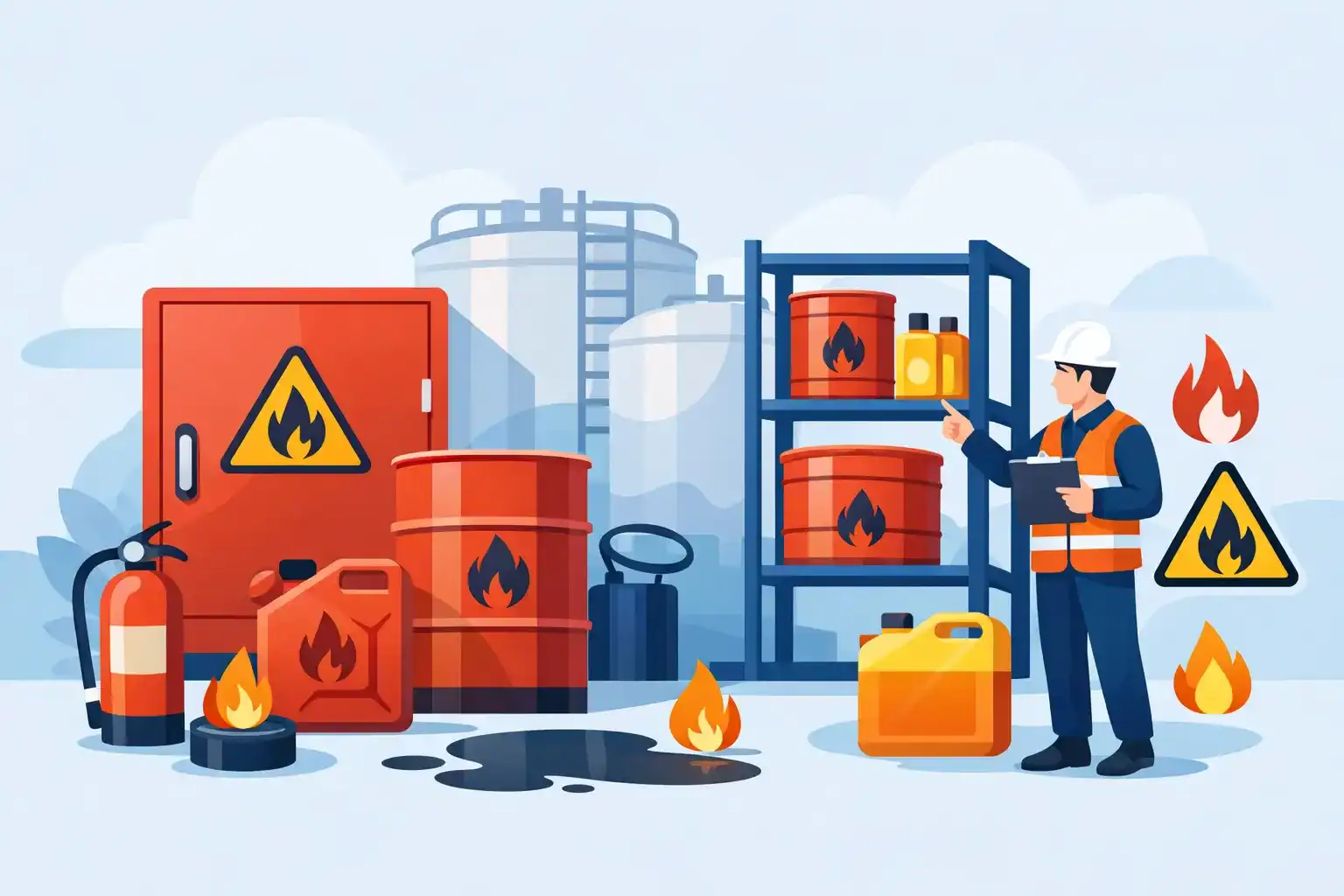
A flammable liquid incident rarely starts with a dramatic mistake. More often, it starts with everyday shortcuts – a drum left near a doorway, solvent decanted into the wrong container, or a cabinet used as overflow because the storeroom is already full. That is why OSHA flammable liquid storage rules still matter well beyond the US. They set out a clear framework for how flammable and combustible liquids should be classified, contained and separated to reduce fire risk in real workplaces.
For Australian buyers, the key point is this: OSHA is not the local regulator, but many multinational operators, contractors and procurement teams still reference OSHA requirements alongside Australian standards and site-specific rules. If you are specifying cabinets, spill pallets, safety cans or fuel-handling controls, understanding the OSHA approach helps you make better storage decisions and spot gaps before they become incidents.
What OSHA flammable liquid storage rules cover
OSHA regulates flammable and combustible liquids under 29 CFR 1910.106. In practical terms, the rule deals with how liquids are classified, what containers can be used, when approved cabinets are required, and how storage areas should be designed and managed.
The regulation is built around the flash point of the liquid. Lower flash point products present a higher ignition risk and generally require tighter controls. Petrol, many solvents, thinners and some cleaning chemicals fall into the higher-risk end of the range. Diesel may be treated differently because it is usually combustible rather than flammable, but that does not make it low risk in storage or handling.
For most workplaces, the rule is not just about where the drum sits. It is about the full storage system – container compatibility, ignition source control, ventilation, segregation, spill containment and the amount kept in each area. That is why compliance often depends on several pieces of equipment working together rather than a single cabinet or pallet.
Classification matters more than people think
One of the most common issues on site is treating all fuel and solvent products as though they carry the same storage risk. OSHA does not do that. It classifies liquids by flash point and, in some cases, boiling point. That classification then affects storage quantities and precautions.
This matters during purchasing as much as during auditing. If a site stores mixed products in one area, the highest-risk liquid often drives the control measures. A workshop storing a few tins of paint thinners, aerosol products and waste solvent may need a different setup from a warehouse storing sealed drums of higher flash point oil products.
It also matters for temporary storage. Decanting from bulk containers into smaller vessels can quietly increase exposure if the smaller containers are not approved, correctly labelled or kept in suitable storage between tasks. The safest setup is usually one that reduces unnecessary transfers and keeps the product in an approved container for as long as possible.
Storage cabinets under OSHA flammable liquid storage rules
For day-to-day operations, flammable liquid storage cabinets are often the most visible control. OSHA permits storage of limited quantities of flammable and combustible liquids in approved cabinets, and those quantity limits are one of the first things safety teams check.
A commonly cited OSHA limit is no more than 250 litres of Category 1, 2 or 3 flammable liquids in a cabinet, or up to 500 litres of Category 4 combustible liquids. Sites dealing in mixed classes need to assess the total load carefully rather than assume the cabinet can simply take whatever fits physically.
Cabinet construction also matters. OSHA recognises specific performance criteria, including a double-walled design, a liquid-tight sill at the bottom, and a construction standard intended to limit internal temperature rise during a fire. In plain terms, a compliant cabinet is not just a metal cupboard painted yellow. It is a purpose-built safety control.
There are practical trade-offs here. A larger cabinet can improve housekeeping by centralising storage, but it can also encourage accumulation if stock control is poor. A smaller cabinet near the work area may support safer access and less handling, but only if refill practices are disciplined. The right answer depends on throughput, container size and whether the area is used for storage only or active dispensing.
Approved containers and safety cans
OSHA places clear emphasis on approved containers. That includes the use of suitable safety cans for smaller quantities of flammable liquids. These are designed to control vapour release, resist damage and reduce the chance of flashback ignition.
This is where many sites come unstuck. Reused food containers, open-top tins and general-purpose plastic jerry cans are still seen in maintenance areas and workshops. Even when used for convenience, they can create an avoidable compliance and fire risk. Container compatibility is also critical. Some chemicals attack seals, plastics or coatings over time, which means the right container for one liquid may be unsuitable for another.
If the task requires frequent pouring or dispensing, it is worth checking whether the chosen container reduces spills as well as meeting storage requirements. A compliant container that dribbles product during every transfer still creates exposure, housekeeping and ignition issues.
Quantity limits outside cabinets and inside rooms
Storage limits are not only about what fits inside a cabinet. OSHA also sets expectations around quantities stored outside approved cabinets or dedicated storage rooms. The more product held in open work areas, the more critical it becomes to control ignition sources, traffic, access and spill paths.
This is why layout matters. A compliant cabinet placed beside a welding bay, emergency exit or forklift charging point may still create an unacceptable risk. Equally, drums stacked neatly without secondary containment may satisfy space pressure but fail the site when a leak occurs.
Where larger quantities are stored, a dedicated room or detached storage area may be more appropriate than adding cabinet after cabinet inside an operational area. That shift usually improves control over ventilation, segregation and fire protection, but it comes with higher fit-out and management requirements. For lower-volume users, cabinet storage remains the more practical option.
Grounding, bonding and ignition control
A major part of OSHA flammable liquid storage rules is preventing ignition during transfer. Static discharge is an obvious risk during dispensing from drums or intermediate containers, particularly with low flash point liquids.
Grounding and bonding become important when transferring product between conductive containers. The aim is to equalise electrical potential and reduce the chance of a spark. This is not an optional technical extra for high-volume sites. If flammable liquid movement is part of normal work, transfer controls should be built into the process, not added after a near miss.
Ignition source control goes further than electrical sparks. Hot work, non-rated equipment, mobile plant, heaters and even poor housekeeping can turn a small vapour release into a serious event. Storage is only compliant in practice when the surrounding area is managed properly.
Ventilation, spills and secondary containment
OSHA focuses strongly on fire risk, but liquid storage also creates spill and environmental exposure. That is where practical controls such as bunding, spill pallets and nearby spill kits become part of the real-world storage system.
A cabinet may contain small leaks internally, but it is not a substitute for broader spill planning where drums, decanting or waste accumulation are involved. If a forklift clips a drum outside the cabinet area, the response will depend on whether the site has suitable containment and absorbent materials ready to go.
Ventilation also deserves a measured approach. More ventilation is not always automatically better if it spreads vapours into a wider area or interferes with fire separation. The design has to match the liquid type, storage quantity and room function. This is one area where buyers should avoid one-size-fits-all assumptions.
How Australian sites should use OSHA as a reference
For Australian operations, OSHA should be treated as a useful benchmark, not a replacement for local legal duties. You still need to align storage decisions with Australian standards, dangerous goods requirements, building rules and your own site risk assessment.
That said, OSHA is often helpful when reviewing imported procedures, working with global contractors or specifying equipment for a business that operates across regions. The core principles are familiar: classify the liquid correctly, store only what is needed, use approved containers, separate ignition sources, and provide containment for both fire and spill scenarios.
If you are buying equipment, the practical question is not just whether a cabinet or spill control product exists. It is whether the selected setup matches the liquid class, the stored quantity, the way the product is handled on site and the compliance framework your business actually works under. That is where specialist suppliers such as Spillmaster add value – not by overcomplicating the job, but by helping buyers match the right storage and spill-control equipment to the risk.
A good storage system should make the safe option the easy option. If staff can identify the correct cabinet, use the right container and respond quickly to a leak without improvising, you are already ahead of most of the failures that lead to flammable liquid incidents.