What Goes in a Spill Kit?

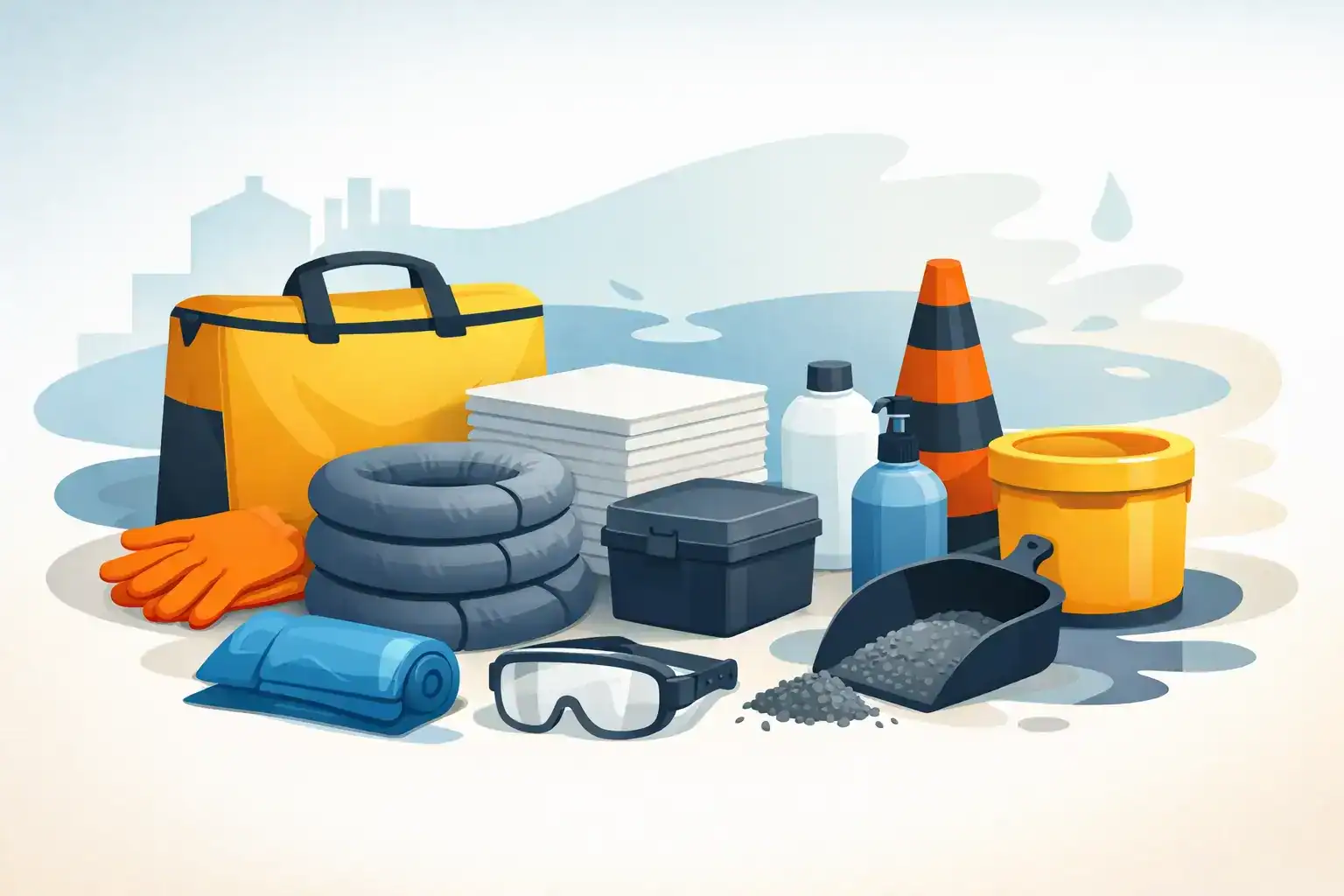
A spill kit that looks complete on the shelf can still fail when a real spill happens. The issue is usually not the container – it is the contents. If you are working out what goes in a spill kit, the answer depends on the liquid, the size of the likely spill, and the conditions on site.
For most workplaces, a spill kit is not just a box of absorbent pads. It is a practical response system. It needs to help workers stop a spill from spreading, protect themselves while responding, clean up the liquid safely, and dispose of contaminated waste in line with site procedures. If one of those steps is missing, the kit is incomplete.
What goes in a spill kit for most workplaces
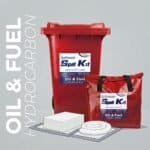
A standard spill kit usually includes absorbent pads, absorbent socks or booms, loose absorbent material, PPE, disposal bags, and basic instructions. Some kits also include drain covers, a dustpan and brush, or chemical-resistant containers, depending on the hazard.
The exact mix matters. Pads are useful for fast surface pick-up, but they do not stop a spill travelling across the floor. Socks and booms are there to contain and direct the liquid. Loose absorbent helps with uneven ground or awkward corners where pads alone are not enough. Disposal bags finish the job by giving workers a way to isolate contaminated waste immediately.
That combination is what turns a spill kit from a compliance item into something operationally useful.
Absorbent pads
Pads are often the first item people think of, and for good reason. They are quick to deploy, simple to handle, and effective for wiping up pooled liquid once the spill has been contained. In workshops, warehouses, loading areas and plant rooms, pads do most of the visible clean-up work.
Even so, they are only one part of the response. A kit stocked with pads but no containment products is likely to be slow and wasteful in a larger spill. Workers end up chasing liquid instead of controlling it.
Absorbent socks and booms
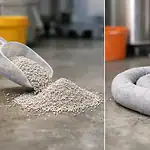
Socks and booms are designed to contain spills before they spread. They can be placed around leaking drums, across doorways, around machinery, or near drains. On hardstand areas or workshop floors, they are often the most important part of the initial response.
The difference between a sock and a boom depends on the application and volume. Smaller socks suit internal areas and tighter spaces. Larger booms are better for bigger spill paths or outdoor use. In marine or fuel-handling environments, specialised booms may also be needed for water-based containment.
Loose absorbent or particulate absorbent
Loose absorbent is useful when the surface is rough, cracked, grated or irregular. It can also be the better option for heavier spills where liquid has spread into areas pads cannot reach cleanly. Granular or particulate absorbents are common in industrial kits for exactly this reason.
There is a trade-off, though. Loose absorbent can create more waste volume than pads, and clean-up may take longer. For some indoor sites focused on speed and housekeeping, pads and socks are preferred unless the risk profile clearly calls for a particulate product.
Disposal bags and contaminated waste handling
A spill response does not end when the liquid is absorbed. Used pads, socks, absorbent material and contaminated PPE need to be isolated and removed properly. Heavy-duty disposal bags are a standard inclusion because they keep the waste contained and make the clean-up process more controlled.
For hazardous chemicals, the waste handling requirements may be stricter than for oil or coolant spills. That is where site procedures, SDS information and waste contractor requirements need to line up with what is in the kit.
Personal protective equipment
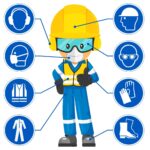
PPE belongs in the spill kit because workers may not have time to source it once a spill has occurred. At a minimum, this often means gloves. Depending on the hazard, it may also include goggles, coveralls, masks or face protection.
This is one of the most overlooked parts of kit selection. The absorbent may be suitable for the spill, but if the PPE is wrong for the substance, the response is compromised. A kit near fuel storage will not necessarily need the same protective equipment as one intended for corrosive chemicals.
The contents change by spill type
Not all spill kits are built for the same liquids. That is why asking what goes in a spill kit without considering the actual hazard can lead to the wrong purchase.
Oil and fuel spill kits
Oil and fuel kits are designed for hydrocarbons such as diesel, petrol, lubricants and hydraulic fluids. They commonly use absorbents that repel water and target oil-based liquids. That makes them suitable for workshops, transport yards, marine settings and fuel handling areas.
If there is any chance the spill could reach stormwater or open water, hydrocarbon-specific absorbents and containment products are especially important. A general-purpose kit may not give the same performance.
General-purpose spill kits
General-purpose kits are used for non-aggressive liquids such as coolants, water-based fluids, mild chemicals and common workshop spills. They are often a practical choice for mixed industrial environments where the risk is broad but not highly specialised.
The limitation is that they are not the right answer for every hazardous substance. If the site stores strong acids, caustics or unknown chemicals, a general-purpose kit may leave a gap in protection.
Chemical spill kits
Chemical spill kits are made for more hazardous substances and usually include absorbents selected for a wider range of chemical compatibility. The PPE requirements also tend to be more important here, because skin contact, vapours and splash risks may be higher.
These kits are common in laboratories, manufacturing plants, chemical storage areas and sites with dangerous goods handling. Where corrosives or reactive chemicals are involved, suitability should never be assumed. The kit contents need to match the substances on site.
Size matters as much as contents
A well-stocked kit can still be the wrong kit if the capacity is too small. Spill kits are commonly sized by absorbency, and that figure should reflect the credible spill risk rather than the smallest possible leak.
A small workshop dealing with occasional oil drips may only need a compact mobile kit. A warehouse with multiple IBCs, drum decanting or fuel transfer points may need larger wheeled kits positioned close to the hazard. Outdoor locations often need higher-capacity kits because spills can spread quickly and access can be less controlled.
This is where buyers often need to think beyond compliance. If a spill from your largest container cannot be realistically contained with the kit on hand, the contents list is not the real problem – the kit size is.
Other items that are often worth including
Some spill kits include extras that make response faster and safer. These are not always standard, but they can be valuable depending on the site.
Drain covers are useful where there is a risk of product entering stormwater. A dustpan and brush help with used absorbent collection. Instruction cards or spill response guides support consistency, especially across larger teams or shift-based operations. In some settings, caution tape or temporary signage also makes sense to isolate the area during clean-up.
These additions are not filler. They can make the difference between a controlled response and a messy one, particularly where multiple people may use the kit.
How to check if your spill kit contents are right
The easiest way to assess a spill kit is to work backwards from the likely incident. What liquids are on site? Where are they stored or transferred? Could they reach drains, soil, trafficable areas or waterways? What PPE is needed to respond safely? How much waste would a clean-up generate?
Once those questions are answered, the kit contents become clearer. A site handling diesel near stormwater pits needs a different mix from a maintenance room dealing with coolant and minor oil leaks. A chemical store with corrosives may need stronger PPE and chemically compatible absorbents. There is no single contents list that suits every workplace.
This is also why refills matter. A spill kit that has been partly used and not replenished is effectively undersized. Regular checks should confirm not just that the container is present, but that the absorbents, PPE and waste bags are still complete and serviceable.
Compliance is part of the answer, not all of it
Compliance is a valid reason to have spill kits on site, but it should not be the only one driving the decision. The real test is whether your team can respond quickly with the equipment provided. That means clear product selection, sensible kit placement, and contents suited to the actual liquids and work areas involved.
For buyers managing multiple hazards, the best approach is usually to standardise where possible and specialise where necessary. General-purpose kits can cover common risks across a site, while dedicated oil and chemical kits are placed where those hazards are concentrated. That balance helps control cost without creating gaps in response capability.
If you are reviewing what goes in a spill kit, treat it as a site risk question rather than a packing list. The right contents are the ones that let your team contain the spill, protect themselves, and manage the waste properly the first time. That is what keeps response practical when the pressure is on.”View our full range of compliant industrial Spill Kits.”