IBC Leak Prevention for Safer Site Storage


A 1,000-litre IBC can turn a small fitting failure into a major site incident quickly. Product can escape beneath racking, enter stormwater drains, create slip hazards and expose workers before anyone has time to move a drum or find a spill kit. Effective IBC leak prevention is therefore not just about responding well when something goes wrong. It starts with how containers are selected, received, stored, handled and contained every day.
For warehouses, workshops, fuel-handling areas and industrial sites, the objective is straightforward: keep hazardous liquids inside the IBC, contain any loss at the point of storage, and ensure workers can act without delay if a leak occurs.
Start with the condition of every IBC
An IBC is not a permanent storage solution simply because it still looks serviceable from a distance. The plastic inner bottle, steel cage, pallet base, cap assembly and discharge valve all have different failure points. UV exposure can degrade plastic, forklift contact can distort the cage, and repeated opening or over-tightening can damage valve threads and seals.
Inspect each IBC when it arrives on site and before it is moved into storage. Check for bulging bottle walls, cracks, staining, dampness around the valve, damaged caps, corrosion on the cage, broken pallet runners and signs of previous impact. If the contents are hazardous, verify that the label remains readable and that the product is compatible with the container.
Pay particular attention to the outlet valve. A valve can appear closed yet seep through a worn seal or damaged thread. Caps fitted over the valve outlet provide useful secondary protection, but they do not replace a sound valve. If there is evidence of leakage, isolate the IBC from sound stock, place it within suitable containment and arrange safe transfer or disposal according to the product’s safety requirements.
Do not rely on age alone
A newly supplied IBC can be damaged in transit, while an older unit may remain suitable if it has been properly protected and inspected. Storage life depends on the liquid, exposure to heat and sunlight, handling frequency, container specification and manufacturer guidance. The practical rule is to assess condition and compatibility, not to assume every IBC has the same service life.
IBC leak prevention depends on correct placement
Where an IBC sits matters as much as its condition. Storing a container directly on a warehouse floor leaves little margin for error. A minor valve leak can travel across a large area, reach drains or become hidden beneath pallets and equipment.
Place IBCs on purpose-designed spill pallets, bunded floors or other compatible secondary containment. The containment system should be able to hold the potential release volume required for the stored liquid and applicable site or regulatory obligations. Capacity requirements vary with the substance, location, storage arrangement and local environmental rules, so a one-size-fits-all approach is not suitable.
The material of the spill pallet or bund must also suit the liquid. Polyethylene containment is widely used for oils, fuels and many chemicals because it resists corrosion, while steel options may suit certain applications where chemical compatibility and site conditions allow. Always confirm compatibility with the safety data sheet and product supplier information before selecting containment.
Keep IBCs away from drains, doorways, vehicle routes and areas where they can be struck by forklifts. If storage near a traffic route cannot be avoided, use physical protection such as bollards or barriers. Allow enough access for workers to inspect labels and valves without climbing around pallets or moving other containers.
Avoid over-stacking and unstable layouts
Stacking may save floor space, but it increases consequences if an IBC fails or is knocked. Follow the manufacturer’s stacking instructions and never stack units with damaged cages, bowed bottles or uncertain pallet condition. Consider whether the storage system still allows safe valve access and spill response. A layout that is efficient for stock counts but impossible to contain during a release is not efficient at all.
Control the risks during handling and dispensing
Many leaks begin during transfer rather than storage. Forklift tynes pushed too far beneath an IBC can puncture the bottle or damage the pallet. Sudden braking, uneven ground and lifting an IBC from the wrong point can stress the cage and base.
Train operators to use appropriate handling equipment, keep forks level and travel with the load low and stable. Do not drag IBCs across floors or use damaged pallets as a temporary base. Before moving a container, check that the cap and outlet valve are fully closed and that any dispensing hose has been disconnected.
Dispensing requires its own controls. Use compatible taps, couplings, hoses and pumps, and support hoses so their weight does not pull on the outlet valve. Fit a drip tray or small containment unit beneath dispensing points to catch drips and minor connection failures. For higher-risk liquids, a controlled dispensing station with larger bunding and clear access to spill response equipment is a sensible investment.
Workers should never force a seized cap or valve. Applying extra leverage may damage the fitting and create an immediate release. Stop the task, assess the equipment and use a safe replacement method.
Build inspections into normal site routines
Leak prevention becomes unreliable when inspections only happen before an audit or after an incident. The best approach is a short, repeatable check that supervisors can include in daily or weekly site rounds.
A useful IBC storage inspection should cover at least these points:
- the IBC bottle, cage, pallet and labels are intact;
- caps, valves, hoses and fittings show no drips, residue or damage;
- the bund or spill pallet is clean, empty and free from rainwater or debris;
- forklift routes and emergency access remain clear; and
- the correct spill kit, absorbents and personal protective equipment are available nearby.
Record defects and assign corrective actions rather than leaving a vague note in a checklist. A small amount of liquid in a bund is not proof that containment is working properly. It is evidence that a release has occurred and the source still needs investigation. Clean the contained material using compatible absorbents, manage the waste correctly and inspect the container before returning it to service.
Keep secondary containment ready to perform
Secondary containment is often overlooked until it is needed. Spill pallets can fill with rainwater in outdoor areas, become obstructed with discarded packaging or be used as a general storage surface. That reduces available capacity and makes a real leak harder to manage.
Keep bunds clear and inspect them for cracks, chemical attack and damage caused by forklift contact. Do not place incompatible chemicals together simply because they fit on the same pallet. Segregation remains essential, particularly where a release could cause a hazardous reaction, generate heat or make clean-up more difficult.
For outdoor storage, protect containers from direct sunlight where possible and plan for rainwater management without discharging contaminated water to stormwater. A covered storage area may reduce both weather-related degradation and the ongoing maintenance burden on bunded equipment.
Prepare workers for the first few minutes of a leak
Even well-managed storage can experience a valve failure, impact or handling error. The first response should be controlled, not improvised. Workers need to know how to stop the source if it is safe, protect drains, isolate the area and select the correct absorbent for the liquid.
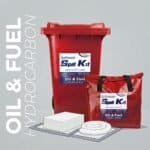
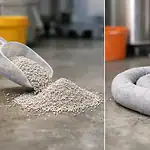
Place spill kits where the risk exists, not in a distant storeroom. General-purpose absorbents may suit many non-aggressive liquids, while oil-only absorbents are appropriate where oil and fuel must be recovered from water. Chemical spill kits and suitable PPE are needed for hazardous substances. The product safety data sheet should guide both the response equipment and the level of personal protection required.
Spillmaster supplies containment, absorbents and spill response equipment for sites that need practical controls around IBC storage and dispensing. The right equipment should be selected for the substance and task, then checked often enough to ensure it is ready when needed.
Treat small leaks as early warnings
A slow drip from an IBC valve is easy to dismiss, especially when the bund has caught it. That is the point at which prevention is cheapest and safest. Replace the suspect fitting, review handling practices and check nearby containers for the same issue before a minor defect becomes a larger release.
Good IBC management is built from ordinary disciplines: sound containers, compatible containment, protected storage, careful handling and workers who know what to do. Keep those controls in place, and the next leak is far more likely to remain a contained maintenance task rather than a site-wide emergency.