Spill Berms: Choosing Containment That Works

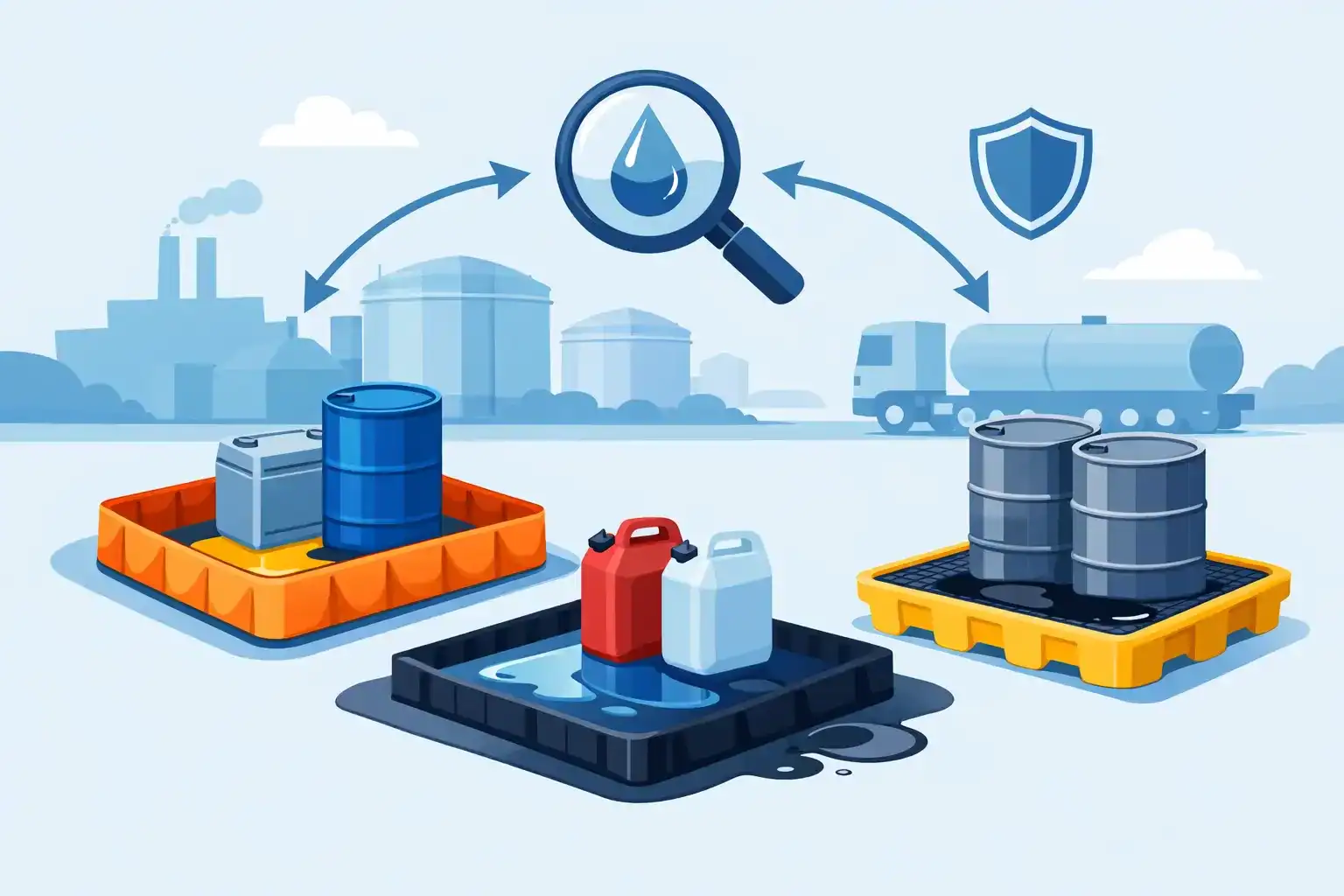
A leaking drum is one problem. A hydraulic hose failure beneath a service vehicle, a refuelling splash, or a bulk container valve left open is another. In each case, spill berms create a defined containment area that stops liquids spreading across hardstand, entering drains or reaching unprotected ground.
For workshops, warehouses, transport depots, fuel-handling areas and temporary work sites, a berm is a practical control that can be deployed where permanent bunding is unavailable or unsuitable. The right unit provides more than a physical barrier. It gives operators a clear place to park, transfer, decant or isolate equipment while a spill is managed.
What spill berms are designed to do
A spill berm is a portable or semi-portable containment system with raised sides and a liquid-resistant base. It is used to capture leaks, drips and spills from vehicles, drums, IBCs, machinery and mobile plant. Depending on its construction, it may be used for temporary spill response, routine maintenance, liquid transfer, washdown controls or short-term storage.
Unlike a spill pallet, which is designed to contain containers placed on top of it, a berm creates a larger protected footprint. That makes it useful when the source of a spill is a ute, forklift, excavator, generator, tanker connection or several containers being handled at once.
The containment objective is straightforward: keep the released liquid within a controlled area until it can be recovered using suitable absorbents, pumps, vacuum equipment or other approved methods. It is not a substitute for safe storage, preventative maintenance or an emergency response plan. It is one layer of control, and it needs to suit the liquid and the task.
Where spill berms make sense on site
Berms are often selected where work changes location or where installing fixed concrete bunding is not justified. A mobile mechanic servicing equipment on a client site, for example, may need a compact folding berm that fits in the vehicle. A depot carrying out routine maintenance may need a larger drive-over model that can remain in position for repeated use.
They are also useful beneath temporary drum decanting stations, diesel-powered equipment and leaking plant awaiting repair. In marine, transport and remote operations, portability can be the deciding factor. The unit must be quick to deploy, but still strong enough to hold its shape and remain chemically compatible with the material being contained.
A berm is less suitable where it will be exposed to constant high traffic, sharp scrap, hot work or liquids that exceed its chemical-resistance rating. In those situations, a fixed engineered system, a spill pallet, a bunded work area or a different containment method may be more appropriate.
Selecting the right spill berm
The cheapest option is not always the lowest-cost option once site conditions are considered. A berm that is difficult to drive into, too small for the equipment, or incompatible with the expected liquid can create operational delays and leave the site exposed.
Start with the source and likely spill volume
Choose capacity based on a credible spill scenario, not just the usual amount of liquid present. Consider the largest vessel, tank, line or hydraulic reservoir that could release into the berm, along with rainfall if the unit will be used outdoors. For drum handling, consider the volume of the largest drum and whether multiple containers may be present at the same time.
Capacity must also allow for the equipment footprint. A vehicle parked in a berm displaces volume. If the walls are only just high enough on paper, a release can overtop the side once tyres, machinery or containers are inside.
Your site’s dangerous goods procedures, environmental obligations and customer requirements may set minimum containment expectations. Check those requirements before purchase, particularly where fuels, oils, corrosives, solvents or other hazardous liquids are involved.
Match the material to the liquid
Berm fabrics and liners are not universally compatible with every chemical. Oils and fuels may be well suited to one material, while aggressive acids, alkalis or solvents require another. Review the product’s chemical compatibility information against the specific substance stored or handled on site, including concentration and temperature where relevant.
Do not assume a berm suitable for diesel is suitable for all chemicals. If the material is unknown, treat it as a higher-risk decision and confirm compatibility before use. For a mixed-use workshop, it may be necessary to select a more broadly resistant material or keep separate containment equipment for different tasks.
Consider how people and vehicles enter
Drive-over berms are designed with low-profile, foam or flexible sidewalls that vehicles can cross without needing a ramp. They suit workshops, service bays and plant maintenance areas where forklifts, cars, trucks or mobile equipment need regular access.
Folding and pop-up berms are fast to deploy and pack down efficiently. They are a good fit for emergency response, temporary transfer work and field service. Their sides may be less practical for frequent vehicle movement, especially with heavy plant or loaded trolleys.
If a unit has rigid or raised walls, check whether ramps are required. A rushed operator is likely to bypass a containment measure that slows down the job. The most effective berm is one that crews can set up and use correctly every time.
Set-up matters as much as capacity
A quality berm will not perform as intended if it is installed on poor ground. Choose a clear, level surface free from sharp metal, stones, protruding bolts and loose rubbish. Sweep the area before deployment, particularly in workshops and loading zones where offcuts and fasteners are common.
Position the berm away from drains where possible. While the berm is intended to prevent liquid migration, keeping distance from drainage points provides another margin of protection if the containment is damaged or overtopped. If work must occur close to drains, have drain covers, absorbent booms and suitable spill kit materials immediately available.
Place the source of the potential spill well within the berm perimeter. Avoid parking wheels on the sidewalls unless the berm is specifically designed for vehicle entry. Ensure hoses, valves and transfer points are positioned so a likely release lands inside the containment area, rather than outside the edge.
For outdoor use, inspect weather conditions. Rain can reduce available containment capacity, while strong wind can affect lightweight temporary systems during set-up. If rainwater collects in a berm, assess it before disposal. It may be contaminated and should not be discharged without appropriate assessment and site approval.
Keep recovery equipment close by
Containment buys time. It does not remove the need to recover the liquid safely. A berm used for oils, fuels or chemicals should be supported by the right spill response equipment for the substances handled there.
For a workshop or fuel-handling area, this commonly means absorbent pads or rolls for small releases, socks or booms to control migration, drain protection, suitable PPE, waste bags or containers, and a compatible spill kit. Larger volumes may require pumping or vacuum recovery by trained personnel.
Used absorbents, contaminated water and recovered chemicals need to be managed as contaminated waste. Segregate them, label containers where required and arrange disposal through your approved waste process. Never treat a contained spill as finished simply because it has stopped spreading.
Inspection and maintenance requirements
Inspect portable containment equipment before use and after every spill event. Look for punctures, tears, failed seams, damaged corners, hardened folds and chemical staining that may indicate material degradation. Check that folding frames, supports, foam walls and connection points still operate as intended.
Clean the berm only where the cleaning method is compatible with the material and site waste controls. Do not pack away a contaminated unit and assume it is ready for the next incident. Residue can create chemical exposure risks, damage the berm over time and transfer contaminants into a vehicle or storage area.
Store the unit dry, protected from direct sun where possible, and away from sharp items. A folded berm should be accessible enough for emergency deployment, but not buried behind stock or equipment. Include its location and intended use in site spill response training.
Avoid the common purchasing mistakes
Most berm failures are predictable. Buyers may select a footprint that only fits the vehicle with no working margin, overlook displaced volume, or choose a low wall for a task that needs a higher capacity. Others purchase a portable unit for permanent heavy-duty use, then find it wears prematurely.
Another common issue is treating the berm as an isolated product. It should fit into a broader spill-control arrangement that includes safe chemical storage, suitable absorbents, trained workers, clear procedures and prompt waste management. A containment area without recovery supplies merely holds the problem in place.
Before ordering, measure the equipment or work zone, identify the largest credible release, confirm the chemical involved, and consider access requirements. Those four checks will narrow the selection quickly and help ensure the product supports the way your site actually operates.
Spill berms are most valuable when they are deployed before a leak becomes a reportable incident. Put the right containment where work is carried out, keep it serviceable, and make sure the crew has the equipment and authority to act when liquid hits the ground.