Loading Dock Containment Guide for Safer Sites

A loading dock can turn a minor leak into an off-site environmental incident in minutes. Pallets are moved, drums are handled, vehicles idle and rainwater finds the lowest point – often a stormwater drain. This loading dock containment guide explains how to assess the risk, select practical equipment and set up controls that work under normal site pressure.
The objective is not to cover every square metre with containment equipment. It is to stop oils, fuels and chemicals from reaching drains, soil, stock areas and neighbouring premises, while keeping forklift access and dispatch work moving.
Start with the dock, not the product
Containment works best when it reflects what actually happens at the dock. Walk the area during receiving and dispatch, rather than assessing it only when it is empty. Look for where freight is unloaded, where damaged goods are set aside, where drums are temporarily staged and where drivers or forklift operators park equipment.
Map every nearby drain and identify whether it connects to stormwater, sewer or an on-site treatment system. Stormwater drains demand particular attention. A small amount of hydraulic oil, diesel or chemical wash-off can travel well beyond the dock boundary.
Also consider the surface condition. Cracked concrete, uneven thresholds and worn expansion joints can direct liquid beneath pallets or around temporary bunding. If the dock is exposed to weather, rainfall changes both the volume of liquid to manage and the speed at which a spill can migrate.
A useful assessment asks three direct questions: what can spill here, how much could reasonably be released, and where will it go first? The answers determine whether you need portable drain protection, a bunded storage area, spill pallets, or a combination of controls.
Loading dock containment guide: match controls to risk
Different controls solve different problems. A drain cover may provide immediate protection during an incident, but it is not a substitute for storing leaking drums on a spill pallet. Likewise, a large bunded area is not always suitable for fast-moving dispatch lanes where pallets need constant access.
Protect drainage first
Where drains sit close to loading bays, keep drain protection within easy reach of the hazard. Flexible drain covers can be deployed quickly over clean, flat surfaces. Drain seals and temporary barriers may suit irregular surfaces or larger flow paths, depending on their construction and the liquid involved.
Check that workers know where this equipment is kept and when to use it. A drain cover stored in a remote storeroom will not help during the first few minutes of a spill. It should form part of the dock spill response equipment, alongside suitable absorbents and PPE.
Do not place drain covers over hot surfaces or assume every cover is compatible with every chemical. Review the product material, the surface condition and the safety data sheet for the substance handled on site.
Contain drums, IBCs and leaking freight
Spill pallets and bunded storage units provide secondary containment for drums, pails and intermediate bulk containers. They are particularly useful where liquids await inspection, are decanted, or may be held temporarily before transport. The right capacity depends on the containers stored, your site procedures and the applicable requirements for the materials involved.
For a dock that receives packaged dangerous goods, allocate a clearly marked quarantine position with secondary containment. This gives staff somewhere safe to place a damaged drum or suspect package without blocking a traffic lane or placing it directly beside a drain.
Low-profile spill pallets can suit areas where access by pallet jack is required. Higher-capacity bunds may better suit static storage or an IBC holding area. The trade-off is operational: more containment can mean a higher threshold, reduced access or a greater footprint. Design the area around the equipment that must move through it.
Control liquid at the edge of the work area
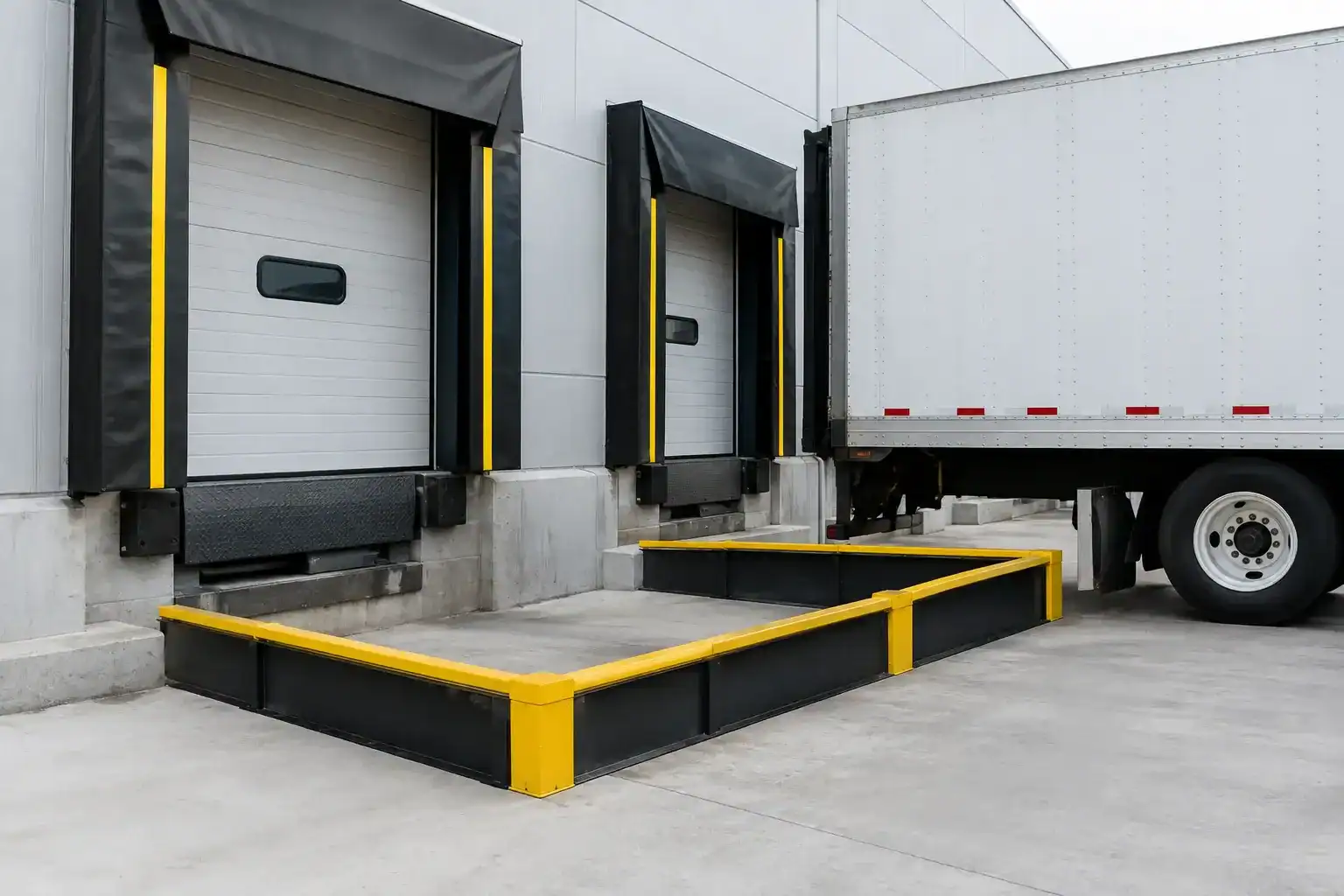
Portable bunding, flexible berms and containment mats can create a temporary boundary around higher-risk tasks. They are useful during drum transfers, maintenance work, vehicle servicing or a short-term unloading activity involving liquids.
For regular operations, make sure the barrier is visible and positioned so forklifts do not strike it. If vehicles must cross the boundary, use a purpose-designed drive-over solution rather than improvising with absorbent socks or loose materials. Improvised controls are easily displaced and can create a trip or vehicle hazard.
Keep a response kit at the point of use
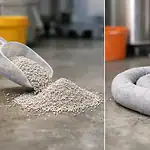
Containment reduces the spread of a spill. Absorbents remove the liquid once it is contained. Both are needed.
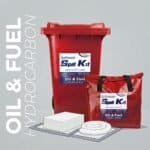
A loading dock spill kit should be selected for the likely liquids handled there. General-purpose absorbents may suit mixed maintenance spills, while oil-only absorbents are appropriate for oils and fuels, including use around water. Chemical spill kits are intended for a broader range of hazardous liquids, but the kit must still be suitable for the specific substances on site.
At minimum, the kit should be accessible, clearly identified and replenished after use. Include compatible gloves, waste bags and other PPE required by the safety data sheet and your response procedure. A kit with missing absorbent pads or no disposal bags is not ready for an incident.
Set up the area for real work
A contained dock still has to receive freight efficiently. Good layout separates normal goods movement from liquid-risk activities. Avoid placing spill pallets in tight turning circles, emergency exits, fire equipment access zones or areas where drivers need clear sightlines.
Use floor markings and simple signage to define the quarantine area, spill-kit location and any no-storage zones around drains. These controls help casual staff, contractors and delivery drivers understand the site arrangement without needing a lengthy briefing.
Housekeeping matters as much as equipment selection. Empty pallets, shrink wrap, damaged cartons and rubbish can hide a drain, obstruct a spill kit or prevent a drain cover from sealing properly. Keep the dock clear enough that a worker can see the direction a spill is travelling and act quickly.
If the site uses a dock leveller, check how it affects drainage. Liquid can run beneath the platform or into pit areas that are difficult to access. A spill response plan should account for these locations, not just the visible dock floor.
Build containment into the response procedure
Equipment alone does not create control. Staff need a short, workable procedure that reflects the dock layout and the products available. The first actions should be clear: protect people, stop the source if safe, cover or isolate drains, contain the liquid, apply absorbents, and report the incident under site procedure.
Training should include practical deployment. Ask staff to locate the drain covers, place a temporary bund and identify the correct spill kit for a fuel leak versus an unknown chemical. This exposes gaps that are easy to miss in a toolbox talk, such as a cover that does not fit the drain or a spill pallet positioned behind stored freight.
After any spill, inspect the containment equipment before returning it to service. Clean reusable items where appropriate, replace used absorbents and damaged components, and arrange disposal of contaminated materials in line with the substance, local requirements and your waste contractor’s instructions. Do not put contaminated absorbents into general rubbish unless the waste classification and disposal method permit it.
Inspect before a spill tests the system
A brief monthly inspection is usually more useful than an elaborate checklist that no one completes. Confirm that drains are visible, covers are accessible, bunds are free from rainwater and debris, spill pallets show no damage, and kits are fully stocked. Inspect more often where liquids are handled daily or freight damage is common.
Rainwater in outdoor bunding needs management. Do not simply drain it away. Treat it as potentially contaminated until assessed, particularly where oils, chemicals or leaking containers have been present. Keeping bunds covered where practical can reduce this issue, but covers must not interfere with safe access and handling.
Containment capacity also needs review when operations change. A new chemical line, larger IBCs, higher delivery volumes or a redesigned dispatch area can make an existing arrangement inadequate. Update the risk assessment before the change becomes routine.
The most effective loading dock controls are the ones workers can use without delay: a clear path to the spill kit, drain protection close to the hazard, fit-for-purpose secondary containment and a defined place for damaged freight. Set those basics in place before the next delivery arrives, not after a spill reaches the gutter.