Flammable Cabinet Versus Safety Can Compared

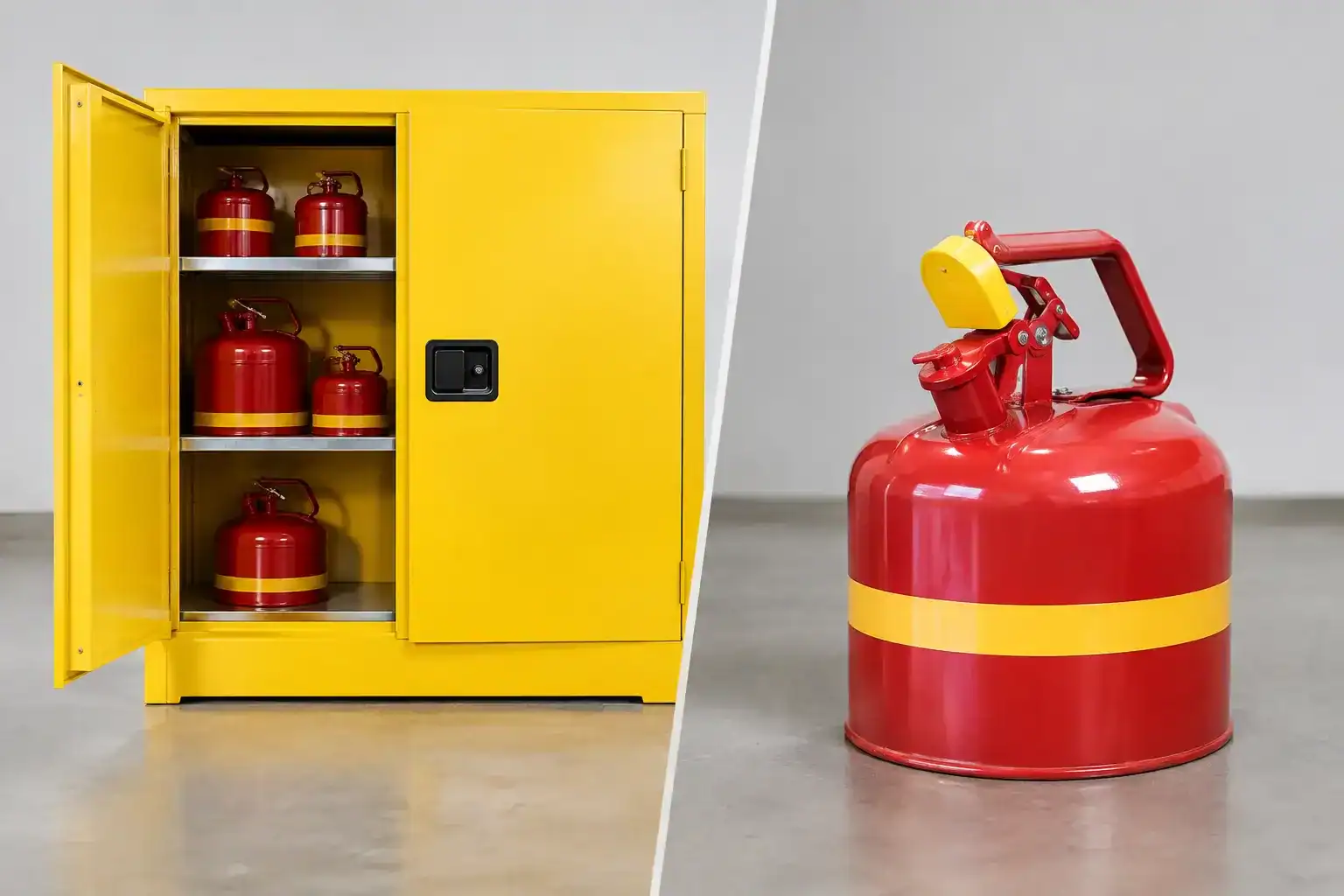
A flammable cabinet versus safety can decision is not simply about choosing a larger or smaller container. These products manage different parts of flammable-liquid risk. One controls how larger quantities are stored in a fixed location; the other gives workers a safer way to carry and dispense small volumes at the point of use.
For workshops, warehouses, laboratories, marine operations and maintenance teams, selecting the wrong option can create practical problems quickly. A cabinet may be oversized for a mobile technician topping up equipment, while a collection of safety cans on a shelf is not a sound substitute for dedicated storage. The right choice depends on the liquid, quantity, task, location and applicable workplace requirements.
Flammable Cabinet Versus Safety Can: Different Jobs
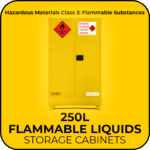
A flammable liquids cabinet is designed for the dedicated storage of flammable liquids, generally Class 3 dangerous goods. It provides a clearly identified, controlled location for containers when they are not being used. Suitable cabinets are constructed to limit the effects of an external fire for a defined period, contain minor leaks within a sump, and keep hazardous liquids separated from general workshop traffic and ignition sources.
A safety can is a portable safety container for storing, carrying and dispensing relatively small quantities of flammable liquid. It is typically used for fuels, solvents, thinners and cleaning fluids that workers need close to the job. A properly specified safety can commonly incorporates features such as a self-closing lid, flame arrester and pressure-relief function, depending on its design and approval.
The distinction matters because a safety can controls the immediate handling risk. A cabinet controls the broader storage risk. In many workplaces, the practical answer is not one or the other. Safety cans are used to issue or dispense liquid, then returned to a flammable cabinet between tasks.
What a Flammable Cabinet Does Well
A flammable cabinet is the stronger choice when liquids remain on site, multiple containers must be managed, or a work area needs a permanent and organised storage point. It helps supervisors keep dangerous goods visible, labelled and away from incompatible materials.
This is particularly relevant where original tins, drums or approved decanted containers accumulate over time. A maintenance workshop might have degreaser, petrol, solvent cleaner and touch-up paint in regular use. Left around benches, under sinks or beside machinery, those products make housekeeping difficult and increase the chance of a leak reaching drains or ignition sources. A suitable cabinet brings those products into one controlled location.
Cabinet capacity should be selected against the quantity held, not merely today’s stock level. Consider deliveries, partly used containers, refill stock and seasonal peaks. It is also worth checking shelf load ratings, internal sump capacity, door configuration and whether the cabinet will need to be positioned indoors, outdoors or in a corrosive environment.
A cabinet is not an all-purpose dangerous goods solution. It does not remove the need for correct labels, current safety data sheets, spill response equipment, segregation from incompatible substances or sensible placement. It also does not automatically make any storage arrangement compliant. Requirements under Australian WHS legislation, local fire controls, site rules and standards such as AS 1940 need to be assessed for the specific premises and quantities involved.
Where a Safety Can Is the Better Tool
Safety cans are suited to controlled decanting and short-distance movement of small liquid volumes. They reduce reliance on open tins, improvised bottles and poorly sealed containers, all of which can release vapours or spill when knocked over.
For example, a technician servicing plant equipment may need a small amount of petrol or solvent at a work bay. Taking a large container from storage and pouring directly from it is awkward and raises spill risk. An approved safety can gives the worker a manageable container designed for controlled use. Once the task is complete, it should be closed and returned to its designated storage location.
Safety cans are also useful where dispensing is frequent. Their compact size makes them easier to handle than a drum, and their purpose-built closure can reduce vapour release compared with an ordinary open-top container. However, portability is not a reason to leave them in vehicles, on benches or beside hot work areas. A safety can still contains a flammable liquid and must be treated accordingly.
When choosing a can, verify that its material, seals and construction suit the chemical being held. Petrol, diesel, acetone, solvents and corrosive products do not all have the same compatibility requirements. Check the safety data sheet and product specification before standardising on a container type.
Storage, Dispensing and Transport Are Separate Questions
The most common purchasing mistake is expecting one product to cover every activity. Storage, dispensing and transport each introduce different hazards.
A flammable cabinet is primarily a storage control. It is normally installed in a selected location, with suitable clearances and access. It is not intended to be loaded into a ute for site-to-site transport. Conversely, a safety can may be suitable for carrying a small amount of liquid to the work area, but it is not designed to replace a cabinet where quantities, storage duration or workplace exposure are significant.
Vehicle transport requires its own assessment. Dangerous goods transport rules, load restraint, vehicle ventilation, quantity thresholds and the nature of the journey all matter. Never assume that placing a safety can in the back of a vehicle resolves transport obligations. Secure containers upright, prevent movement, protect them from heat, and follow the requirements that apply to the load and route.
A Practical Selection Process
Start with the liquid classification shown on the safety data sheet. Flammable liquids require different controls from combustible liquids, corrosives, oxidisers and toxic substances. Do not store incompatible chemicals together simply because there is spare space in a cabinet.
Next, assess how much liquid is present at one time. If the workplace holds several containers or keeps regular stock for operations, a flammable cabinet is usually the foundation of the arrangement. If a worker needs a controlled quantity to complete a task away from the cabinet, select a compatible safety can as the handling container.
Then look at the work pattern. A fixed workshop with routine solvent use may need both cabinet storage and several clearly allocated safety cans. A mobile maintenance crew may need a limited number of approved portable containers, with the main stock retained at a compliant base location. A laboratory may require smaller containers and stricter segregation due to the number of different chemicals in use.
Finally, consider the consequences of a spill. Place storage away from drains, doorways, ignition sources and high-traffic areas where practicable. Keep suitable absorbents and spill kits nearby, but not inside a cabinet where they could be inaccessible during an incident. Staff should know who is authorised to decant liquids, where containers are returned, and what to do if a leak or fire occurs.
Common Gaps to Avoid
The most preventable issues are usually procedural rather than technical. Unlabelled decanted liquid, overfilled safety cans, cabinet doors left open, mixed chemical storage and containers stored on the floor all undermine an otherwise good setup.
Do not rely on a cabinet as a place to hide poor housekeeping. Inspect its sump for leaks, check that shelves are seated correctly, remove redundant chemicals, and keep container labels legible. For safety cans, inspect lids, gaskets, handles and flame arresters where fitted. Damaged or corroded containers should be removed from service rather than repaired informally.
Training also matters. Workers need clear instructions on the difference between a fuel container, a safety can and a waste container. Used solvent, oily rags and chemical waste may need a separate, purpose-designed containment solution. Mixing waste streams or returning contaminated liquid to a clean safety can creates a new hazard.
Build the System Around the Task
The decision is straightforward once the job is defined. Use a flammable cabinet to establish secure, organised storage for flammable liquid stock. Use a compatible safety can where workers need to carry or dispense small volumes safely. Where both needs exist, use both products as part of one controlled system.
Before ordering, review the safety data sheet, quantities on hand, site layout and relevant Australian requirements. If a cabinet is the appropriate storage control, compare the available capacities in our flammable liquids storage cabinet range. A correctly matched cabinet, safety can and spill response setup gives your team a practical control they can use every shift, not just a box to tick during an inspection.