Marina Fuel Spill Response: Contain It Fast

A marina fuel spill is not a workshop spill with a better view. Fuel can move rapidly across the water, under pontoons, into berths and along shorelines. Wind, tide, wash and vessel movement can turn a small overflow at the bowser into a wider environmental and operational incident within minutes.
For marina operators, fuel dock staff, vessel owners and maintenance teams, the priority is simple: stop the source if it is safe, prevent the fuel from spreading, recover what can be recovered, and escalate the incident through the correct channels. That requires a practised response plan and equipment selected for fuel on water, not a general-purpose kit stored somewhere out of reach.
Why a marina fuel spill needs a different response
Petrol, diesel and oils behave differently from water-based liquids. Most fuels float, allowing them to travel across the surface and collect in sheltered corners, around pilings and beneath floating infrastructure. Petrol also presents a serious vapour and ignition risk. Diesel is less volatile but can create a broad surface sheen and persist in enclosed or low-flow areas.
A marina adds complications that industrial yards do not always have. Access may be limited by gangways or moored vessels. Drains, stormwater outlets and tidal channels create pathways for contamination. Staff may need to work close to water while wearing PPE, and a vessel’s engine, battery system or nearby electrical equipment may become an ignition source.
The response therefore depends on the fuel type, volume, weather, current, location and the immediate risk to people. A few litres of diesel contained beside a fuel berth calls for a different approach to a petrol release heading towards a stormwater outlet. The same principle applies in both cases: do not let the spill become larger than the response equipment available.
The first actions at a marina fuel spill
The first responder should assess hazards before handling absorbents. Do not enter an unsafe area, start engines, operate electrical switches, or use equipment that could create an ignition source where petrol vapours may be present. Keep people away from the affected area and stop refuelling or transfer activity.
If it is safe to do so, stop the release at its source. This may mean closing a valve, righting a container, stopping a transfer pump or using an emergency shut-off at the fuel facility. Never take risks to save product. A leaking hose, damaged fitting or pressurised transfer line may require isolation by trained personnel rather than an improvised repair.
Once the source is controlled, contain the fuel before beginning recovery. In practical terms, the response sequence is:
- Isolate the area and remove ignition sources where safe.
- Stop the fuel release or reduce its flow.
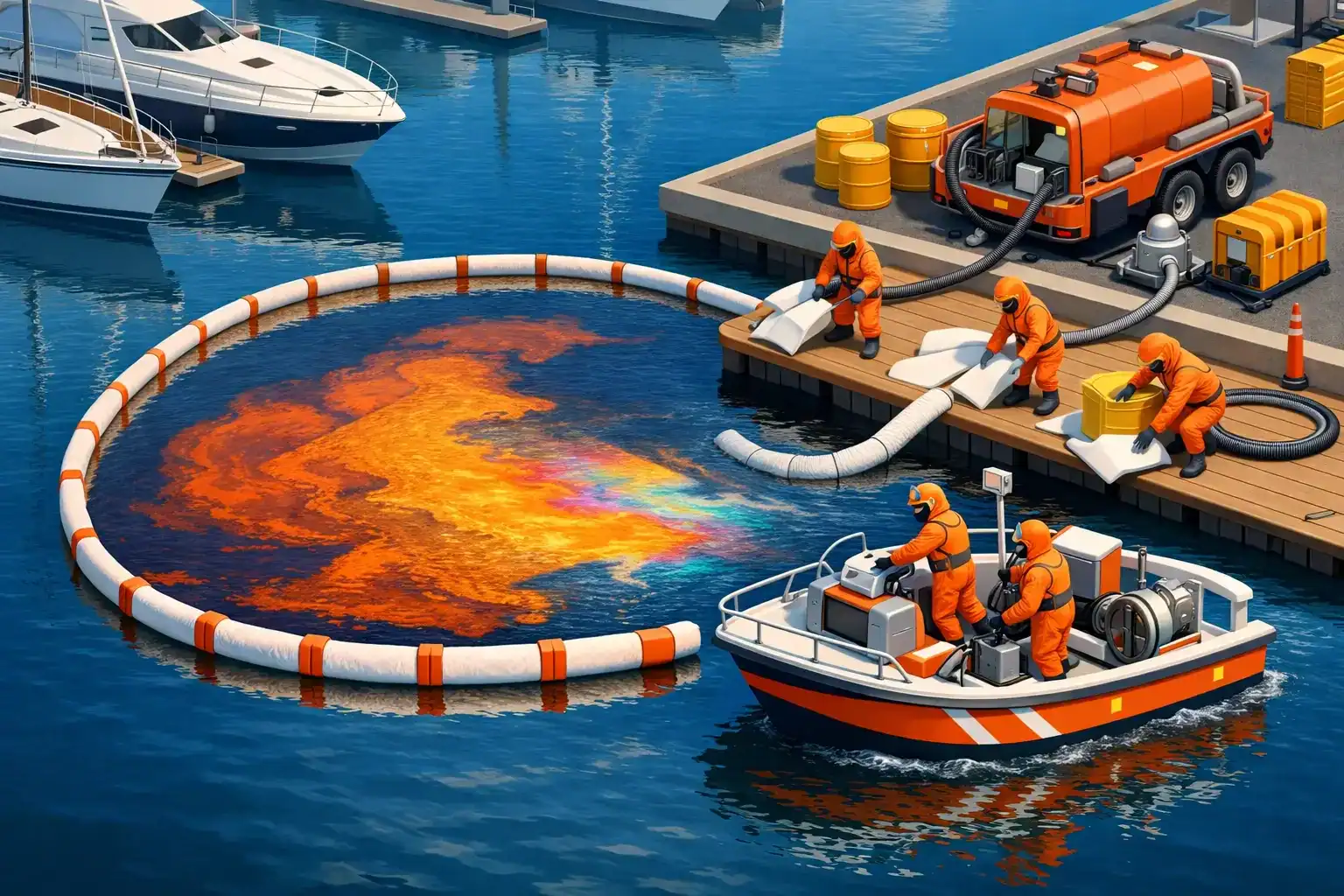
- Deploy floating booms to limit surface spread.
- Use fuel-compatible absorbents to recover contained product.
- Protect drains, shorelines and sensitive water entry points.
- Notify site management and the relevant authorities as required.
This order matters. Throwing pads onto a spreading sheen before establishing containment can waste absorbents and allow fuel to move beyond the berth. Booms create a working area. Absorbents then remove fuel from within that area.
Containment comes before clean-up
Floating containment booms are the primary control for fuel on water. They are designed to sit at the surface, forming a barrier that directs or holds floating hydrocarbons. A boom can be deployed around the spill source, across the entrance to a berth, or in a protective line ahead of an exposed shoreline, drain outlet or vessel.
Boom placement needs to account for water movement. In a calm, enclosed marina, a circular or horseshoe arrangement around the release may work well. Where current or wind is present, position the boom to intercept the fuel as it moves rather than assuming it will remain where it started. Avoid stretching a boom too tightly or placing it where water flow will simply carry fuel underneath or around its ends.
For a small spill near a fixed edge, absorbent socks or mini booms may provide quick initial control. They are useful around scuppers, drains and tight spaces, but they are not a substitute for proper floating boom where a spill is moving across open water.
Choose absorbents made for hydrocarbons
Fuel spill absorbents must repel water while attracting and retaining hydrocarbons. Marine oil-only pads, rolls, pillows and booms are designed for this job. They float, absorb petrol, diesel, oils and many hydrocarbon products, and avoid becoming saturated with water as quickly as general-purpose absorbents.
Pads are effective for polishing up a contained sheen, wiping vessel surfaces and dealing with small localised pools. Rolls suit larger recovery areas and can be cut to size. Pillows provide higher absorbency in corners, bilges, scuppers and beneath leaking fittings. Absorbent booms are useful both as a secondary barrier and for collecting fuel inside a contained area.
Do not use loose materials that can break apart or become marine debris. Likewise, do not rely on water-based or general-purpose absorbents for floating fuel. Selecting the wrong media slows the response and creates more waste to manage.
Protect people, vessels and infrastructure
Marine spills are an environmental issue, but the immediate workplace risks can be just as serious. Petrol vapour can travel and ignite well away from the release point. Staff should wear suitable chemical-resistant gloves, protective eyewear and workwear appropriate to the task. If there is a fire, vapour or exposure risk beyond routine spill control, move people away and contact emergency services.
Avoid pressure-washing fuel into the water, hosing it towards drains, or dispersing it with detergents unless specifically directed by the relevant authority. These actions can spread contamination, interfere with recovery and complicate reporting obligations.
Protect stormwater infrastructure early. Drain covers, drain seals, absorbent socks and portable bunding can reduce the chance of fuel reaching land-based drainage systems. At fuel docks and marina workshops, these controls should be placed where staff can access them immediately, not locked in a remote storeroom.
Vessels require attention too. Check bilge areas, hull sides, mooring lines and fenders, as fuel can collect or transfer across these surfaces. If a spill has entered a vessel bilge or enclosed compartment, treat it as a potentially hazardous atmosphere. Ventilation, isolation and specialist assistance may be necessary.
Reporting and disposal are part of the response
Containing the visible sheen is not the end of the job. Marina operators should follow their site emergency plan, notify management and record the incident. Notification requirements vary by state, territory, spill volume, product, location and whether pollution has entered waters or drainage systems. Contact the relevant environmental regulator, port or harbour authority, marina management and emergency services where required.
A useful incident record includes the time and location, estimated product and quantity, weather and water conditions, suspected source, controls deployed, photographs where safe, personnel involved and waste generated. This information supports regulatory reporting, insurance requirements, follow-up inspections and improvements to the response plan.
Used fuel absorbents, contaminated PPE and collected residues are controlled waste. Store them in compatible, clearly labelled containers or bags away from ignition sources and arrange disposal through an approved waste contractor. Do not place contaminated absorbents in general rubbish bins or leave them on the dock while awaiting collection.
Set up the marina for a faster response
The best response equipment is equipment that staff can reach before the spill spreads. A marina should position marine spill kits at fuel docks, boat ramps, maintenance areas, wash-down zones, workshop entrances and other likely release points. Larger sites may require dedicated floating boom stations rather than expecting one compact kit to protect multiple berths.
A fit-for-purpose marina spill kit should include oil-only absorbents, floating containment boom, absorbent socks, disposal bags, gloves, protective eyewear and clear response instructions. The exact capacity should reflect the maximum credible spill, not merely the smallest likely drip. Fuel transfer operations, bulk storage, vessel maintenance and public access all influence that assessment.
Inspection is just as important as purchasing. Check kits after use, confirm absorbent stock is dry and serviceable, replace missing PPE, and make sure boom connectors and deployment lines are ready. A sealed kit that nobody has practised using is not a response plan.
Run short spill drills with fuel dock attendants, maintenance staff and contractors. Focus on practical decisions: who shuts down transfer, who deploys the first boom, where waste is held, and who makes notifications. Drills reveal whether equipment locations, access routes and responsibilities work under pressure.
Spillmaster supplies oil-only absorbents, floating booms, drain protection, PPE and spill kit components for workplaces that need dependable fuel-spill control equipment. Match the equipment to the marina’s actual risks, keep it close to the hazard, and train people to use it without delay.
A fuel sheen can travel further than expected, but a prepared crew can keep a release contained, protect the marina and return the site to safe operation with far less disruption.