Manufacturing Solvent Storage Example: Safer Setup

A manufacturing solvent storage example is most useful when it reflects the way a site actually operates: deliveries arrive, drums are moved, smaller containers are filled, waste accumulates and staff need quick access without creating an uncontrolled fire or spill risk. A cabinet in the corner is not a storage plan if incompatible chemicals, ignition sources and leaking containers are still part of the daily workflow.
Consider a medium-sized fabrication workshop using acetone, thinners and solvent-based cleaners for surface preparation, parts washing and maintenance. It receives solvent in 200-litre drums, keeps opened product in 20-litre containers near the work area and generates contaminated solvent rags and waste liquid. The practical objective is to hold enough stock for production while keeping the quantity at each point of use to a controlled minimum.
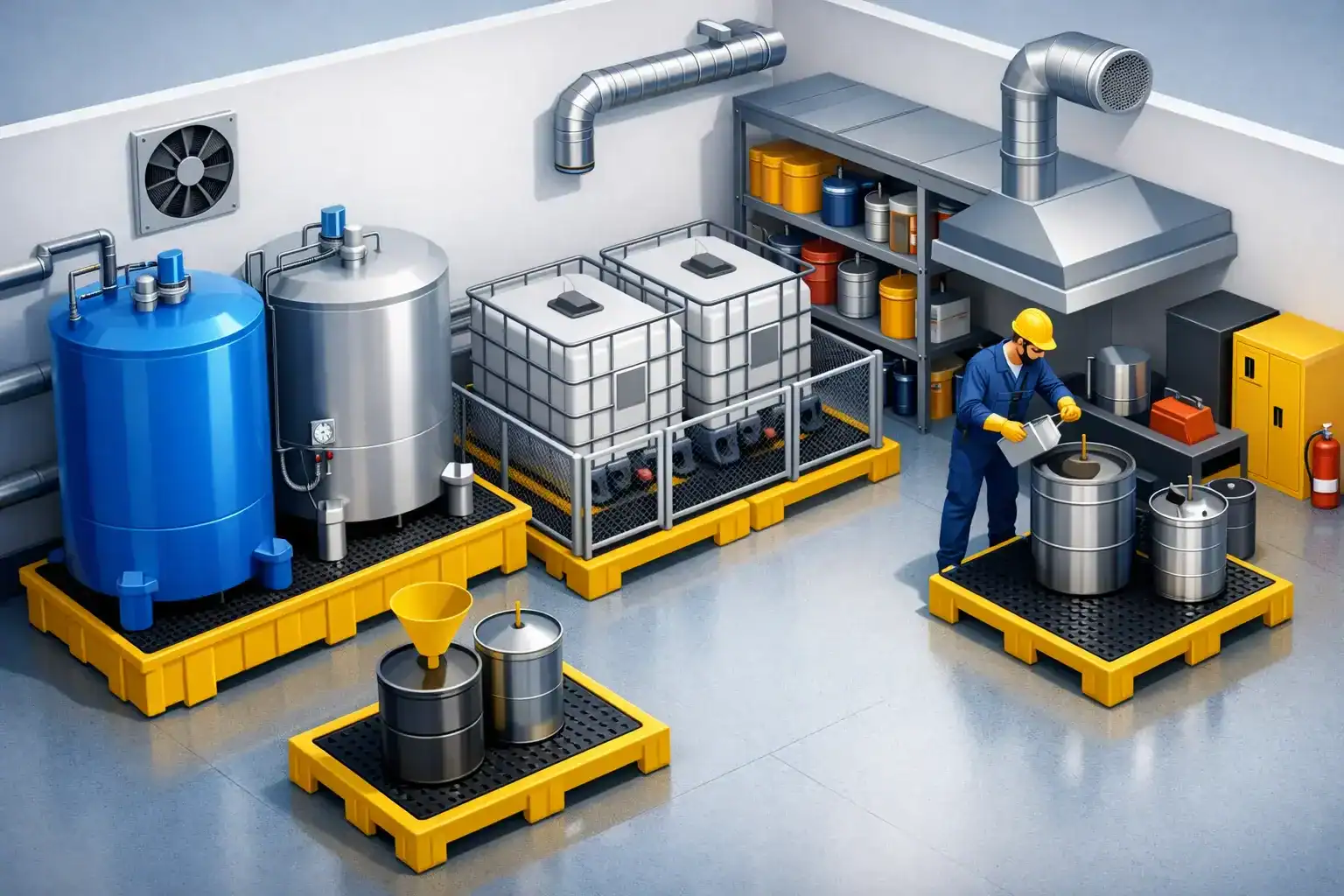
Manufacturing solvent storage example for a workshop
In this example, bulk solvent is received into a designated dangerous goods storage area away from welding bays, battery charging, hot work and vehicle traffic. The area has controlled access, clear flammable-liquid signage and protection from forklifts. Drums remain closed when not in use and sit upright in suitable bunded containment, not directly on the floor.
The storage capacity is selected for the maximum likely inventory, not the usual quiet-week stock level. If a supplier delivery arrives before the previous order has been used, the containment system must still safely manage the volume on site. Bunding must account for the stored containers and provide practical protection if a drum leaks or is damaged during handling.
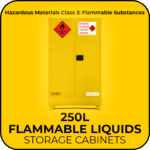
A flammable liquids safety cabinet is used closer to production for approved quantities of smaller containers required during a shift. This avoids repeated trips to the bulk store while limiting the amount of solvent exposed in the work area. Containers are labelled, lids are secured and only authorised personnel access the cabinet.
Waste solvent is not returned to the clean-product cabinet. It is collected in clearly identified, compatible waste containers with secure closures and moved to a separate designated holding point for disposal or collection. Mixing unknown waste streams can create a chemical compatibility issue and make disposal more difficult and expensive.
This arrangement separates four functions that are often incorrectly combined: bulk storage, day-use stock, decanting and waste collection. That separation makes the site easier to inspect, easier to clean and safer to manage during a spill or fire event.
Start with the solvent, not the cabinet
The word solvent covers a wide range of products. Some are highly flammable, some are combustible, and others may present toxicity, corrosion or environmental hazards that change the storage requirement. The safety data sheet is the starting point for every product decision.
Check the product classification, flash point, dangerous goods class, packing group, incompatible materials, recommended personal protective equipment and emergency measures. A solvent that appears similar to another cleaner may require different segregation, ventilation or fire controls.
For flammable liquids, the storage plan should align with the current applicable Australian requirements, including relevant workplace health and safety duties, fire authority expectations and standards such as AS 1940 where applicable. State and territory rules, site size, quantities and building use can affect the controls required. Where threshold quantities or complex chemical inventories are involved, obtain competent dangerous goods and fire safety advice rather than treating a cabinet as a complete compliance solution.
Design the storage area around real handling tasks
Storage failures commonly occur during transfer, not while an unopened drum is sitting still. In the workshop example, a worker needs to decant solvent from a drum into a smaller approved container. That task should happen in a defined area with enough room to position containers safely, manage hoses or pumps and deal with a small release immediately.
Use suitable drum handling equipment and dispensing accessories rather than tipping heavy drums by hand. Keep containers closed during transport and avoid moving open solvent containers across busy floors. If a forklift is used, protect the storage area from impact and make sure operators understand the route and handling rules.
Ventilation is another site-specific decision. A well-ventilated location helps prevent vapours accumulating, but ventilation does not make an ignition source acceptable. Keep flammable liquids away from welding, grinding, naked flames, heaters and electrical equipment that is not suitable for the environment. Review nearby drains as well. A solvent spill entering a stormwater drain can quickly become an environmental incident beyond the original storage area.
The day-use cabinet should be positioned where staff can reach it without carrying containers through high-risk areas, but not so close to operations that it is exposed to sparks, heat, collision or unauthorised use. There is no universal ideal location. The correct position depends on product use, traffic flow, emergency exits, ventilation and the amount held.
Containment must match the credible spill
A small drip tray beneath a dispensing point is useful, but it is not a substitute for adequate secondary containment under bulk drums. The containment choice should match the container type, number of containers, stored volume and likely failure scenario.
For the workshop example, a bunded pallet may suit 200-litre drums in the bulk store, while a small bunded work floor or dispensing station may be more appropriate for transfer activities. Chemical compatibility matters. Confirm that the sump, pallet, tray and absorbent materials are suitable for the solvent being handled.
Keep bunds free of rubbish, empty packaging and pooled rainwater. A containment area that has become a general storage zone may not hold a spill as intended. It can also conceal leaks until a minor issue becomes a larger clean-up problem.
Spill response equipment needs to be located where the release is likely to occur, not locked away at the opposite end of the building. For flammable solvent use, a suitable spill kit should include compatible absorbents, disposal bags, gloves and other items identified by the site risk assessment. Workers must know when to contain a minor spill and when to stop work, isolate the area and escalate.
Control access, records and housekeeping
Good storage equipment can be undermined by poor routine controls. Keep an up-to-date chemical register and make safety data sheets accessible to workers. Record deliveries, monitor stock levels and inspect drums, taps, cabinets and bunding for corrosion, dents, leaks or missing labels.
Clear labelling prevents avoidable mistakes. Every decanted container needs the product identity and hazard information required for safe use. Unlabelled bottles create immediate uncertainty during a spill, medical event or shift change. Do not reuse food or drink containers for solvents under any circumstances.
Housekeeping around solvent storage is a safety control, not a presentation exercise. Remove cardboard, oily rags, excess packaging and other combustible materials from the area. Store solvent-contaminated wipes in suitable closed metal containers where required by the product and process. Keep aisles, exits, firefighting equipment and spill kits unobstructed.
Training should cover the site procedure, not only generic chemical awareness. Staff need to understand which products belong in the cabinet, where bulk stock and waste go, how to use the dispensing equipment, what PPE applies and how to report a leaking drum. Supervisors should verify these practices during normal work, particularly after new products, layout changes or staff turnover.
A practical pre-purchase check
Before buying a flammable liquids cabinet, bunded pallet or spill kit, confirm the quantity and container sizes you need to manage. Then check the product’s chemical suitability, storage capacity, sump capacity, load rating, access requirements and location constraints. A lower-priced option that is too small, incompatible or difficult to use will usually lead to unsafe overflow storage nearby.
For many manufacturing sites, the right combination is a secure bulk containment solution, fit-for-purpose flammable liquids storage for point-of-use stock, a controlled decanting area and solvent-compatible spill response supplies. Spillmaster supplies these core controls so buyers can match containment and storage equipment to the task rather than relying on improvised arrangements.
The most useful test is simple: if a drum leaks, a worker needs solvent or an inspector walks through the site, can the team immediately show where every container belongs and what happens next? Build the storage arrangement until the answer is clear every time.