Best Hazardous Waste Containers for Australian Sites


A leaking waste drum rarely starts as a dramatic incident. More often, it begins with a solvent-soaked rag in the wrong bin, a lid left loose after a shift, or a container that was suitable for oil but not for the chemical added later. Choosing the best hazardous waste containers means controlling those small failures before they become a spill, exposure event or disposal problem.
For Australian worksites, the right container is not simply the biggest or cheapest option. It must suit the waste stream, remain compatible with its contents, close securely, tolerate the way it will be handled, and support the labelling and storage controls used on site. The container also needs to work with the collection and transport arrangements of your licensed waste contractor.
Start with the waste, not the container
Hazardous waste is a broad description. Used oil, flammable solvent, corrosive cleaning residue, paint waste, contaminated absorbents and oily rags can all require very different containment. A container that performs well for one may be unsuitable or unsafe for another.
Before selecting a container, identify what is going into it, including its likely contaminants. Check the safety data sheet for the original product where relevant, review your waste classification information, and confirm whether incompatible materials could be mixed during collection. If the waste composition is uncertain, treat it cautiously and seek advice from a competent person or your waste provider before combining it with other materials.
In practical terms, most sites need separate arrangements for at least these waste types:
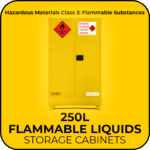
- flammable liquids and solvent-contaminated materials
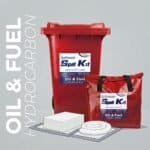
- oils, fuels and oily absorbents
- corrosive acids or alkalis
- chemical-contaminated solids, including PPE, wipes and loose absorbent.
Segregation matters because waste can react even after it has left the process area. Mixing oxidisers with combustible material, acids with alkalis, or incompatible solvents can generate heat, vapours, pressure or a release from the container. Clear waste-stream separation is usually a more reliable control than trying to solve an incompatibility after the fact.
The best hazardous waste containers by application
There is no single best hazardous waste container for every workplace. The most suitable type depends on the material, the volume generated, the transfer method and whether the waste stays on site for hours, weeks or longer.
Closed-head drums for liquid waste
Steel and high-density polyethylene closed-head drums are a common choice for liquid hazardous waste. Steel drums are often used for suitable oils, fuels and solvent waste, while polyethylene drums can be appropriate for many corrosive liquids. The material choice must be verified against the waste chemistry rather than assumed.
A drum is practical where waste is produced in moderate volumes and can be transferred through a bung opening. It is compact, stackable only where the drum design and site controls allow it, and straightforward for waste contractors to handle. Choose a drum with sound closures and avoid filling it to the brim. Leave adequate ullage so liquid has room to expand, particularly where temperature changes are possible.
Open-top drums for contaminated solids
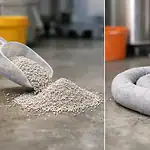
Open-top drums with removable lids are useful for solid or semi-solid hazardous waste. They can hold contaminated rags, used absorbent, disposable PPE, filters, paint solids and similar materials that do not pour easily through a bung.
The lid should be fitted promptly after waste is added. This helps contain vapours, prevents rainwater entering the drum and reduces the chance of incompatible rubbish being dropped in later. For solvent-soaked rags or other flammable contaminated materials, ensure the drum and storage arrangement are suitable for the hazard and are managed in line with site procedures.
Safety cans and small collection containers
At benches, maintenance bays and laboratories, a full-size drum is often impractical. Small, purpose-designed collection containers and safety cans allow teams to capture waste at the point of generation, then decant or transfer it under controlled conditions to a larger approved container.
This approach reduces carrying distances and discourages workers from using drink bottles, unlabelled buckets or open tins. Select containers with a self-closing or secure lid where appropriate, a stable base and a design that is suitable for the liquid or material being collected. Small containers still need labels. A container’s size does not reduce the hazard of its contents.
Overpack drums for damaged packages
An overpack drum is a secondary container used to enclose a leaking, damaged or compromised package. It can be an essential emergency response item where original chemical containers, small drums or waste packages have split, corroded or lost their closure.
Overpacks are not a substitute for correct routine waste storage. Their role is to provide immediate secondary containment, allow safe movement of a damaged package and prevent a release from spreading. Keep compatible absorbents, plugs and PPE nearby so the leak can be controlled before the package is placed into the overpack.
IBCs for higher-volume compatible waste
Intermediate bulk containers, or IBCs, can suit large volumes of compatible liquid waste where site handling equipment and waste collection arrangements support their use. They are commonly considered for oils and other suitable non-reactive liquid streams, but not every hazardous material is appropriate for an IBC.
An IBC introduces particular checks: valve protection, forklift handling, exposure to sunlight, fill level, container condition and the risk of residual product from prior use. Never rely on an IBC’s appearance alone. Confirm it is fit for the intended waste, compatible with it and acceptable to the receiving facility.
Material compatibility is the non-negotiable check
Container compatibility is where many otherwise sensible purchasing decisions fail. Some chemicals attack metals; others permeate or weaken certain plastics. Solvents can affect seals and gaskets, while corrosives can compromise closures over time. Heat from a reaction or hot process waste may also exceed a container’s intended operating conditions.
Check the container material, lid, bung, gasket and tap or valve, not just the body of the container. If waste is being accumulated over time, consider how the chemical concentration may change through evaporation or contamination. A container that is acceptable for a dilute product may not be suitable once the waste becomes more concentrated.
Where doubt remains, keep the material isolated and obtain technical confirmation. The cost of using a more suitable container is small compared with a chemical release, damaged stock, emergency clean-up or worker exposure.
Capacity, handling and secondary containment
Choose capacity based on how much waste your site produces between collections, while keeping manual handling and emergency response realistic. Oversized containers can sit for too long, become difficult to move and create a larger consequence if they fail. Undersized containers can lead to overfilling, makeshift storage and unnecessary transfers.
Containers should be stored upright, protected from vehicle impact and kept closed except when waste is being added. For liquids, use suitable bunding or spill pallets to contain a leak from the primary container. The bund must be compatible with the chemical and sized for the storage arrangement, not selected as a token precaution.
Consider the route from the work area to the waste storage point. If a drum must cross a busy forklift aisle, travel outdoors in wet weather or be moved by hand, the handling method needs to be built into the choice. A well-specified container is only effective if workers can use it safely every shift.
Labels, segregation and transport requirements
A hazardous waste container should be clearly labelled from the moment waste is first added. At a minimum, site labels should identify the contents, key hazards, accumulation date where required by procedure, and the responsible area or contact. Do not rely on memory, a marker note on the lid or the appearance of the liquid.
Keep incompatible wastes physically separated and use dedicated containers for each approved waste stream. Ensure labels remain readable if the container is exposed to oil, weather or chemical splashes. If waste will be transported off site, packaging, marking, documentation and transport requirements may apply under the Australian Dangerous Goods Code, as well as state or territory environmental requirements. Confirm the requirements with your licensed waste contractor before dispatch.
Work health and safety duties, dangerous goods obligations and environmental rules can vary by jurisdiction and by the quantity and classification of waste held. A container alone does not make a storage area compliant. It forms part of a broader system that includes risk assessment, segregation, signage, spill response equipment, inspections and staff training.
A practical buying check before ordering
When comparing hazardous waste containers, confirm the waste type and compatibility first. Then check the closure style, practical fill volume, lifting or handling method, intended storage duration and whether secondary containment is required. Finally, confirm that the container will be accepted by the waste contractor or receiving facility.
Inspect containers routinely for corrosion, swelling, cracked lids, damaged bungs, residue around closures and unreadable labels. Replace compromised units early rather than waiting for a leak. Stocking the right drums, overpacks, absorbents and bunding gives site teams a controlled response when waste handling does not go to plan.
The right container should make safe behaviour the easy option. Set up collection points close to the work, label them clearly, provide compatible spill controls and give workers a container they can close properly every time. That is the practical standard worth applying when selecting hazardous waste containment for your site.