Which Cabinet Stores Flammables Safely at Work?

A tin of solvent left beside a workbench, a few aerosols in a storeroom and a decanted container of fuel can quickly become a serious fire risk. The question, which cabinet stores flammables safely, is not answered by choosing any lockable steel cupboard. The correct choice is a purpose-built flammable liquids safety cabinet sized, located and managed for the substances and quantities on site.
For Australian workplaces, the safety data sheet (SDS), your dangerous goods register, site risk assessment and applicable requirements under AS 1940 should drive the decision. A cabinet is one part of a storage system. It must work with correct segregation, ignition control, spill containment and day-to-day housekeeping.
Which cabinet stores flammables safely?
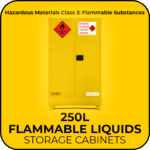
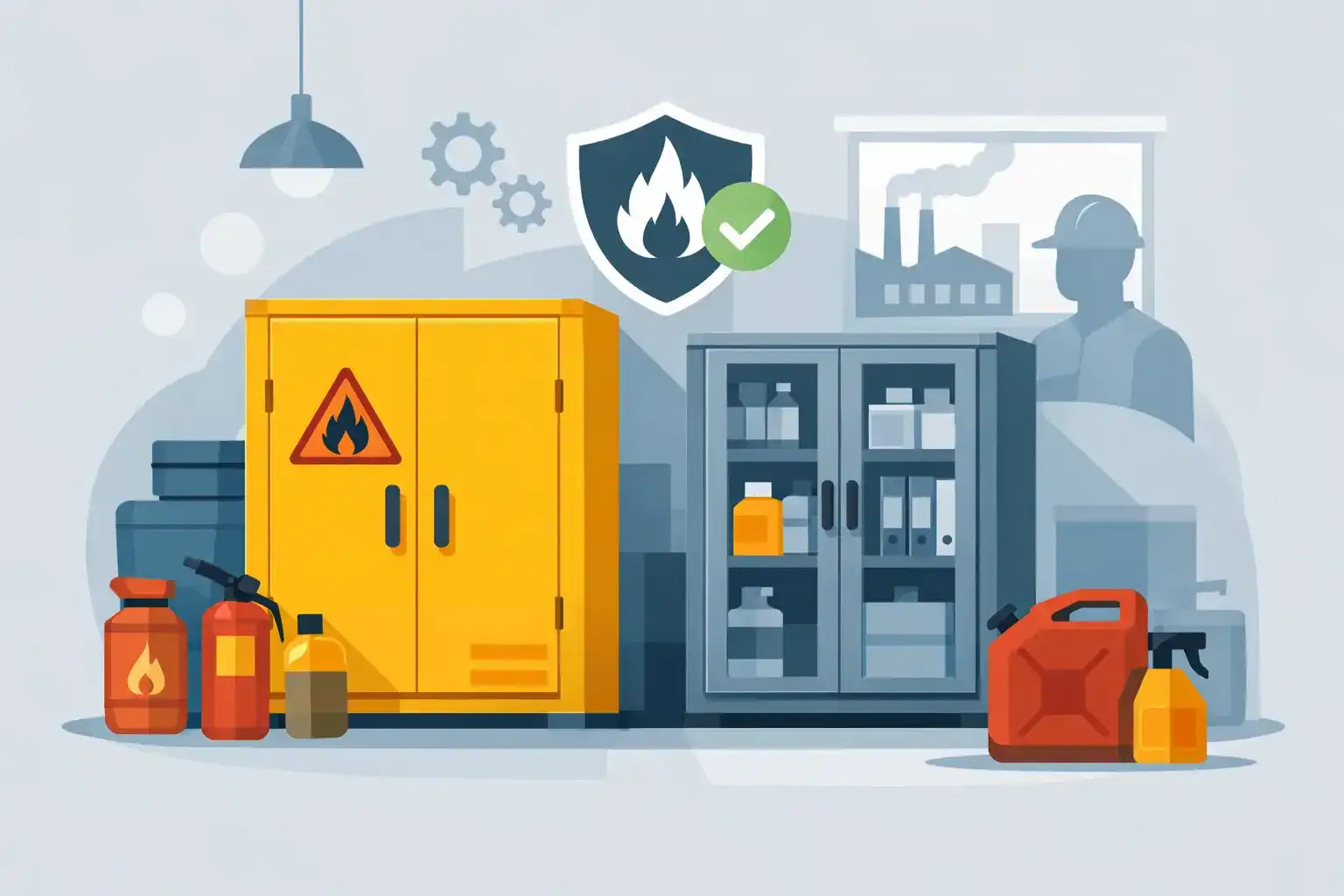
Flammable liquids should be stored in a dedicated flammable liquids safety cabinet designed for Class 3 dangerous goods. These cabinets are built to limit the consequences of a fire, contain minor leaks and keep incompatible products away from the flammable liquid store.
A fit-for-purpose cabinet is generally constructed from steel and incorporates a liquid-tight sump at the base. The sump captures leaks from damaged or poorly closed containers rather than allowing liquid to spread across the floor. Doors, seals, closing mechanisms and cabinet construction should be designed to meet the relevant Australian storage standard or stated compliance requirements for the intended use.
Do not substitute a general-purpose workshop cabinet, filing cabinet or chemical cupboard simply because it is metal and has a lock. Those products are not necessarily engineered to manage vapours, spills or fire exposure associated with flammable liquids. A cabinet for corrosives is also not automatically suitable for fuels, thinners or solvents. Product compatibility matters as much as the cabinet material.
The label matters too. The cabinet should be clearly identified for flammable liquids so workers, contractors and emergency responders can recognise the hazard without opening it.
Start with the substance, not the cabinet size
The SDS is the first document to check. It identifies the product’s dangerous goods class, subsidiary risks, flash point, recommended storage conditions and incompatible substances. Petrol, acetone, paints, solvents, adhesives, ethanol and some cleaning chemicals may all require flammable liquid controls, but their other hazards can differ.
Class 3 flammable liquids are commonly the products stored in a flammable liquids cabinet. However, do not assume every liquid in the workshop belongs there. Some products may be corrosive, toxic, oxidising or environmentally hazardous as well as flammable. Where a product has multiple hazards, assess the full SDS and ensure the proposed arrangement meets the strictest relevant control.
Oxidisers require particular attention. They can intensify combustion and should not be stored with flammable liquids. Likewise, acids, alkalis, poisons and reactive chemicals may need separate storage arrangements. Gas cylinders are not cabinet stock either. Flammable gases generally require an appropriate cylinder cage or purpose-designed gas storage solution with suitable ventilation, separation and signage.
If the product is decanted into a smaller container for regular use, that container still needs correct labelling and a secure closure. A compliant cabinet cannot compensate for unlabelled bottles or open solvent tins.
Choose capacity around the maximum likely quantity
The right cabinet capacity is based on the quantity that will genuinely be stored, not just what fits in the available floor space. Count full containers, partly used containers, decanted products and stock that may arrive before old stock is used. Then allow enough room for containers to be placed upright, identified and removed without forcing staff to move several items first.
Small under-bench cabinets can suit maintenance bays and laboratories where only limited working quantities are held. Tall cabinets provide more storage in a compact footprint for workshops and warehouses. Larger cabinets may be appropriate for bulkier containers, but increasing storage capacity can also change the separation distances, fire protection measures and licensing considerations that apply to the site.
Avoid treating a larger cabinet as permission to accumulate unnecessary stock. Keeping inventory to operational need reduces fire load, simplifies inspections and lowers the chance of expired or forgotten chemicals remaining on site. Frequent-use products should be managed through stock rotation, with older stock used first where safe and appropriate.
The sump capacity also deserves attention. It needs to contain a credible leak from the containers stored inside. Never line shelves or the sump with absorbent material in a way that restricts drainage, conceals a leak or conflicts with the cabinet manufacturer’s instructions. Keep compatible absorbents and a suitable spill kit nearby, but outside the cabinet so they remain accessible during an incident.
Location is part of safe storage
A compliant flammable liquids cabinet can still be poorly installed. Position it where staff can access products safely while keeping it away from ignition sources, hot work, welding areas, electrical equipment that may create sparks, direct heat and vehicle traffic. A cabinet located at the end of a forklift aisle is vulnerable to impact unless it is protected by suitable barriers.
The storage area should support safe handling. There needs to be adequate lighting, clear access, stable flooring and enough space for workers to transfer containers without blocking exits, walkways or emergency equipment. Do not place the cabinet where a leak could enter a drain, stormwater line or unprotected doorway.
Ventilation requirements depend on the products, cabinet design, room conditions and local regulatory expectations. Venting a cabinet is not always a simple improvement. Incorrectly installed ducting can compromise fire performance or create a path for vapours to travel. Follow the cabinet manufacturer’s instructions and obtain competent advice where mechanical ventilation or connection to an external system is being considered.
For larger quantities, storage may need to move beyond a cabinet-based solution to a dedicated dangerous goods store, outdoor storage area or purpose-designed container. This is where the SDS, AS 1940, WHS requirements and local fire authority guidance should be reviewed together. Cabinet storage is practical for many workplaces, but it has limits.
Check the cabinet features that affect daily use
The best cabinet is one workers can use correctly every shift. Doors should close properly and not be held open with tape, wedges or cartons. Shelves must be compatible with the intended containers and installed as specified. The cabinet should remain level so its sump can perform as intended.
When comparing flammable liquids cabinets, confirm the following practical points:
- the cabinet is specifically intended for flammable liquids and supported by clear compliance information
- its internal capacity, shelf load rating and sump capacity suit the containers being stored
- doors, handles and closing mechanisms are appropriate for the work area and expected frequency of access
- hazard labels are visible and replacement labels are available if damaged
- the cabinet can be safely delivered, positioned and protected from vehicle impact.
Price matters, but a lower-cost cabinet that does not suit the chemical class, storage volume or installation location is not a saving. The right specification reduces the risk of incident response costs, damaged stock, downtime and compliance failures.
Manage the cabinet after installation
Safe storage does not end when the cabinet is installed. Add the stored products to the dangerous goods register, maintain current SDS documents and train workers on what belongs in the cabinet. They should know to close lids, return products after use, report leaks and keep incompatible chemicals out.
Routine inspections are straightforward and effective. Check for damaged containers, residue in the sump, deteriorated labels, blocked access, corroded shelves, faulty door closures and stock that no longer has a clear purpose. Any spill inside the cabinet should be managed promptly using compatible PPE and absorbents, with contaminated material disposed of in accordance with site procedures.
Keep ignition sources under control near dispensing and transfer tasks. Where flammable liquids are being poured or pumped, use appropriate containers and handling equipment, and assess whether bonding or earthing is required to control static electricity. The cabinet protects stored liquids. It does not remove the risks created when containers are open.
A practical purchasing decision
For most workshops, warehouses and maintenance facilities, a dedicated Class 3 flammable liquids safety cabinet is the correct answer. Select it only after confirming the products, likely quantities, required segregation and installation location. If your operation holds larger volumes, mixed dangerous goods or frequently transfers fuels and solvents, a broader storage assessment is warranted before purchase.
Spillmaster supplies practical storage and spill-control equipment for workplaces that need clear, dependable dangerous goods controls. The useful question is not simply how much a cabinet holds. It is whether the cabinet supports safer handling, cleaner inspections and a storage arrangement your team can maintain every day.