Secondary Containment for Fuel Drums

For most workplaces, the question is not whether a drum might fail. It is when, where and how much impact that failure could have. Drums get moved by forklift, left in high-traffic areas, exposed to weather, overfilled or damaged around the rim and tap. Good containment planning assumes those risks are real and puts a barrier in place before a spill reaches the floor, the yard or a stormwater drain.
A single leaking fuel drum can shut down a work area faster than most teams expect. Clean-up costs, wasted product, slip hazards, soil contamination and compliance pressure all arrive at once. That is why secondary containment for fuel drums is not just a storage accessory – it is a practical control measure for any site handling diesel, petrol or other liquid fuels.
What secondary containment for fuel drums actually does
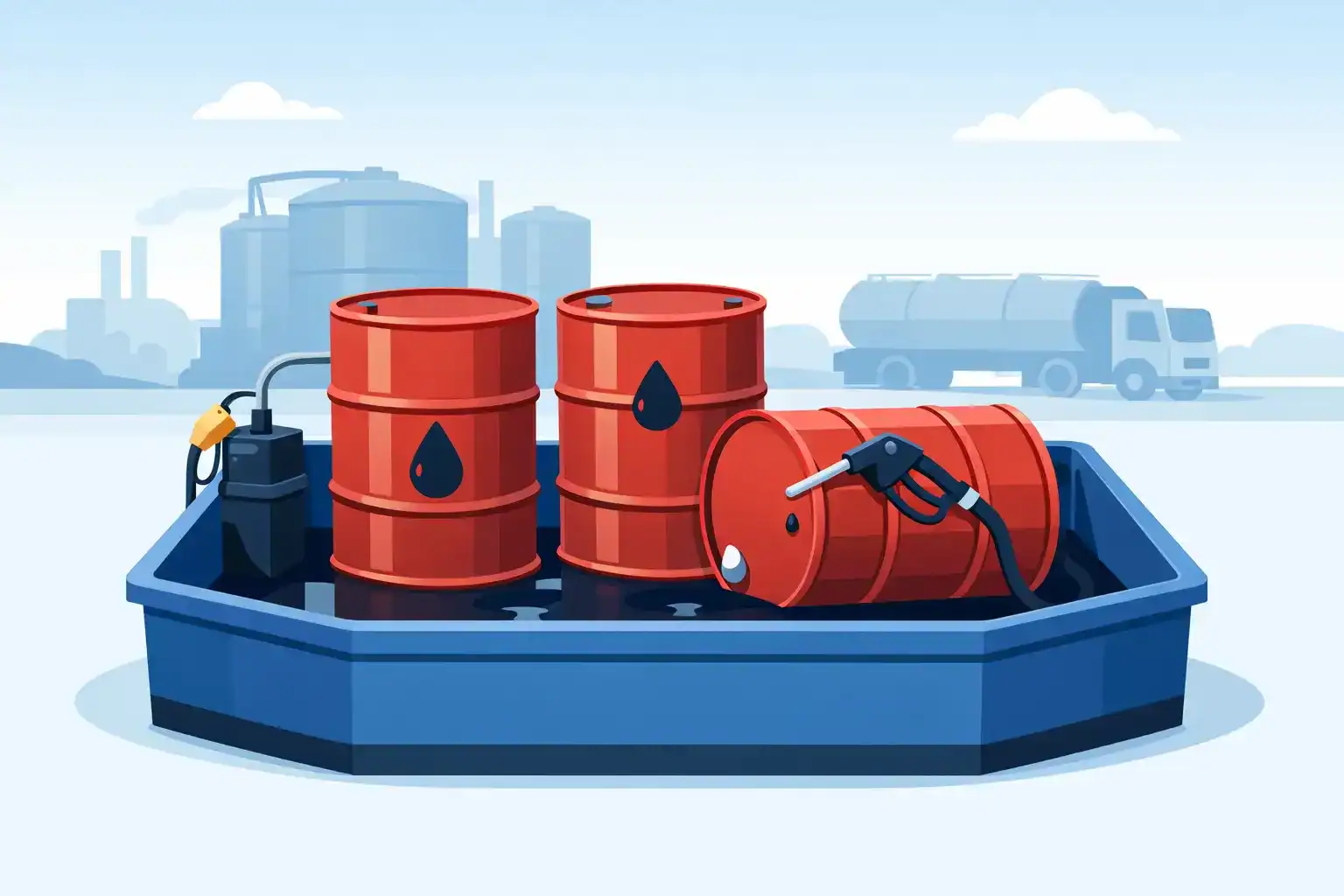
Secondary containment is the backup system that captures fuel if the primary container leaks, ruptures or overflows. In practice, that usually means storing drums on bunded pallets, spill pallets, drip decks or within bunded areas designed to hold escaped liquid.
The purpose is straightforward. It keeps fuel off the ground, away from drains and out of the path of workers, vehicles and ignition sources. It also gives your team time to respond properly, rather than scrambling to contain a spread that should have been controlled at the storage point.
This matters even when drums appear to be in good condition. Fuel containers often fail in ordinary ways rather than dramatic ones. A worn bung, a cracked tap fitting, corrosion at the base seam or a small puncture from rough handling can release enough liquid to create a serious site issue.
Why fuel drums need more than basic storage
Fuel is mobile, flammable and difficult to manage once it escapes containment. Unlike a small water leak, a fuel spill can spread quickly across concrete, travel with rainwater and generate vapours that increase risk around enclosed or busy work areas.
That changes the storage standard required. Sitting a drum directly on a warehouse floor or workshop slab might seem tidy, but it offers no protection if product escapes. A tray under the tap might catch drips during decanting, but it is not the same as a properly sized secondary containment system.
For operations managers and WHS teams, the practical issue is exposure. If a drum is stored near traffic routes, drains, fabrication areas, generators or loading zones, the consequences of failure are higher. The more active the area, the less margin for error.
Choosing the right secondary containment setup
The right setup depends on drum numbers, handling method, fuel type and where the drums are stored. There is no one-size-fits-all answer, which is why buyers should start with the operating conditions rather than the cheapest option.
Single drums and low-volume storage
For one or two drums in a controlled area, a bunded drum pallet is often the most practical choice. It keeps the drum elevated, captures leaks underneath and gives clear separation between the container and the floor. This is common in workshops, maintenance bays and smaller depots where fuel is kept for plant, utes or standby equipment.
The key here is capacity and fit. The containment unit needs to suit the number of drums stored and provide enough sump volume to capture likely spill scenarios. It also needs to handle the actual drum footprint and any dispensing accessories attached to it.
Multi-drum storage areas
Where sites store several drums together, larger spill pallets or modular bunding systems usually make more sense. These help centralise fuel storage, keep handling consistent and reduce the chance of drums being placed in ad hoc locations around the site.
The trade-off is space and access. Larger containment systems improve control, but they need enough room for drum placement, inspection and safe decanting. If forklifts are involved, load rating and entry design matter as much as sump capacity.
Outdoor fuel drum storage
Outdoor storage introduces a different problem – rainwater. If containment fills with water, available spill capacity drops. In some cases, that can leave a site with the appearance of compliance but not the actual function.
For outdoor areas, buyers need to think about weather exposure, drainage management and inspection frequency. Covered bunding or purpose-suited outdoor containment may be necessary where drums are stored long term or where seasonal rain is heavy. The goal is to preserve containment capacity, not just tick off that a pallet is present.
What buyers should check before purchasing
Secondary containment products can look similar at a glance, but performance differences matter in day-to-day use. A poor fit usually shows up after delivery, when the drum does not sit correctly, access is awkward or the unit cannot tolerate the handling conditions on site.
Start with chemical compatibility. Fuel products can affect materials differently, so the containment unit should be suitable for diesel, petrol or the specific hydrocarbons stored. Then check sump capacity, drum count, static load rating and whether the unit is intended for indoor or outdoor use.
Access is another practical factor. If staff need to dispense from the drum regularly, the setup should allow safe positioning and stable handling. If drums are moved often, forkliftable designs may be more efficient. If the area is tight, compact footprints may matter more than maximum storage density.
Spillmaster typically supports buyers who need that fit-for-purpose clarity, because storage and spill control products only work properly when the product matches the actual task.
Secondary containment for fuel drums and compliance
Compliance is one reason to install containment, but it should not be the only one. The real value is operational control. That said, fuel storage obligations are not optional, and secondary containment often forms part of what inspectors, auditors and internal safety teams expect to see.
Specific requirements depend on the workplace, the volume stored, the fuel class, site layout and the applicable Australian rules or local environmental conditions. That is why buyers should avoid making assumptions based on a different site or industry. A workshop, farm, warehouse, marina and civil yard may all store fuel drums, but their risk profile is not identical.
In practical terms, compliant storage usually means looking beyond the drum itself. You need to consider spill capture, separation from hazards, safe dispensing, access to spill response equipment and ongoing inspection. Containment is part of the system, not the whole system.
Common mistakes that create risk
The most common mistake is treating secondary containment as an afterthought. A drum arrives, it gets placed where there is room, and containment is added later if someone raises a concern. By then, poor positioning may already be creating unnecessary risk.
Another issue is under-sizing. Buyers sometimes choose containment based only on the number of drums, without allowing for fittings, taps or the real spill volume they may need to capture. That can leave the system technically present but practically limited.
Outdoor neglect is another frequent problem. Rainwater, debris and poor housekeeping reduce effectiveness over time. Containment only works if the sump remains available and the area is inspected. A pallet full of dirty water is not a reliable control measure.
There is also the temptation to improvise with trays, mats or makeshift barriers. Those products may help with minor drips during transfer, but they are not substitutes for proper secondary containment where fuel drums are stored.
Making containment part of everyday site control
The best containment setup is the one your team will actually use properly. That means placing it where drums are received, stored and accessed without awkward workarounds. If the containment unit slows down normal tasks too much, staff may bypass it, and the risk returns.
It helps to pair drum storage with nearby spill kits, clear signage and basic inspection routines. Check drum condition, fittings, sump contents and signs of impact damage. If dispensing happens at the storage point, keep absorbents and PPE close enough that a small incident can be managed immediately.
Good site control is usually not about complexity. It is about choosing equipment that suits the task, putting it in the right place and making sure it stays serviceable.
When a standard solution is not enough
Some sites need more than a basic spill pallet. High-throughput fuel use, mixed chemical storage, uneven outdoor ground, mobile refuelling operations or shared contractor areas can all change the containment requirement.
In those cases, it is worth stepping back and looking at the full storage process. How often are drums moved? Who dispenses fuel? Is the area exposed to vehicles? Could a leak reach stormwater? Are drums stored temporarily or permanently? Those details often determine whether a simple drum bund is suitable or whether a larger bunded storage approach is the safer option.
If you are buying secondary containment for fuel drums, the best decision is usually the one that reduces the most likely risk on your site, not the one that simply fills a line item on a procurement list. A well-chosen containment system does its job quietly, every day, until the moment you need it most. “View our full range of certified Spill Pallets for compliant drum and IBC secondary containment.”