Workplace Spill Reporting Guide for Australian Sites

A 20-litre drum knocked from a pallet, a leaking forklift hydraulic line or a chemical container with a damaged cap can become more than a clean-up job. A sound workplace spill reporting guide ensures the spill is controlled, the right people are notified, evidence is captured and the same failure is less likely to happen again.
For Australian worksites, reporting is a practical safety control. It creates a clear record for supervisors, safety teams and environmental managers, while supporting the business to meet duties that may apply under WHS, environmental protection, dangerous goods and site-specific requirements. The exact reporting threshold depends on the substance, quantity, location and jurisdiction. Your procedure should account for all four.
Report after making the area safe
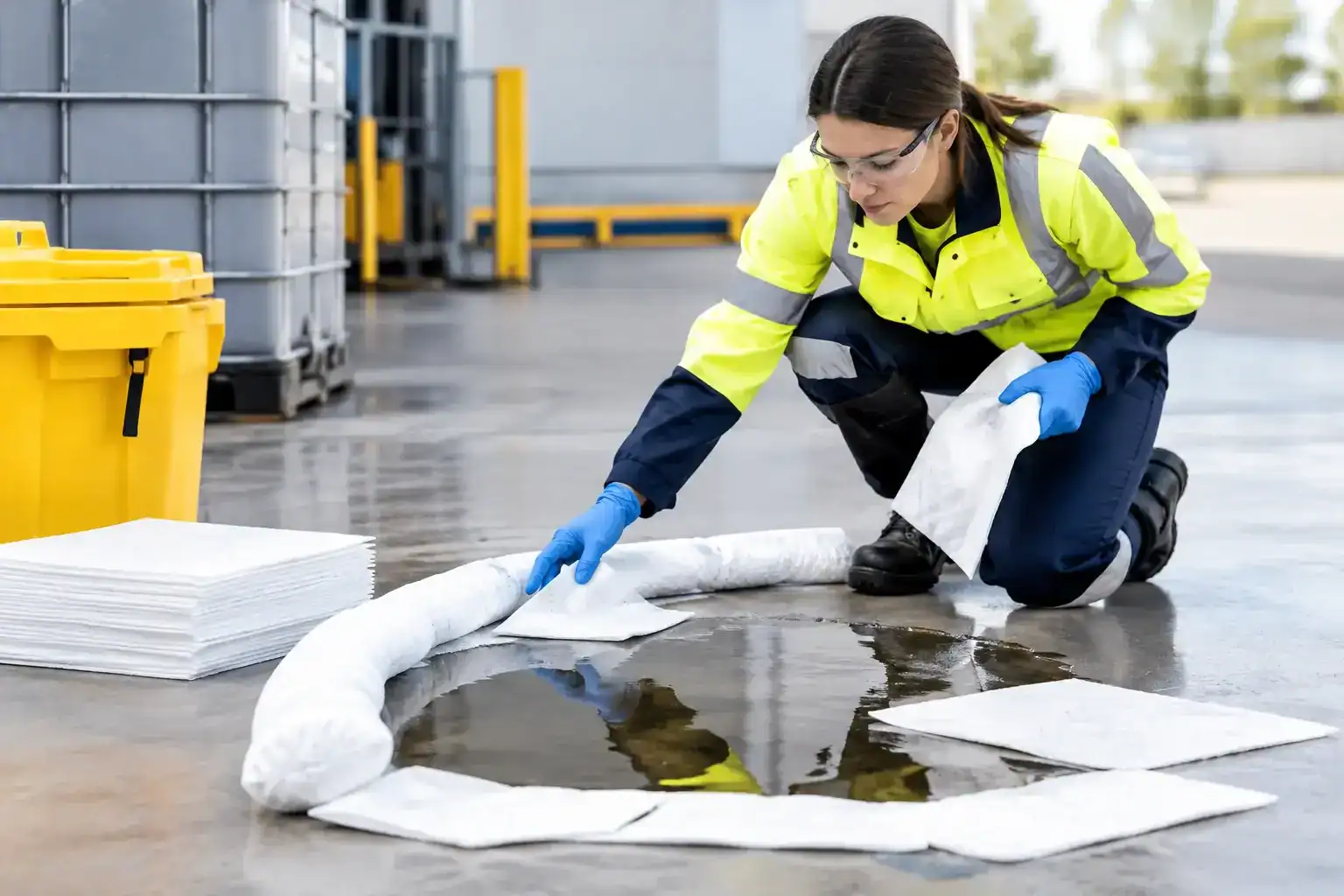
The first priority is always people, not paperwork. If a spill presents an immediate risk, isolate the area, stop the source where safe to do so and use the correct spill response equipment. Keep ignition sources away from flammable liquids, prevent material entering drains and wear PPE suited to the substance involved.
Do not ask an untrained worker to manage an unknown chemical spill. Refer to the safety data sheet, site emergency procedure and the relevant supervisor or emergency contact. For a significant release, vapour hazard, fire risk, drain entry or exposure incident, escalate immediately under the site emergency plan.
Once the immediate danger is controlled, report the incident as soon as practicable. Waiting until the end of a shift can mean key details are forgotten, contaminated absorbents are moved without a disposal plan, or a leak source remains in service.
What counts as a reportable spill?
A report should be raised for more than obvious, large-scale releases. Small spills, near misses and recurring leaks provide useful evidence of a developing problem. A few drops of oil from the same plant each week may indicate failed seals, poor maintenance or an unsuitable storage arrangement.
Your internal reporting procedure should cover any unplanned release of oil, fuel, coolant, chemicals, solvents, acids, alkalis, paints, wastewater or other potentially harmful substances. It should also cover spills that reach, or could reasonably reach, stormwater drains, soil, waterways, neighbouring property or public areas.
External notification requirements are different from internal reporting. Depending on the material and circumstances, notification to emergency services, a regulator, landowner, local authority or environmental authority may be required. Confirm the applicable obligations for your state or territory rather than relying on a generic threshold.
Information to capture in a workplace spill report
A useful report is factual, timely and detailed enough for another person to understand what occurred without guessing. Avoid assigning blame in the initial record. The purpose is to establish the facts, manage the risk and identify corrective action.
Record the date, time and exact location, including the relevant bay, workshop area, loading zone or drain location. Identify the substance and estimate the volume released. If the material is unknown, state that clearly and attach or reference the container label, product name, UN number or safety data sheet where available.
The report should explain how the spill was discovered, what was happening at the time and the apparent source. Note weather conditions for outdoor spills, especially where rain, wind or stormwater movement may affect the spread. Record whether anyone was exposed, whether PPE was worn and whether first aid or medical assessment was required.
Also document the response. This includes the workers involved, isolation measures used, absorbents or booms deployed, drains protected, contaminated materials collected and the person who authorised the area to return to service. Clear photos can be valuable, provided they are taken safely and retained in line with company policy.
A practical incident record includes
For consistency, a spill form or digital system should capture at least these details:
- the substance, estimated quantity, hazard classification and source of the release
- the location, time, weather conditions and any drains, soil or waterways at risk
- actions taken to contain and clean up the spill, including PPE and equipment used
- people exposed, injuries, property damage, environmental impact and notifications made
- corrective actions, assigned responsibilities and due dates for completion.
A report that only says “oil spill cleaned up” does not support investigation, disposal decisions or prevention. A short but specific record is far more useful: “Approximately five litres of hydraulic oil released from a damaged hose at forklift bay three. Stormwater grate protected with drain cover and absorbent socks. Hose tagged out, waste placed in labelled drum and maintenance work order raised.”
Escalation and notification decisions
Every site should define who receives spill reports and who decides whether the incident needs external notification. In a small workshop, that may be the owner or manager. On a larger site, it may be the supervisor, HSE manager, environmental adviser and emergency response lead.
Escalate quickly where there is a hazardous chemical, a large or uncontrolled release, a fire or explosion risk, worker exposure, a spill beyond the site boundary or contamination of a drain or waterway. Do the same where the substance is a dangerous good, the release involves a transport incident, or specialist clean-up support is needed.
It is better to escalate an uncertain event than to assume it is minor. The person making the report does not need to make a legal determination. Their role is to provide accurate information promptly so the responsible person can assess the notification requirement.
Keep a record of every notification, including the time, name of the person contacted, advice received and any reference number. This is particularly important where regulators or emergency services provide instructions about containment, sampling, disposal or site access.
Investigate the cause, not just the spill
Clean-up is only the first stage. Once the site is safe, investigate why the release occurred. Many spills are predictable: an overfilled container, a poorly secured drum, an unsuitable decanting method, forklift contact, worn hose, damaged valve or insufficient bunding.
Look beyond the immediate error. If a drum was punctured by a forklift, ask whether traffic routes, racking protection, load handling practices and storage layout were adequate. If a container overflowed, check whether staff had access to suitable funnels, dispensing equipment, fill-level controls and clear procedures.
Corrective actions should be specific and assigned to a person with authority to complete them. “Take more care” is not a control. Replacing a failed hose, installing spill pallets, adding a drain cover near a transfer point, separating incompatible chemicals or changing inspection frequency are actions that can be verified.
Close the report only when corrective actions are complete or formally transferred into the maintenance or risk-management system. A supervisor should check that contaminated absorbents, soil, PPE and other waste have been classified and disposed of through an appropriate waste stream. Absorbent material used on chemicals or oils must not automatically go into general rubbish.
Make reporting easy during real work
A reporting process fails when it is too slow, unclear or hidden in an office folder. Keep spill forms available in the same places as spill kits, such as loading docks, workshops, chemical stores and mobile response vehicles. Digital reporting can work well, but sites should also have an option that remains usable during power, network or mobile coverage issues.
Train workers on the difference between a minor spill they can safely manage and an incident that requires immediate escalation. Run short drills using likely scenarios for the site: diesel at a refuelling point, oil in a workshop, a leaking chemical drum in storage or a spill approaching a stormwater grate.
Equipment must match the hazards. General-purpose absorbents are useful for many water-based fluids and oils, while oil-only absorbent products are designed for hydrocarbons and repel water. Chemical spill kits, compatible PPE and suitable containment are required where hazardous chemicals are handled. Spillmaster supplies these categories for sites that need practical, fit-for-purpose response equipment rather than a one-size-fits-all kit.
Review reports at regular safety meetings. Repeated incidents in one area often reveal a purchasing, maintenance, storage or training gap that is not obvious from a single report. Trend data also helps justify improvements before a minor release becomes a costly environmental incident.
A spill report is most valuable when it leads to a safer next shift. Put the form where workers can reach it, keep the right containment equipment close to the risk, and treat every recurring leak as a reason to act.