Best Spill Kits for Workshops That Fit the Job


A small pool of oil beneath a hoist can quickly become a slip hazard, find its way to a drain, or spread across a busy workshop floor on vehicle tyres and boots. The best spill kits for workshops are not simply the biggest kits on the shelf. They are the kits that suit the liquids on site, can be reached without delay, and give workers what they need to contain and clean up safely.
For workshop managers, maintenance supervisors and safety officers, the selection decision should start with the work being carried out. Our How to Select a Spill Kit guide covers the broader selection process; this article applies those principles specifically to workshops. An automotive repair bay, a heavy equipment workshop and a fabrication area may all use oils and fuels, but their spill risks, floor space and chemical inventory can be very different. A fit-for-purpose kit supports a faster response and helps maintain a cleaner, more controlled workplace.
What Makes the Best Spill Kits for Workshops?
A workshop spill kit needs to deal with the most likely spill, not an imagined worst-case event alone. Look first at the substances regularly handled, transferred or stored: engine oil, hydraulic fluid, diesel, petrol, coolant, solvents, degreasers, battery acid or cleaning chemicals. The safety data sheet for each product is a useful starting point, particularly where chemicals are corrosive, flammable or hazardous to people or the environment.
Capacity matters, but it is only one part of the decision. A 120-litre kit may look comprehensive, yet it is of limited value if it is stored behind stock or is filled with absorbents that are unsuitable for the liquid spilled. Equally, a small grab-and-go kit may be ideal near a parts-washing station but inadequate for a burst hydraulic hose on mobile plant.
The most effective workshop arrangements often use more than one kit size. A larger wheeled kit can be positioned near the main work area or fluid storage point, while compact kits are placed at known risk points such as service bays, waste-oil tanks, battery charging areas and chemical stores. This reduces the distance workers must travel when every minute counts.
Match the absorbent to the liquid
General purpose absorbents are commonly suitable for non-aggressive workshop liquids, including oils, coolants, water-based fluids and many everyday maintenance spills. They are a practical choice where the workshop has mixed, low-hazard liquid risks and a single response kit is required.
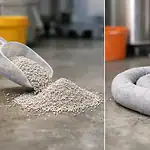
Oil-only absorbents are designed to take up hydrocarbons while repelling water. They are useful around fuel and oil handling areas, wash bays, outdoor hardstands and drains where rainwater may be present. If diesel or lubricating oil can escape outdoors, oil-only socks, pads and booms are especially useful for protecting stormwater.
Hazchem absorbents are intended for hazardous chemical spills, including many acids, alkalis and unknown liquids. They are appropriate where the workshop uses corrosive cleaners, chemical treatment products, laboratory-style fluids or other substances that should not be managed with standard general purpose absorbents. Check chemical compatibility before relying on any kit. No absorbent category removes the need to follow the product safety data sheet and site procedures.
Choose a Kit Format Workers Will Use
A spill kit has to work in real workshop conditions: tight bays, uneven surfaces, moving equipment and workers wearing gloves. The container format affects how quickly it can be deployed and maintained.
A shoulder bag or small carry bag suits service vehicles, mobile maintenance teams and individual workstations. It is easy to move, but its capacity is limited. A hard-case kit provides better protection from dust, moisture and knocks, making it a sensible option for fixed areas where supplies need to remain clean and identifiable.
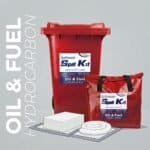
For larger workshop risks, wheelie bin spill kits are usually the practical choice. They hold a substantial volume of pads, socks, pillows, disposal bags and protective equipment, and can be wheeled directly to the spill. A bin also gives the kit a clear home, which makes routine inspections easier. In areas with limited room, confirm that the bin can still be moved through access ways and around parked equipment.
The kit should be clearly labelled for its intended use. Workers should not have to guess whether a yellow chemical kit is reserved for corrosives or whether a grey general purpose kit can be used on a fuel spill. Clear labelling, simple instructions and a known storage location are as valuable as adding more absorbent pads.
Size the Kit Around Credible Spill Scenarios
Rather than choosing a kit solely by its advertised litre capacity, consider what could reasonably be released before the source is isolated. A workshop that changes small volumes of engine oil may need several accessible 20-litre or 50-litre kits. A site servicing trucks, forklifts, agricultural machinery or plant equipment may need a 120-litre or 240-litre wheeled kit near the work zone, supported by smaller kits in service bays.
Consider the volume in hoses, filters, drums, jerry cans, hydraulic systems and transfer containers. Also allow for the fact that absorbents may be used to build a barrier before workers begin recovery. A spill kit sized only to absorb the liquid volume can be too lean once socks are laid around drains and pads are used to protect walking areas.
When assessing capacity, account for the physical layout. Sloped floors, roller doors, drainage pits and floor grates can turn a modest spill into an environmental incident. Drain covers, absorbent socks and booms should be available wherever liquids could reach stormwater or trade waste drains.
Contents That Earn Their Place in a Workshop Kit
A useful spill kit is a complete response system, not just a bale of pads. The exact contents will vary, but a well-specified workshop kit should provide materials to stop the spread, recover the liquid, protect the responder and manage the waste.
Absorbent socks are usually the first item deployed. They can be shaped around a spill, placed across a doorway or positioned around drains to create a boundary. Pads are then used for surface recovery, while pillows are helpful where liquid has pooled or where a leak is continuing beneath machinery.
Personal protective equipment is equally important. At a minimum, the kit should contain gloves appropriate to the materials handled, along with suitable eye protection where splash risk exists. For hazardous chemicals, the required PPE may be more specific than what is stored in a standard kit. Site procedures and safety data sheets should determine whether chemical-resistant gloves, face protection, protective clothing or respiratory protection is needed.
Disposable bags and ties are often overlooked until clean-up is underway. Used absorbents can be contaminated waste and should be bagged, labelled and disposed of according to the substance involved and local waste requirements. Do not place fuel-soaked pads, chemical residues or contaminated PPE in general rubbish simply because the spill appears small.
Do Not Treat a Spill Kit as a Standalone Control
Spill kits are a response measure. They do not replace correct chemical storage, bunding, drip trays, preventative maintenance or staff training. The strongest workshop spill controls reduce the likelihood of a release before workers ever open the kit.
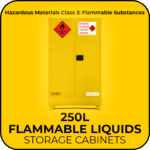
Store oils, fuels and chemicals in suitable containers and keep incompatible substances separated. Use bunding or spill pallets beneath drums and containers where leaks could occur. Inspect hoses, fittings, tanks and mobile plant for damage, particularly in high-use areas. Where flammable liquids are stored, use appropriate storage solutions and keep ignition sources controlled.
Training should be practical. Workers need to know when they can safely manage a minor spill and when to isolate the area, notify a supervisor or escalate to emergency services or specialist responders. An unknown chemical, a spill affecting a drain, a significant fuel release or fumes that present a health risk should never be treated as routine housekeeping.
Inspect, restock and replace promptly
An empty or incomplete kit is a compliance risk disguised as a safety control. Nominate a person or team to inspect each kit on a planned schedule and after every use. Check that the container is accessible, labels remain legible, PPE is intact, disposal bags are available and absorbents are dry and uncontaminated.
Refill packs make it easier to replace used pads, socks and pillows without purchasing an entirely new kit. Keep a record of inspections and replenishment, particularly if the workshop operates under a formal environmental management or safety system. The record also helps identify recurring leaks and high-use areas that may need better preventative controls.
A Practical Buying Decision
For most workshops, a general purpose kit is the sensible base option where oils, coolants and mixed maintenance fluids are the main concern. Add oil-only response materials where fuels, outdoor work or drainage exposure create a risk, and use a dedicated hazchem kit wherever corrosive or hazardous chemicals are present. If the site has several distinct risks, separate kits are clearer and safer than trying to make one kit cover every scenario.
Buy enough capacity for the credible release, position kits where workers can reach them immediately, and make sure the contents match the substances on site. A properly selected kit gives your team a practical first response when a leak or spill occurs, while better storage, maintenance and inspection help ensure they need to use it less often.