Chemical Compliance for Safer Worksites


A leaking 20-litre drum, an unlabelled decanted bottle or a spill kit buried behind stock can quickly turn a routine shift into an incident. Chemical compliance is the day-to-day discipline of knowing what chemicals are on site, controlling how they are stored and used, and ensuring workers can respond safely if something goes wrong.
For Australian workplaces, compliance is not a once-a-year paperwork exercise. It sits across work health and safety duties, dangerous goods requirements, environmental obligations and the practical expectations of customers, insurers and workers. The exact requirements vary by state, territory, chemical type and quantity, but the operating principle is consistent: identify hazards, apply suitable controls and keep those controls working.
What chemical compliance looks like on site
Chemical compliance is the system behind safe chemical handling. It covers procurement, delivery, storage, labelling, use, spill response, waste handling and record keeping. A site may have the right cabinet or spill pallet, but it is not compliant in practice if incompatible products are stored together, containers are left open, or workers do not know what to do during a release.
The strongest systems make safe work the easy option. Chemicals have a defined storage location. Safety Data Sheets (SDS) are current and available to workers. Containers are labelled. Required personal protective equipment is close to the task. Spill control equipment is accessible, suitable for the liquid involved and replaced after use.
This approach also helps control cost. Small leaks can damage stock, contaminate drains, interrupt operations and create disposal costs well beyond the price of the original chemical. Prevention and early containment are usually the lower-cost option.
Start with a current chemical inventory
A chemical register gives a business a clear starting point. It should identify hazardous chemicals held or used at the workplace, their quantities, locations and current SDS. Include products kept in workshops, plant rooms, cleaning cupboards, maintenance utes and temporary project areas. These are often the places where site controls become inconsistent.
Review the register whenever a new product arrives, an existing product changes formulation or a chemical is no longer used. Avoid assuming that a product is low risk because it is familiar. Degreasers, cleaning agents, paints, fuels, oils, aerosols, adhesives and batteries can all create hazards that need to be assessed.
The inventory should match the physical site. If the register records four drums of solvent but six are stored in the warehouse, the business cannot accurately assess its exposure or prepare for an emergency. Regular walk-through inspections are the practical check.
Use SDS information to set controls
An SDS is not just a document to file. It tells the site what hazards apply and what controls are required. This includes recommended PPE, first aid measures, fire risks, incompatible substances, storage conditions and spill-response advice.
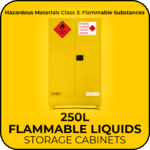
Before bringing in a new chemical, check whether it creates a storage or response requirement the site cannot meet. For example, a flammable liquid may need a suitable flammable liquids storage cabinet, while corrosives may require separate containment and compatible PPE. Storing products according to convenience rather than compatibility is a common and avoidable failure.
Store chemicals for containment, separation and access
Storage controls depend on the chemical and the volumes held. However, several practical principles apply across most workplaces. Keep containers closed and in good condition, protect them from impact and weather exposure, and store them where unauthorised people cannot access them. Keep aisles, emergency equipment and exits clear.
Secondary containment is a key control where leaks could reach floors, soil, drains or waterways. Spill pallets, bunds, drum trays and other bunding products can contain a release before it spreads. The right option depends on the containers being stored, the substance, the available space and how stock is moved.
A pallet that suits four 205-litre drums may not suit frequent decanting or forklift movements. Likewise, a cabinet may be appropriate for smaller containers but not for bulk fuel storage. Select equipment around the actual task and storage volume, rather than treating every hazardous product as the same category.
Segregation matters just as much as containment. Some substances can react dangerously when mixed, while flammables must be controlled away from ignition sources. Follow the SDS and relevant dangerous goods guidance when planning storage areas. If there is uncertainty about classifications, quantities or separation distances, obtain competent advice before changing the layout.
Keep labels clear after decanting
Original supplier labels should remain legible. If a chemical is decanted into a smaller container for use, that container must be labelled so workers can identify its contents and hazards. An unlabelled spray bottle is not a minor housekeeping issue. It can lead to incorrect use, unsuitable PPE selection or dangerous mixing.
Labels should be durable enough for the environment. Workshop heat, moisture, chemical splashes and repeated handling can quickly make handwritten labels unreadable. Check labels during routine inspections and replace damaged containers rather than trying to manage a known weak point.
Do not reuse food or drink containers for chemicals. The risk of mistaken consumption is obvious, but it also undermines the basic requirement that hazardous substances are clearly identified and safely contained.
Make spill response part of chemical compliance
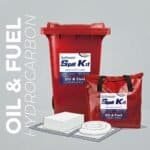
Every site using hazardous chemicals needs a credible response plan for foreseeable spills. That means more than owning a chemical spill kit. Workers need to know where it is, what it contains, when they can safely use it and when an incident must be escalated.
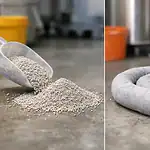
The correct absorbent depends on the liquid involved. General purpose absorbents can suit many workshop fluids, while oil-only absorbents are designed to repel water and are useful around waterways, marine work and outdoor fuel spills. Chemical absorbents are intended for a broader range of hazardous liquids, including aggressive chemicals. Choosing the wrong type can delay containment or create a false sense of control.
A practical spill response arrangement includes suitable absorbents, booms or socks to stop spread, disposal bags or containers, gloves and other PPE, and clear instructions. Kits should be placed close to credible spill points such as chemical stores, refuelling areas, loading zones, workshops and waste storage areas. A kit locked in an office is of limited value when a drum leaks at the far end of a warehouse.
After any spill, replenish used items immediately and investigate why it happened. A split drum, failed tap or poor transfer method may point to a maintenance or process issue that needs correcting. Treating every spill as an isolated event allows the same failure to recur.
Train for the task, not just the induction record
Training needs to reflect the work people actually perform. A warehouse worker moving drums by forklift, a technician decanting solvent and a cleaner using concentrated chemicals do not face the same risks. Each worker should understand the relevant hazards, required PPE, storage rules and emergency actions for their role.
Short, site-specific refreshers are often more effective than relying on a generic annual module. Use toolbox talks to cover changes in products, recurring housekeeping problems, near misses or lessons from an incident. Ask workers to locate the SDS, identify the correct spill kit and explain the first steps they would take after a release. This tests whether the system works under pressure.
PPE must also match the chemical and task. Gloves are not interchangeable. Material compatibility, breakthrough time, grip, dexterity and splash risk all matter. Refer to the SDS and manufacturer information rather than selecting gloves solely because they are available in the cupboard.
Inspect, maintain and document the controls
Chemical compliance weakens when equipment is installed and forgotten. Build checks into normal site routines. Inspect containers for corrosion, dents and leaks. Confirm bunds and spill pallets are clean enough to provide their designed capacity. Check cabinet doors, shelving and signage. Make sure spill kits are complete and absorbents have not been removed for unrelated cleaning jobs.
Record inspections, corrective actions, training and incidents in a form that can be reviewed. Documentation demonstrates that controls are being managed, but its bigger value is operational. Patterns become visible: the same loading area may generate repeated leaks, or one contractor may be leaving chemicals outside the designated store.
Review the system after layout changes, seasonal weather events, new plant installation or a change in chemical volumes. A compliant arrangement can become unsuitable when stock levels increase or a work area changes purpose.
Good chemical control is built through ordinary actions done consistently: a labelled container, a clean bund, the right gloves and a spill kit within reach. For worksites that need dependable containment, storage and response equipment, choosing fit-for-purpose products is one practical way to keep those actions reliable when they matter.