Best Flammable Storage Cabinet Features

A leaking five-litre solvent container can become a much larger problem when it is stored beside ignition sources, incompatible chemicals or a busy workshop aisle. The best flammable storage cabinet features are the ones that control that risk in normal day-to-day use, not just the ones that look suitable on a specification sheet.
For Australian workplaces handling fuels, paints, solvents, thinners and other Class 3 flammable liquids, cabinet selection should begin with the product being stored, the quantities on site and the way the area operates. A cabinet must support safe storage, spill containment and access control while fitting the applicable dangerous goods requirements for the site.
Best flammable storage cabinet features for worksites
A fit-for-purpose flammable liquids cabinet is more than a steel cupboard. It is a containment and fire-risk control that needs to perform when containers drip, staff are moving quickly, or an emergency occurs nearby. The best choice balances compliance, capacity and practical usability.
Construction designed for flammable liquids
Start with cabinet construction. Flammable storage cabinets should be purpose-built for dangerous goods, not repurposed tool cabinets or general chemical cupboards. Look for a cabinet designed and manufactured to meet the relevant requirements of AS 1940, the Australian Standard covering the storage and handling of flammable and combustible liquids.
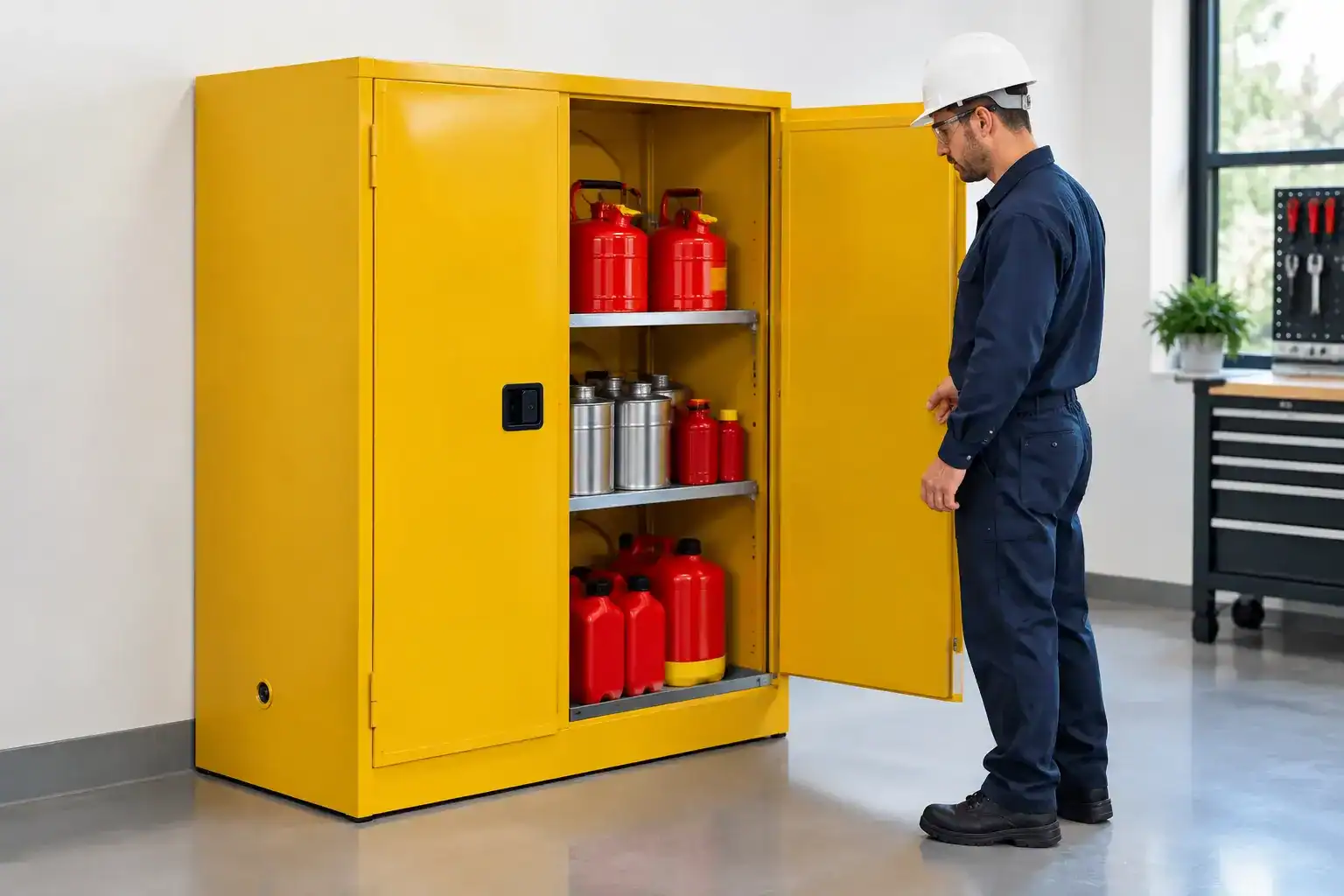
Common design elements include a double-skinned steel body with an insulating air space, tightly fitted doors and protected openings. These features help limit heat transfer to stored liquids during a fire and provide a controlled storage point for containers that could otherwise be spread throughout a workshop or warehouse.
Do not assume that a yellow finish alone makes a cabinet compliant. Colour assists with identification, but documented construction, suitable warning labels and the manufacturer’s stated standard are what matter when assessing a cabinet for workplace use.
A liquid-tight sump with sufficient capacity
Spill containment is one of the most useful cabinet features in everyday operation. A liquid-tight base sump captures leaks from damaged containers, loose caps and decanted products before they reach the floor, drains or other chemicals.
Check the sump capacity against the volume and type of containers being stored. A cabinet used for many small tins may need a different shelf layout from one holding 20-litre drums. The sump must remain unobstructed, so avoid filling the bottom of the cabinet with loose cartons, funnels or absorbent packs.
Adjustable, perforated steel shelves are also valuable. They allow small leaks to drain safely into the sump rather than pooling underneath containers, and they make it easier to configure storage around the actual packaging used on site. Confirm each shelf’s load rating, particularly where liquids are stored in metal cans or larger containers.
Doors that suit the work area
Door style has a direct effect on safety and workflow. Manual-close doors can be appropriate where access is infrequent and staff can reliably close the cabinet after each use. Self-closing doors add another layer of control in busier locations, reducing the chance the cabinet is left open during a shift or when staff are called away.
The right option depends on the operating environment. In a maintenance store where one authorised person accesses products occasionally, manual doors may be suitable. In a production area where solvents are issued several times a day, self-closing doors can provide better protection against human error.
Check that doors close fully without striking nearby benches, pallets or equipment. For larger cabinet units, consider the swing path and whether two-door access is needed to remove containers safely. Doors that cannot be opened properly tend to be propped open, defeating the purpose of the cabinet.
Ventilation provisions, used correctly
Ventilation is often misunderstood. A flammable liquids cabinet may have capped vent ports that allow connection to a dedicated mechanical exhaust system where a risk assessment identifies the need. This is not the same as leaving vents open by default.
Uncontrolled venting can reduce a cabinet’s fire protection performance and may introduce vapours into unsuitable areas. If ventilation is required, it should be designed for the application, installed correctly and maintained as part of the site’s hazardous chemicals controls. The cabinet manufacturer’s instructions, site risk assessment and relevant Australian requirements should guide the decision.
For many applications, the better starting point is to minimise vapour release at source: keep containers sealed, clean up drips promptly, avoid decanting inside the cabinet unless the procedure and equipment allow for it, and store only compatible products together.
Security, labelling and clear identification
Flammable liquids should not be freely accessible to every person entering a work area. A lockable cabinet helps prevent unauthorised use, theft and product misuse. It also supports stock control for higher-value products such as solvents and fuels.
Security should not obstruct emergency response. Relevant personnel need to know what is inside, where keys or access controls are held, and how to respond to a spill or fire. Clear dangerous goods signage, Class 3 identification and visible no-smoking warnings help workers and contractors recognise the hazard before opening the doors.
Keep the cabinet inventory current. Safety data sheets should be readily available to workers, but they do not need to be stored inside a cabinet where they could be inaccessible during a fire. A current chemical register also makes it easier to identify incompatible goods and avoid exceeding site storage limits.
Capacity matched to actual stock levels
Buying the largest cabinet available is not always the safest or most economical decision. A large unit may encourage excess chemical purchasing, consume valuable floor space and make stock rotation harder. Conversely, an undersized cabinet can lead to containers being left on benches, stored in open trays or placed in unsuitable cupboards.
Calculate the maximum volume normally held on site, including reserve stock and products waiting for disposal. Then allow sensible room for inspection and safe handling. Containers should be stable, labels visible and easy to remove without dragging other products forward.
Storage thresholds, aggregate quantities and location rules can change depending on the substances involved and the premises. An EHS officer, dangerous goods adviser or other competent person can help determine whether a cabinet is sufficient or whether the site requires a dedicated store, external storage or additional controls.
Features that depend on cabinet location
Even the right cabinet can create a hazard when positioned poorly. Place flammable liquid storage away from ignition sources, hot work, direct sunlight, vehicle impact areas, exits and stairways. The cabinet should not restrict an escape route or create an obstacle in a high-traffic aisle.
Where forklifts, pallet jacks or trolleys operate nearby, consider impact protection. A cabinet with dented doors, damaged hinges or a compromised sump is no longer providing the certainty it was purchased for. In exposed locations, bollards or a better siting arrangement may be more effective than relying on the cabinet body alone.
The surrounding surface matters as well. Position the unit on a stable, level base so doors and shelves operate correctly and leaked liquid remains within the sump. Keep compatible spill response equipment close enough to use quickly, without placing absorbents or spill kits where they block cabinet access.
Earthing and static control for transfer tasks
If flammable liquids are being transferred between containers, static electricity must be considered. A storage cabinet is not automatically a dispensing station. Where decanting is required, use a designated area and an appropriate bonding and earthing procedure for the liquid, containers and equipment involved.
Some cabinet setups include an earthing point, but its presence does not remove the need for a documented procedure or staff training. Pumps, safety cans, drum taps and dispensing accessories should be selected for the specific substance and task.
Inspect the cabinet after installation
A cabinet should be included in routine workplace inspections, not forgotten once stock is loaded. Check that doors close and latch, labels remain readable, shelves are not overloaded, and the sump is clean and free from stored items. Look for corrosion, dents, loose hinges and signs of leaking containers.
Review what is being stored at the same time. Flammable liquids should be segregated from incompatible chemicals, including oxidising agents. Do not use a flammable liquids cabinet as overflow storage for every hazardous product in the facility. Chemical compatibility must take priority over convenience.
Staff need simple instructions: close the doors after use, return containers with caps secured, report leaks immediately and never store unlabelled containers. These controls cost very little, but they determine whether cabinet features deliver their intended protection.
When selecting a cabinet, focus on certified construction, contained spills, suitable doors, practical capacity and safe placement rather than headline size or price alone. The cabinet that suits your operation is the one workers can use correctly every day while supporting the site’s broader dangerous goods and spill-response controls.