Essential Laboratory Spill Supplies: What to Stock


A 500 mL solvent bottle dropped beside a laboratory bench can become a serious exposure and fire risk before anyone has found the right absorbent. Essential laboratory spill supplies give trained staff a defined first response option, but only when the equipment matches the substances, volumes and hazards present in the lab.
Laboratories are not all the same. A teaching lab handling dilute acids has different spill-control needs from a quality-control facility using flammable solvents, or a research space managing corrosives, biological materials and compressed gases. The correct stockholding starts with a clear understanding of what is stored, transferred and used at each work area.
Start with the spill hazards, not the kit colour
A spill kit should be selected against the site’s chemical register, safety data sheets (SDS), risk assessments and emergency procedures. Review the likely substances, the maximum credible spill volume, where a spill could travel and whether the material presents fire, corrosive, toxic, environmental or biological risks.
General-purpose absorbents are useful for many non-aggressive liquid spills, including oils, coolants and water-based fluids. They are not a substitute for chemical absorbents where acids, alkalis or unknown hazardous liquids may be involved. Chemical spill kits and compatible absorbent pads, socks and pillows are designed for a broader range of hazardous liquids. The compatibility statement for every product still needs checking against the chemicals used on site.
For laboratories using flammable liquids, spill response must sit alongside ignition control. Staff should know when to stop work, isolate sources of ignition if it is safe to do so, ventilate in line with site procedures, prevent the liquid entering drains and evacuate rather than attempt clean-up. No spill kit makes a large vapour-generating solvent spill safe for unprotected personnel.
Biological spills require their own documented response process. This may include restricted access, a suitable disinfectant, contact time, disposable tools, biohazard waste containers and exposure reporting. Ordinary absorbent materials alone do not manage the infection-control requirements of a biological incident.
Essential laboratory spill supplies to keep ready
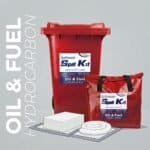
A well-equipped response point combines containment, absorption, personal protection, collection tools and waste handling. Keeping these components together in a clearly marked kit improves response time, while separate refill stock prevents the kit being left incomplete after an incident.
Absorbents for containment and recovery
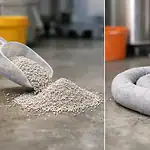
Absorbent socks or booms are usually the first items deployed. They create a barrier around the spill, protect doorways and stop liquid reaching drains, cracks or equipment bases. In a laboratory, flexible socks are particularly useful around benches, instrument stands and awkward floor layouts.
Absorbent pads and rolls are used once the spill has been contained. Pads suit smaller pools and wipe-down work, while rolls offer coverage for larger areas or repeated use. Absorbent pillows provide greater capacity where liquid is collecting in one location, such as beneath a leaking container or around a damaged drum.
The choice between general-purpose, oil-only and chemical absorbents matters. Oil-only products repel water and are appropriate for hydrocarbons in wet areas, but are not a universal laboratory option. Chemical absorbents are commonly the safer selection where hazardous liquids, acids, bases and unknown substances are possible. Use only products identified as compatible by the manufacturer and your site assessment.
PPE for the person responding
PPE must be selected for the actual exposure risk, not simply included because it is convenient. Chemical-resistant gloves, splash goggles, a face shield, protective coveralls and suitable footwear may be required. Gloves need chemical compatibility with the material involved, and one glove type will not protect equally against every solvent or corrosive.
Respiratory protection requires particular care. A disposable mask is not an automatic answer to chemical vapours, gases or oxygen-deficient spaces. If respiratory protective equipment is part of the response plan, it should be selected, fit-tested, maintained and used under a formal respiratory protection program. Where the spill presents an inhalation hazard beyond the planned capability of staff, isolate the area and escalate to emergency responders or a specialist contractor.
Tools that keep hands away from the spill
A chemical-resistant scoop, scraper, brush, tongs and disposable waste bags allow responders to collect saturated absorbent and contaminated debris without unnecessary contact. A small plastic shovel is useful for solids and residues, while a sealable overpack or compatible waste drum may be needed for larger clean-ups.
Include hazard labels, marker pens and cable ties so waste can be identified and secured. Contaminated absorbents can remain hazardous even after the visible liquid has been removed. They must not be placed in general rubbish unless the substance assessment and disposal requirements expressly allow it.
Drain protection and secondary containment
A laboratory floor drain can turn a manageable spill into an environmental incident. Drain covers, plugs or mats should be accessible where drains are within the potential flow path. They need to be deployed early, before absorbent recovery begins, and staff should practise their use.
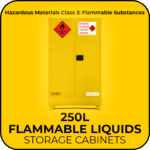
Secondary containment also reduces the likelihood of a spill occurring in the first place. Bunding trays, spill pallets, safety cabinets and compatible storage trays help contain leaks from bottles, drums and waste containers. For flammable liquids, compliant storage cabinets and appropriate segregation arrangements should be part of the wider control plan, not an afterthought once stock has accumulated on benches.
Match supplies to likely laboratory scenarios
Most laboratories benefit from more than one response arrangement. A small bench-side kit can deal with a minor bottle leak or splash, while a larger, wheeled spill kit may be appropriate near chemical stores, solvent decanting stations or loading areas. The point is not to place a kit in every corner. It is to make suitable equipment available before a spill can spread beyond the immediate area.
Consider these common scenarios when setting stock levels:
- A corrosive bottle breaks during transfer, requiring compatible chemical absorbents, splash PPE, containment socks and labelled waste packaging.
- A flammable solvent leaks from a container, requiring rapid containment, drain protection, ignition control and a clear decision point for evacuation.
- A leaking waste container develops beneath a fume cupboard, requiring secondary containment, absorbents and safe waste transfer equipment.
- A biological sample spills in a controlled area, requiring the laboratory’s biological spill procedure, disinfectant and biohazard waste controls.
If hydrofluoric acid, highly toxic chemicals, reactive materials, mercury, cytotoxic drugs or other high-consequence substances are used, standard spill supplies may not be enough. These hazards need substance-specific procedures, specialist equipment and trained response arrangements. For mercury, for example, never rely on a normal vacuum cleaner, which can spread vapour contamination.
Placement, inspection and refill discipline
The best equipment is of little use if staff cannot reach it. Position spill supplies near higher-risk work without placing them inside the likely spill zone. Keep routes to the kit clear, mark the location and include it in induction and refresher training. A locked chemical store may need its own kit rather than relying on supplies located elsewhere in the building.
Assign ownership for routine checks. Inspect kit contents after every use and at planned intervals, confirming absorbents are dry, PPE is intact, labels are legible and tools have been returned. Replace expired or degraded products, especially disinfectants and any PPE with a stated shelf life. Refill packs are a practical way to restore commonly used absorbents and bags without replacing the entire kit.
Record spill events, even minor ones. The report should identify the substance, approximate volume, cause, response actions, waste route and any exposure or environmental release. Repeated small spills often point to a larger issue such as unsuitable storage, poor decanting practices, inadequate bunding or a training gap.
Train for decisions, not just clean-up
Laboratory personnel need to know their limits. Training should cover how to raise the alarm, read relevant SDS information, select PPE, protect drains, use absorbents and package waste. Just as importantly, it should state when not to intervene. A large spill, an unknown chemical, a fire risk, strong vapours, injury or any loss of containment beyond staff capability requires escalation.
Short, scenario-based drills are more useful than asking staff to remember where a kit is stored. Run through realistic events such as a leaking solvent bottle, a corrosive splash near a drain or a failed waste container. Check whether equipment can be reached, whether the correct PPE is available in the right sizes and whether staff can identify the waste process.
A laboratory spill response system should make the safe action the easy action. Review the chemicals on site, position compatible supplies where they are needed and keep every kit complete. When the next container fails, your team should not be deciding what to use – they should be following a response they have already prepared for.