Hazmat Absorbent Socks for Safer Spill Control

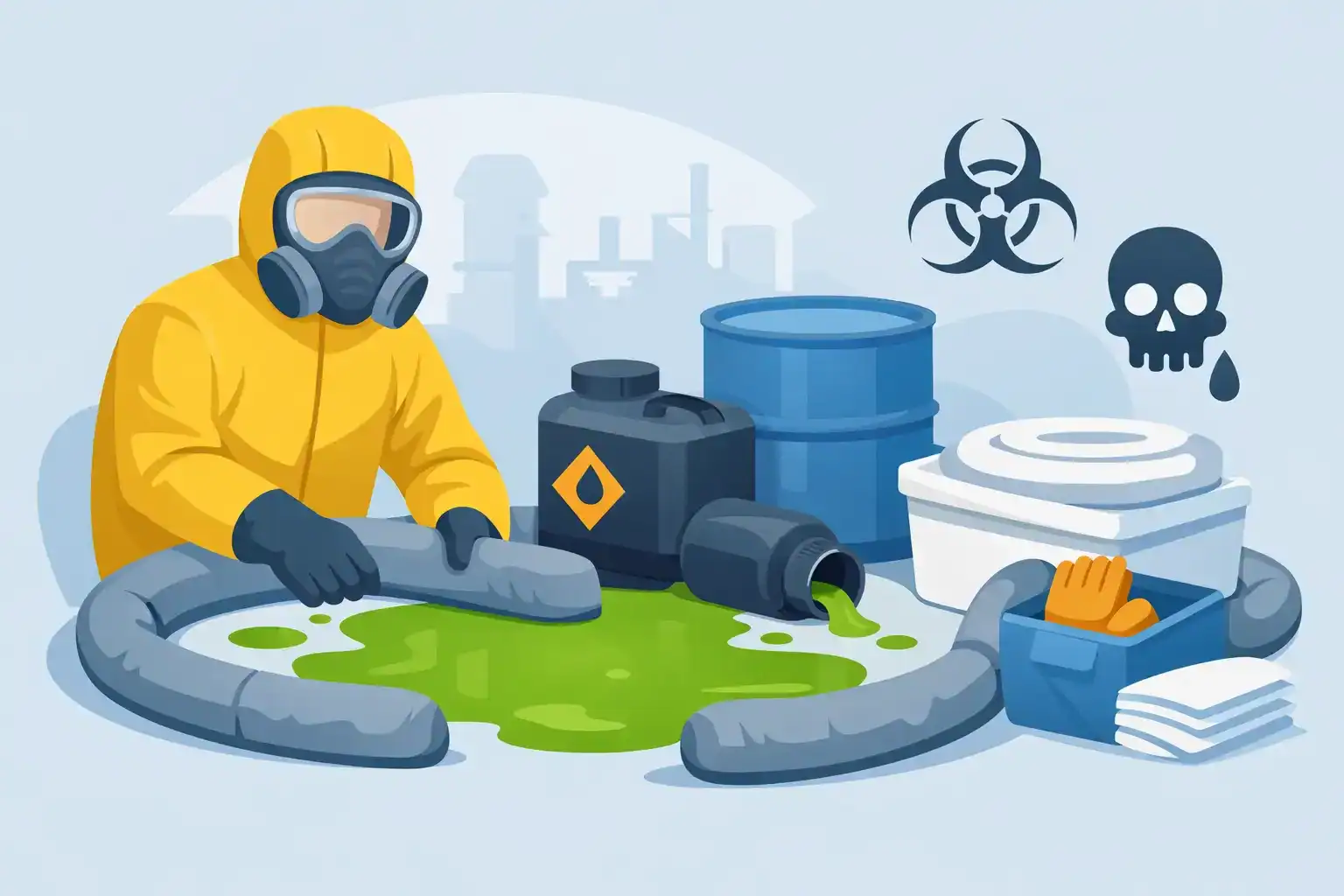
A leaking drum does not need to become a site-wide incident. Positioned quickly around the source, hazmat absorbent socks slow and contain the spread of hazardous liquids while the response team identifies the product, protects drains and completes the clean-up.
For warehouses, workshops, laboratories, manufacturing plants and fuel-handling areas, absorbent socks are a practical first-response item. They are not a substitute for a spill plan, correct PPE or chemical compatibility checks. Used properly, however, they give personnel a fast way to form a barrier around a spill before it reaches walkways, stock, stormwater drains or sensitive equipment.
What hazmat absorbent socks are designed to do
Hazmat absorbent socks are flexible, tubular absorbents made for containing and soaking up a broad range of chemical liquids. They are commonly yellow for quick identification during an emergency, although colour should never be the only basis for selecting an absorbent.
Their main job is containment. A sock can be curved around a leaking container, placed across the path of a spreading liquid or positioned around a drain. As it absorbs, the sock helps reduce the liquid available to travel further. This makes it easier to recover the remaining spill with pads, pillows or loose absorbent.
Unlike rigid barriers, socks follow uneven floors, fit around machinery bases and can be joined or overlapped to make longer containment lines. That flexibility is particularly useful where a spill is moving across cracked concrete, grating or an irregular workshop floor.
A sock is not designed to neutralise a chemical or make an unsafe substance safe to handle. If the substance is unknown, reacting, fuming, highly toxic or creating an immediate fire risk, isolate the area and follow the site emergency procedure. Only trained personnel wearing suitable PPE should attempt a response.
Hazmat absorbent socks versus other absorbent types
Choosing the wrong absorbent can complicate a spill response. The product category should match the liquid and the location of the incident.
Hazmat or chemical absorbents are intended for aggressive and hazardous liquids, including many acids, bases, coolants, solvents and other chemical solutions. They are often selected where the spilled liquid is hazardous or cannot be confidently classified as oil-only.
Oil-only absorbent socks are made for oils and fuels. They repel water, which makes them the right choice for hydrocarbon spills on water or in wet environments. They are not the automatic choice for chemical spills simply because the liquid looks oily.
General-purpose absorbents suit everyday non-aggressive workshop liquids such as oils, coolants, water-based fluids and many maintenance spills. They can be economical for routine use, but they may not provide the chemical resistance or suitability required for corrosive substances.
The key trade-off is cost versus risk. General-purpose socks may be appropriate for known, low-hazard fluids, while chemical-grade socks provide broader capability for hazardous-material areas. For any chemical, check the safety data sheet, the product compatibility information and your site risk assessment before relying on an absorbent in an incident.
Where socks should be kept and deployed
Absorbent socks work best when they are within reach before a spill happens. Keep them in clearly marked spill kits near chemical storage, decanting points, maintenance bays, battery-charging areas, loading zones and waste-handling locations. A kit stored on the other side of a large facility may meet an inventory requirement, but it will not help during the first critical minutes of a spreading spill.
At the scene, protect drainage first where it is safe to do so. Place socks around floor drains, pits, doorways and the leading edge of the liquid. Then form a complete ring around the source or create a curved barrier that directs the liquid into a controlled area.
Avoid placing socks through the middle of a fast-moving spill and assuming they will stop it. For larger volumes, use multiple socks in parallel or overlap their ends so liquid cannot pass through gaps. If the spill is travelling down a slope, create a wider containment line below the spill and reinforce it with additional absorbent.
Once the spread is controlled, use compatible pads, pillows or particulate absorbent to recover pooled liquid. Keep clean and used absorbents separate. Mixing them creates waste unnecessarily and makes stock checks harder after the incident.
Selecting the right sock for the job
Length, diameter and absorbency all affect performance. Longer socks allow a response team to make a continuous barrier around drums, IBCs or machinery. Shorter lengths are useful for drains, small leaks and tight spaces. Larger-diameter socks generally hold more liquid and can be more effective for deeper pools, but they are less convenient around confined equipment.
When specifying stock, consider the largest credible spill rather than the most common drip. A small workshop may need enough socks to isolate a leaking 20-litre container and protect its nearest drain. A chemical store or loading bay may require enough material to contain a much larger release while further assistance is arranged.
It is also worth considering how the product will be handled. Socks are generally a consumable item once contaminated. Select formats that fit your spill kit, are easy for staff to carry and can be deployed without searching for additional equipment. A practical kit normally combines socks for containment with pads for recovery, disposal bags, labels and suitable PPE.
A safe response sequence for chemical spills
A clear sequence helps prevent well-intentioned staff from creating additional exposure. First, assess from a safe distance. Identify the material where possible, check for vapours, ignition sources, slippery surfaces and nearby drains, and determine whether the spill is within the capability of the site response team.
If it is safe to proceed, wear PPE specified by the safety data sheet and site procedure. This may include chemical-resistant gloves, goggles or face protection, protective clothing and appropriate respiratory protection. Do not handle a hazardous liquid with standard disposable gloves just because they are available in the kit.
Next, stop the source only if this can be done safely – for example, upright a fallen container, close a valve or place a compatible overpack around a damaged package. Deploy socks to protect drains and contain the spill, then use the appropriate absorbents to collect the liquid.
Place saturated socks and used clean-up materials into compatible waste bags or containers. Label the waste and arrange disposal in line with the chemical classification, safety data sheet and local environmental requirements. Used absorbents can be hazardous waste even when the original spill volume was small.
Finally, restock the spill kit immediately, record the incident and investigate why it occurred. A kit with used socks missing from it is not ready for the next event, and repeated minor leaks often point to an issue with handling, storage, maintenance or packaging.
Common mistakes that reduce containment performance
The most common error is treating every spill as the same. A sock that is suitable for diesel on a wet loading dock may not be suitable for a corrosive chemical in a warehouse. Another frequent problem is inadequate quantity. One sock placed around a leaking drum may absorb the first run-off, but it may not contain the full release if the leak continues.
Drain protection is also often left too late. By the time liquid reaches a grate, it may already be entering the drainage system. Teams should identify drain locations during spill planning and know which kit holds the socks or drain covers needed to protect them.
Do not walk through a contained spill to retrieve more equipment unless there is a safe access path. Contamination can spread on boots, trolley wheels and forklift tyres well beyond the original area. Establish a controlled boundary and keep non-essential people clear.
Build socks into a workable spill-control system
Hazmat socks deliver the best result as part of a complete response arrangement, not as a stand-alone purchase. Match them with the right spill kit, chemical-resistant PPE, drain protection and disposal supplies for the hazards present on site. Check stock levels during routine safety inspections and replace damaged, wet or contaminated materials before they are needed.
For sites handling a range of liquids, clearly segregated chemical, oil-only and general-purpose spill response equipment reduces decision-making under pressure. Spillmaster supplies practical absorbent and containment options so teams can equip the work area for the spills they are most likely to face.
The right sock is the one that can be deployed immediately, is compatible with the liquid involved and gives your team enough capacity to keep a small leak from becoming an environmental or compliance problem.