How to Clean Chemical Leaks Safely at Work

A small chemical leak can become a worker exposure, fire, drainage or environmental incident within minutes. Knowing how to clean chemical leaks starts with recognising that not every spill should be handled the same way. The chemical involved, quantity released, location, available controls and competency of the people on site determine whether the spill can be managed internally or needs emergency assistance.
The first priority is always people. Do not rush in with an absorbent pad before you know what has been released. Check the product label and Safety Data Sheet (SDS), isolate the area and use the right personal protective equipment (PPE). A controlled response protects workers, reduces downtime and helps maintain site compliance.
Assess the chemical leak before cleaning
If it is safe to do so, identify the substance from the container, label, manifest or SDS. The SDS provides the information needed to assess hazards, required PPE, incompatible materials, spill response methods and disposal requirements. Never assume a clear liquid is harmless, or that a product can be cleaned like oil simply because it is liquid.
Consider whether the material is flammable, corrosive, toxic, oxidising, reactive or hazardous to the aquatic environment. Also assess where the leak has travelled. A spill on sealed concrete may be contained with absorbents, while the same material near a drain, unsealed ground or waterway may require immediate escalation.
Do not attempt to clean the leak if the chemical is unknown, fumes are present, there is a fire or explosion risk, the spill is beyond site response capacity, or the material has entered drainage or the environment. Evacuate or restrict access as required, call emergency services where necessary, and follow your site emergency plan.
How to clean chemical leaks: control the source first
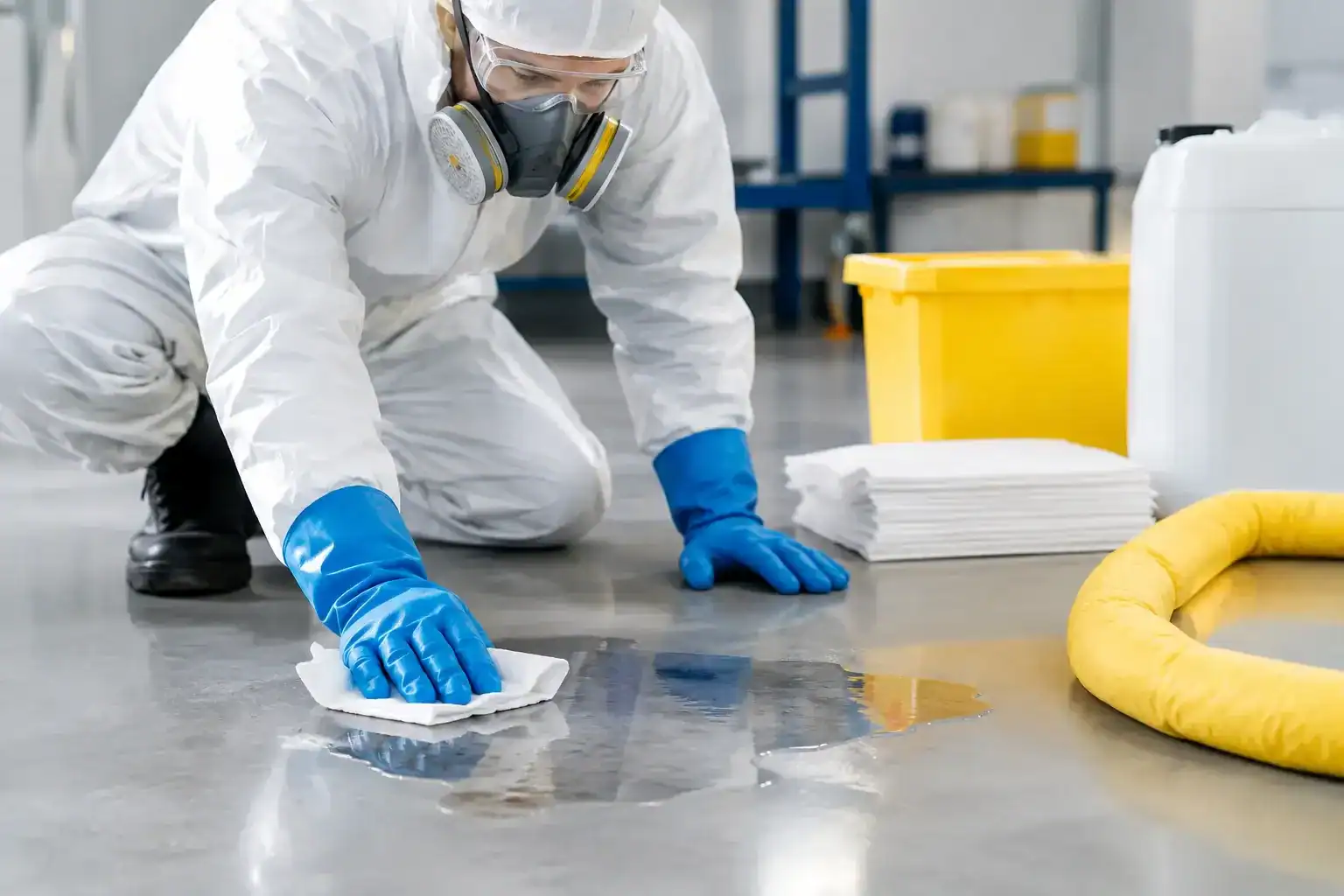
Only approach once the area has been assessed and the required PPE is in place. Depending on the substance, this may include chemical-resistant gloves, safety glasses or goggles, a face shield, protective clothing and suitable respiratory protection. Standard disposable gloves are not suitable for every chemical. The SDS should guide glove material and other PPE selection.
Where it can be done safely, stop the leak at its source. Upright a fallen drum, close a valve, place a leaking container into an overpack drum, or position the damaged package so the breach is uppermost. Do not attempt repairs that expose workers to the chemical or create a larger release.
Protect drains before applying absorbent. Drain covers, drain seals, containment booms or sand-filled barriers can prevent chemicals reaching stormwater. This step is especially critical in workshops, warehouses, loading areas and fuel-handling locations where drainage points may be close to stored materials.
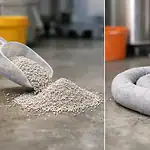
For larger releases, work from the outside towards the spill. Place booms, socks or other compatible containment products around the perimeter to stop spread, then use pads, rolls, pillows or loose absorbent to collect the liquid. Keep incompatible materials apart. For example, an oxidising agent must not be allowed to contact absorbents or waste materials that the SDS identifies as incompatible.
Select absorbents that suit the hazard
Absorbent selection is not just a purchasing decision. It affects the safety and effectiveness of the response. General-purpose absorbents are commonly used for coolants, oils, fuels and many non-aggressive workplace liquids. Chemical absorbents are designed for hazardous liquids and are often used where acids, caustics or other aggressive chemicals may be involved. Oil-only absorbents are intended for hydrocarbons and repel water, making them useful for marine and outdoor fuel spills.
However, the product category alone does not replace the SDS. Some chemicals require a specific neutralising agent, while others must not be neutralised on site. Never mix products in an effort to make a spill safer. An incorrect neutraliser can generate heat, gases or a violent reaction.
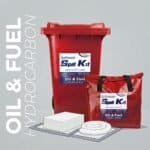
A properly stocked chemical spill kit should contain compatible absorbents, containment materials, PPE, waste bags or containers, and clear response instructions. The kit needs to be positioned close enough to the risk area to be useful, not stored in a distant storeroom behind other stock.
Collect and contain the waste
Once the liquid is absorbed, use compatible tools to place used pads, granules, PPE and contaminated debris into suitable waste bags, drums or other approved containers. Seal and label the waste so it is clear what it contains. Chemical spill waste is rarely ordinary rubbish and must not be placed in general waste bins unless the SDS and local waste requirements specifically permit it.
Treat all materials used in the response as contaminated until assessed otherwise. This includes disposable PPE, tools, packaging and any soil, rags or timber affected by the release. Store waste securely away from incompatible substances while disposal arrangements are made through an approved waste contractor.
Do not hose chemical residue into drains or wash it across a hardstand. Water can spread contamination and carry pollutants into stormwater systems. If the SDS permits wet cleaning after collection, use only the stated method and capture any contaminated wash water for appropriate disposal.
Decontaminate the area and check for hidden spread
After bulk material has been removed, inspect the surrounding surface, nearby pallets, equipment, racking and footwear. Leaks can travel beneath shelving, into expansion joints or under machinery. A clean-looking floor does not always mean the hazard has been removed.
Use the SDS directions to determine whether the surface needs decontamination, neutralisation or further treatment. For corrosive materials, check whether the affected surface has been damaged. For flammable liquids, maintain ignition control until vapours have dispersed and the area is confirmed safe for normal operations.
Remove PPE carefully to avoid transferring contamination to skin, clothing or clean surfaces. Wash hands and exposed skin immediately. Any worker who has had chemical contact, inhaled vapours or developed symptoms should follow the SDS first-aid guidance and seek medical assessment where required.
Report the incident and restore your readiness
Every chemical leak should be recorded, even when it is contained quickly. Record the substance, estimated volume, location, cause, response actions, waste arrangements and any exposure or environmental impact. This information supports WHS obligations, internal investigation and better purchasing decisions.
A simple spill often exposes a preventable issue: a damaged drum, unsuitable storage, poor decanting practice, missing bunding or an undersized spill kit. Investigate the cause before returning the area to normal use. If the incident involved dangerous goods, review whether storage segregation, signage, secondary containment and inspection routines remain suitable.
Replenish used supplies immediately. A spill kit with missing pads, gloves or waste bags is not ready for the next incident. Spillmaster supplies spill kit refills, chemical absorbents, drain protection, bunding and PPE to help sites restore response capability without replacing equipment that is still serviceable.
Build a response plan before a spill happens
The safest chemical clean-up is the one your team has already practised. Keep current SDS documents accessible, identify drains and shut-off points, nominate trained responders and match spill kits to the chemicals and volumes stored on site. Review this whenever stock, processes or site layouts change.
For low-risk, familiar spills, trained workers with the right equipment may be able to respond quickly and safely. For unknown, reactive, highly toxic or large-volume releases, stopping work and escalating early is the correct decision. A disciplined response protects people first, then the environment, equipment and operation.