Chemical Storage Requirements for Safer Worksites


A leaking five-litre container can stop a workshop, contaminate a drain and expose staff before anyone has time to find the safety data sheet. Most chemical incidents are not caused by one dramatic failure. They start with everyday chemical storage decisions: a drum left outside, an incompatible product placed on the same shelf, or no secondary containment beneath a decanting area.
For Australian worksites, chemical storage needs to do more than keep products tidy. It must control exposure, prevent incompatible substances from mixing, limit environmental harm and give workers a clear response path when something goes wrong. The right arrangement depends on the chemicals, quantities, work activities and site layout, but the principles remain consistent.
Start with the chemical, not the cabinet
The first question is not which cabinet to buy. It is what is being stored and what can happen if it leaks, overheats, reacts or is accessed by the wrong person.
Use the current safety data sheet (SDS) and product label to identify each product’s dangerous goods class, hazards, storage conditions and incompatibilities. Check whether it is flammable, combustible, corrosive, toxic, oxidising or environmentally hazardous. Record the package size, total volume held onsite, frequency of use and whether containers are opened or decanted in the area.
This assessment helps distinguish between products that can share a storage zone and products that require separation. Acids and alkalis, for example, should not be stored together simply because both are corrosives. Oxidisers must be kept away from flammable liquids and combustible materials. A flammable aerosol may need a different control approach to a sealed container of cleaning chemical, even if both are kept in the same maintenance room.
SDS instructions are the starting point, not a filing exercise. They should be available to the people handling the product, and storage requirements should be reflected in the actual workplace setup.
Match chemical storage controls to the risk
A suitable storage system normally combines a secure location, compatible containment and practical access for workers. It also needs to account for the way products arrive, move and are used onsite.
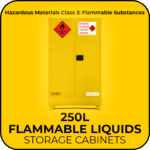
Small volumes of approved flammable liquids are commonly stored in purpose-designed flammable liquids storage cabinets. These cabinets help isolate fuels, solvents, paints and other flammable products from ignition sources and general workplace traffic. Cabinet selection should consider the substances being stored, the internal capacity required, ventilation requirements where applicable, and the relevant Australian Standard and regulatory requirements for the site.
For drums, intermediate bulk containers and larger containers, bunding is often the central control. Spill pallets, bunded floors and other secondary containment systems capture leaks before they reach soil, drains or neighbouring work areas. The required capacity will depend on the containers held and applicable requirements, so avoid treating every pallet or bund as interchangeable. Check its chemical compatibility, load rating, drainage arrangement and whether it can safely contain the liquid involved.
Outdoor storage brings extra variables. Rain can fill an uncovered bund and reduce available spill capacity. UV exposure can degrade some containers. Forklifts, delivery vehicles and uneven ground increase the chance of impact damage. Where chemicals are stored outside, use a designated area that is protected from vehicle contact, managed for stormwater and positioned away from drains, waterways and sensitive boundaries.
Keep incompatible chemicals apart
Segregation is one of the most effective controls in chemical storage, and one of the easiest to compromise when space is tight. A spare shelf, an empty corner or the top of a cabinet can quickly become an unplanned storage area. That is how incompatible stock ends up side by side.
Separate substances based on their hazard classes and SDS directions, not their brand, container size or department. Clearly label each storage area and maintain enough physical separation to prevent mixing if a container fails. In some cases, separate cabinets or dedicated bunding are appropriate. In others, a properly designed barrier or distance may be sufficient. The right option depends on the quantities and hazards involved.
Do not store chemicals with unrelated stock such as cardboard, rags, food, PPE or general maintenance supplies. Combustible packaging adds fuel to a flammable liquids incident, while contaminated rags can create their own fire and exposure risk. Keep access aisles clear so staff can inspect containers and respond to a leak without climbing over stock.
Control ignition sources and unauthorised access
Flammable liquids and vapours require particular discipline. Store them away from welding, grinding, battery charging, heaters, switchboards and other potential ignition sources. Vapours can travel beyond the immediate storage point, especially in enclosed or poorly ventilated areas, so the location matters as much as the container.
Use appropriate signage to identify hazards and restrict access to trained personnel. Storage areas should be secure, but not so cluttered that workers cannot retrieve products safely or see leaking containers. Place heavier containers lower down, keep labels facing outward where practical, and avoid stacking containers beyond their design limits.
Containers should remain closed when not in use. Decanting is a high-risk point because it introduces open containers, splashes and the potential for overfilling. Use a designated decanting area with suitable secondary containment, compatible dispensing equipment and spill response materials close at hand.
Build spill response into the storage area
Chemical storage without spill response equipment is an incomplete control. Even well-managed sites experience damaged packaging, loose caps and handling errors. The difference is whether the spill is contained at the source or allowed to reach a drain, traffic area or neighbouring property.
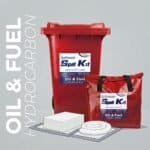
Position spill kits and absorbents where they can be reached quickly without entering the affected area. The kit must suit the liquids stored. General-purpose absorbents may be suitable for oils, coolants and many non-aggressive liquids, while chemical absorbents are designed for hazardous chemicals, including many corrosives. Oil-only absorbents are intended for hydrocarbons and repel water, making them useful in marine, outdoor and drainage-sensitive locations.
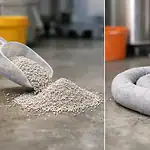
Drain covers, absorbent socks and booms can provide immediate protection around drains and along likely spill paths. However, these products do not replace bunding or safe storage. They are response tools, not a reason to accept a poorly controlled storage area.
Inspect spill kits after use and on a routine schedule. An empty kit cabinet, missing gloves or degraded absorbents will not help during an incident. Restock used components promptly and make sure the team knows who is responsible for checking them.
Inspect routinely and keep records that matter
A monthly visual check will identify many problems before they become incidents. Look for damaged drums, rusting containers, faded labels, swollen packaging, residue around bungs, blocked access, pooled rainwater, overfilled bunds and expired or obsolete stock. Remove unknown chemicals from service until they are identified and managed correctly.
Inventory control is also a storage control. Buying excessive quantities because a product is on special can create a compliance and space problem if the site has nowhere suitable to hold it. Order volumes that match consumption where possible, rotate stock and dispose of unwanted chemicals through an approved process. Never combine leftovers into an unlabelled container to save space.
Keep SDSs current, record inspections and document corrective actions. These records support better day-to-day control and demonstrate that hazards are being actively managed when customers, auditors or regulators ask how the site handles dangerous goods.
Review the setup when the work changes
A storage arrangement that worked for a small workshop may not be suitable after new equipment, larger deliveries or a change in production. Review chemical storage when new substances are introduced, quantities increase, a storage area is relocated or an incident reveals a weakness.
Ask practical questions: Can a forklift strike this drum? If this container leaks, where will the liquid go? Can workers reach the spill kit without crossing the spill? Are incompatible products separated even during deliveries and temporary storage? Those answers will point to the controls that need attention.
Good chemical storage is visible in the ordinary details: labelled containers, clear access, compatible cabinets, effective bunding and response equipment that is ready when it is needed. Get those details right before the next delivery arrives, not after a spill tests the system.