How to Deploy Containment Boom at a Spill Site

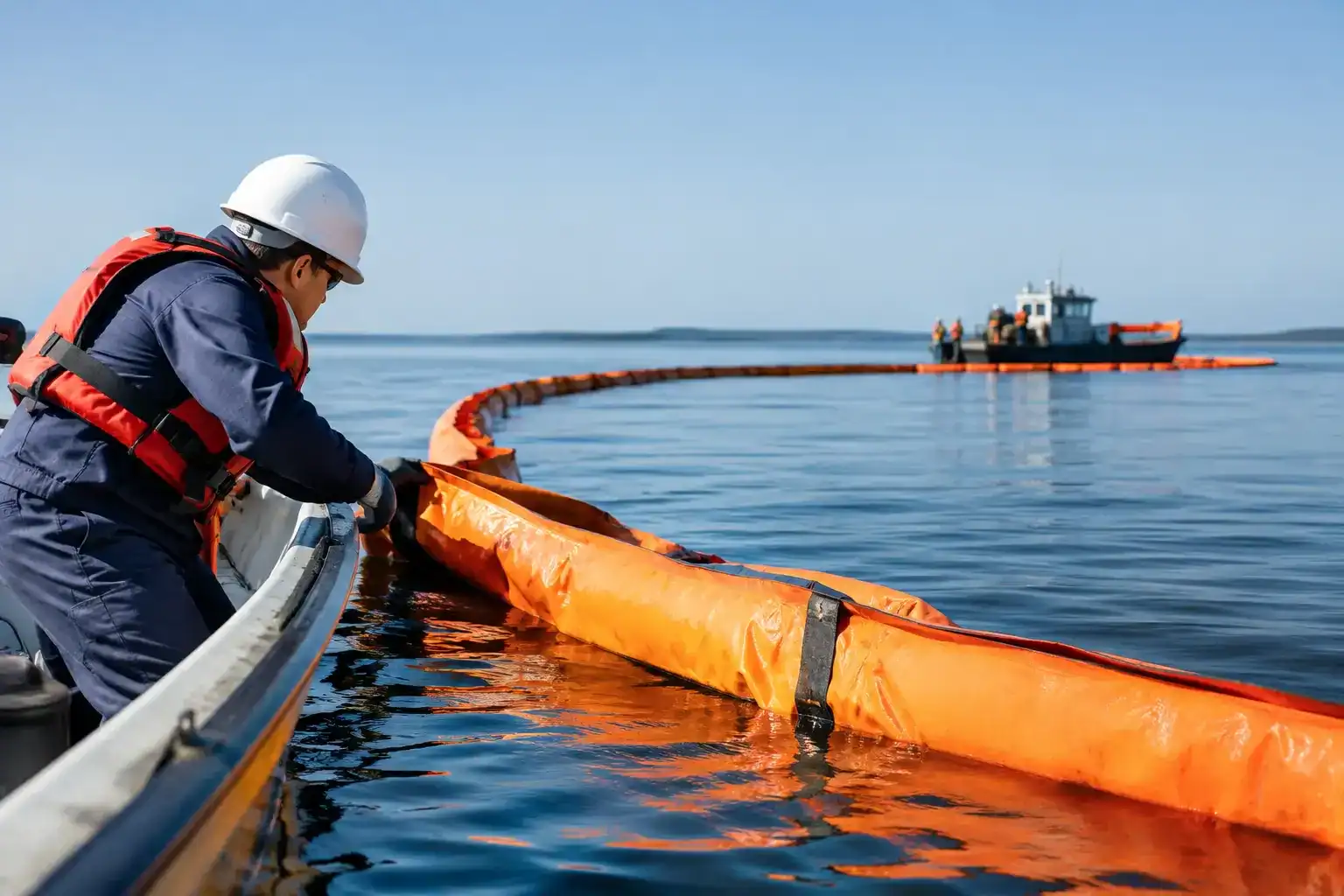
A containment boom that is in the wrong position, poorly anchored or deployed too late can allow oil to spread well beyond the original release point. Knowing how to deploy containment boom properly gives site teams time to recover product, protect sensitive shorelines and keep a manageable incident from becoming an expensive clean-up operation.
Containment boom is primarily used on water to control the movement of floating oils, fuels and other hydrophobic liquids. It does not remove a spill, and it is not suitable for every chemical. Its job is to create a barrier that directs, excludes or holds floating product so it can be recovered with absorbent pads, socks, skimmers or other approved equipment.
Assess the spill before putting boom in the water
Do not treat boom deployment as the first action in every incident. First, stop the source if this can be done safely. Isolate pumps, close valves, upright a leaking container or place a temporary bund around the release point. If product continues entering the water, the boom will only be managing the symptom.
Identify the substance from the container label, safety data sheet and site chemical register. Containment boom is generally effective for oils, diesel, petrol and many other floating hydrocarbons. It may be unsuitable where a substance dissolves, sinks, reacts with water or presents a significant vapour, fire or toxicity risk. Escalate to emergency services or a specialist response contractor where required by the site emergency plan.
Assess the conditions around the spill. Current, tide, wind direction, water depth, vessel traffic, access points and weather will affect the deployment method. A small calm-water spill near a stormwater outlet can often be controlled quickly with a short boom and absorbents. A release in a river, marina, harbour or open water needs a wider exclusion plan, capable anchors and adequate personnel.
Workers should wear PPE appropriate to the product and task. This may include chemical-resistant gloves, eye protection, protective clothing, safety boots and a suitable lifejacket for work near water. Keep ignition sources away from flammable liquids and establish an exclusion zone before equipment is handled.
Choose the right containment boom
Select boom according to the water conditions and the job it must perform. Calm-water boom is typically used in drains, ponds, sheltered marinas and slow-moving waterways. It is designed for easy handling and rapid deployment, but may not hold position in strong current or choppy conditions.
For rivers, ports and exposed areas, choose heavier-duty boom with sufficient freeboard above the water and skirt depth below it. The freeboard reduces splash-over, while the skirt helps limit oil passing underneath. A boom that is too light, too short or too shallow will not provide reliable containment in moving water.
Also confirm that the boom material is compatible with the spilled product. Oil-only boom and absorbent boom repel water and absorb hydrocarbons, but they are not a substitute for a containment barrier where there is a larger volume of free product. Non-absorbent containment boom is designed to hold and direct product for recovery and can be reused when correctly decontaminated.
Measure the required length before deployment. Allow extra length for the planned angle across the current, shoreline connections and anchor points. A boom stretched tightly in a straight line across flowing water is likely to fail. It can collect product and debris until pressure forces oil over or under the barrier.
How to deploy containment boom safely
The best deployment arrangement depends on whether the objective is to contain the spill, divert it away from a sensitive area or exclude it from an inlet, shoreline or stormwater outlet. Assign a site controller before starting. That person should direct the operation, monitor changing conditions and maintain communication with plant operators, vessel crews or emergency responders.
1. Prepare equipment and the recovery area
Lay the boom out on a clean, accessible surface and inspect it before use. Check connectors, flotation chambers, ballast chain or weights, tow points, straps and anchor lines. Confirm that the connectors match and that there is no damage that could create a gap.
Set up the recovery area before deploying. This is the point where contained product will be removed using absorbents, skimmers or vacuum recovery. Place waste bags, overpacks, drip trays and spare absorbents nearby, but above the likely waterline. Having a recovery area ready prevents the team from moving oil from one uncontrolled area to another.
2. Connect sections securely
Join boom sections on shore or from a stable work platform wherever possible. Lock each connector fully and check that the flotation and skirt sections align correctly. A partly engaged connector can separate under load, creating an opening that allows product through.
Use enough boom to form a curved collection area rather than a tight line. For longer deployments, attach anchor lines or bridle points as specified by the equipment manufacturer. Avoid tying ropes around the boom body, as this can distort the boom and damage its structure.
3. Deploy from the protected side
Start at the down-current or downwind anchor point where practical, then work towards the source or the second anchor point. This approach helps prevent floating product from passing through the unfinished line. Keep the boom clear of sharp edges, propellers, rocks and submerged hazards.
For shoreline deployment, secure each end to stable anchor points such as approved posts, trees, bollards or purpose-built ground anchors. Do not use weak fencing, handrails or temporary structures. The load on anchors can increase quickly with current, wind and accumulated debris.
If deploying from a vessel, use trained personnel and maintain safe deck practices. Keep hands clear of pinch points, do not stand inside bights of rope and avoid placing workers between a moving vessel and the boom. Slow, controlled vessel movements are more effective than rushing a deployment.
4. Set the boom at an angle to the current
In moving water, deploy boom at an angle rather than directly across the flow. The correct angle depends on water speed and boom type, but a shallower angle generally reduces pressure on the barrier and guides product towards the recovery zone. As current increases, the boom may need to be set closer to the bank.
Watch for a visible build-up of water against the boom, a bowed skirt, excessive tension or oil appearing on the downstream side. These signs can indicate that the current is too strong, the angle is too steep or the boom is overloaded. Reposition the boom, add anchors or use multiple staged booms rather than relying on one barrier.
5. Recover product and monitor continuously
Once the boom is stable, recover pooled product from the thickest area first. Use compatible absorbent pads, rolls, sweeps or socks to collect remaining sheen and residue. Change saturated absorbents before they release product back into the water.
A deployed boom requires active monitoring. Check anchor points, connector integrity, skirt position and product accumulation at regular intervals. Remove debris carefully, as branches, rubbish and weed can push the boom under the surface or create bypass points. Reassess the setup when tides change, rain begins or vessel wash increases.
Common deployment errors
The most frequent mistake is attempting to contain a spill with boom laid perpendicular to a fast current. The boom catches the force of the water, product escapes beneath it and anchors may fail. A better arrangement is an angled deflection boom leading to a protected collection point.
Another error is using absorbent boom as the only control for a sizeable fuel spill. Absorbent boom has a useful role around drains, vessel bilges and small releases, but it can become saturated quickly. Use a containment boom to control free product first, then use absorbents for recovery and polishing.
Teams also underestimate the importance of shoreline sealing. Oil will follow the path of least resistance, including small gaps between the boom and bank. Secure the boom ends above the waterline where conditions allow, and inspect those connection points throughout the response.
Pack down, dispose of waste and restock
Do not remove the boom until floating product has been recovered and there is no risk of a further release. Lift it carefully to minimise drips, allowing liquid to drain into a controlled area where appropriate. Decontaminate reusable containment boom in accordance with the product guidance and your waste procedures.
Used absorbents, contaminated PPE, damaged boom and collected product may be regulated waste. Segregate them, label containers clearly and arrange disposal through an approved waste provider. Record the incident, materials used, waste quantities and any corrective actions required by your environmental management system.
Finally, restock immediately. A boom stored with missing connectors, degraded anchor lines or no matching absorbents is not response-ready. Keeping the correct containment boom, anchors and recovery materials together at known locations gives your team a practical advantage when the next spill occurs.