Which PPE Suits Acids in Your Workplace?

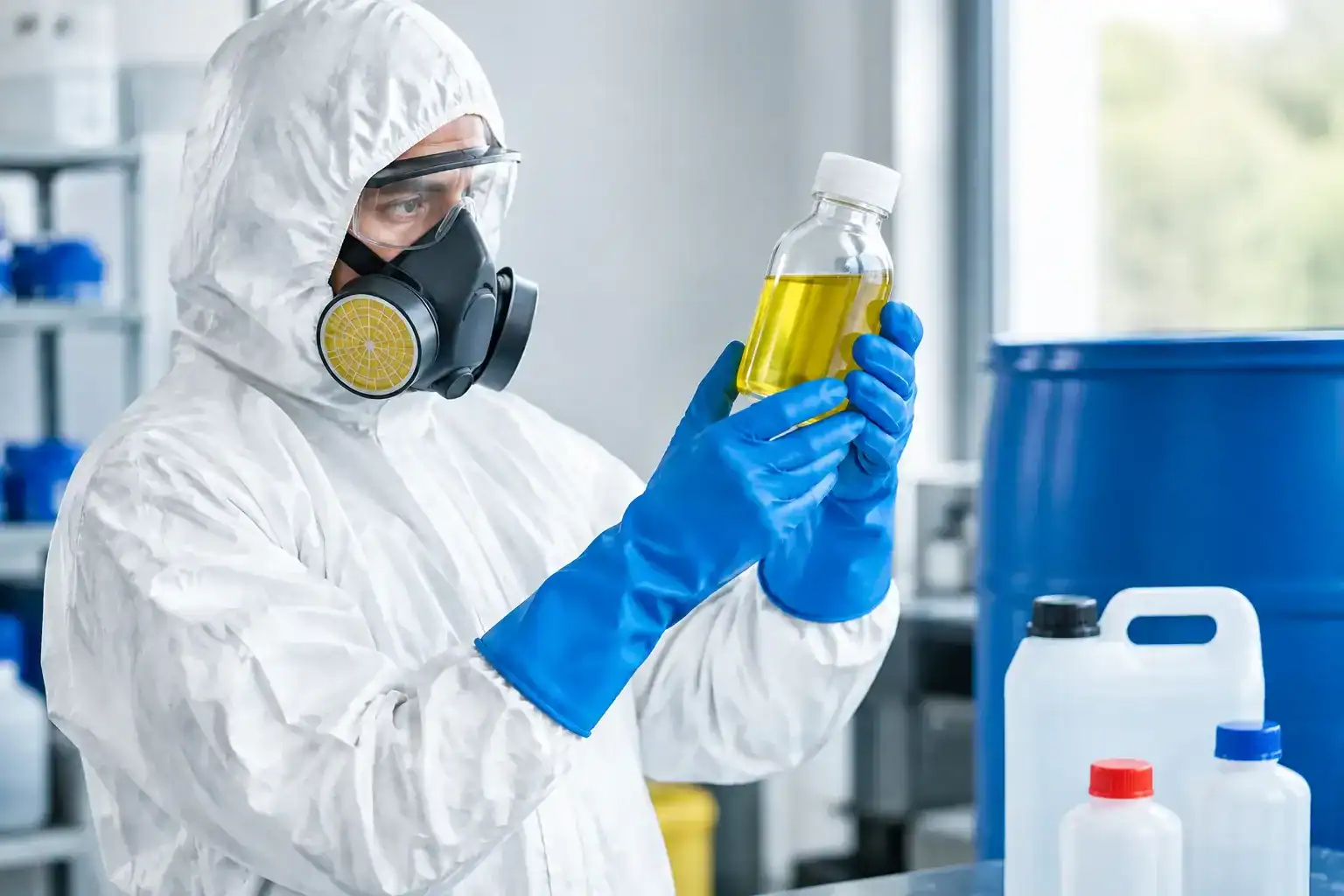
A worker decanting dilute phosphoric acid into a drum does not face the same risk as a technician opening a line containing hot, concentrated sulphuric acid. Both jobs involve acids, but the correct protection can be very different. The answer to which PPE suits acids starts with the chemical and the task, not with a one-size-fits-all suit.
Acid PPE must protect against the realistic exposure: a small splash during dosing, repeated contact while cleaning, a pressurised spray, or vapour in an enclosed area. Selecting equipment by appearance alone can leave gaps in protection and create a false sense of security.
Start with the acid, its strength and the task
Check the current safety data sheet (SDS) before choosing gloves, clothing or respiratory protection. The SDS should identify the hazards, exposure controls and recommended PPE. It is the working starting point, but a site risk assessment still needs to consider how the product is used.
Acid concentration matters. Dilute acids can still cause burns or eye damage, while concentrated acids may rapidly degrade materials that perform well against weaker solutions. Temperature, contact time and whether the acid is mixed with other chemicals also affect compatibility. Nitric acid, for example, is strongly oxidising, while hydrofluoric acid presents serious toxic exposure risks as well as corrosive hazards.
The work method is equally important. A closed transfer with reliable connections may require gloves and eye protection for connection and disconnection. Open pouring, drum decanting and line breaking can create a splash risk across the body. Pressure washing or responding to an uncontrolled release may require a higher level of chemical clothing and respiratory controls.
Which PPE suits acids? Build protection in layers
For most acid handling tasks, PPE is a system. Gloves protect hands, goggles protect the eyes, a face shield adds splash protection for the face, chemical-resistant clothing protects the body, and suitable footwear protects against spills reaching the feet. A failure in one item can undermine the rest.
Chemical-resistant gloves
Glove selection should be based on permeation and breakthrough data for the specific acid. Manufacturers publish chemical compatibility charts that identify how a glove material performs against a chemical at a stated concentration and temperature. Use this information alongside the expected contact time.
Common glove materials include nitrile, neoprene, butyl rubber, PVC and laminated barrier materials. Nitrile can be suitable for some incidental acid contacts, but it is not automatically the right choice for every acid or extended exposure. Neoprene and PVC are often used for acid splash applications, while butyl rubber may offer stronger resistance to particular aggressive chemicals. No material is universally suitable.
Choose a glove length that covers the actual risk. A short disposable glove may be adequate for a controlled sample transfer, whereas bulk handling or wash-down work may call for a longer gauntlet glove that overlaps the sleeve. Inspect gloves before each use, replace damaged gloves immediately, and avoid reusing disposable gloves after contamination.
Eye and face protection
Acid splashes can cause permanent eye injury within seconds. Chemical splash goggles that seal around the eyes are generally more suitable than standard safety glasses where splash exposure is possible. Safety glasses may provide impact protection, but they do not stop liquid entering around the sides, top or bottom.
For pouring, decanting, mixing or other splash-prone work, wear a face shield over chemical splash goggles. A face shield is not a substitute for goggles. It protects the face from direct splash and helps shield the goggles, while the goggles provide the primary seal around the eyes.
Acid-resistant suits, aprons and sleeves
The right body protection depends on the likely volume and force of contact. For occasional low-volume splash work, a chemical-resistant apron worn over suitable workwear may be sufficient if the risk assessment supports it. Add chemical sleeves where forearm exposure is likely.
Where there is a credible risk of substantial splashing, choose a chemical-resistant coverall or acid suit with proven compatibility for the product. PVC, neoprene, rubber-coated fabrics and multilayer chemical barrier fabrics are used across different acid applications. The material, seams, closures and hood design all matter. A suit with weak seams or exposed fastening points may not provide the protection expected from its fabric alone.
Chemical protective clothing is commonly classified by protection type. Type 3 garments are intended for liquid-tight protection against strong liquid jets, while Type 4 garments are designed for spray-tight protection. Lower classifications may be designed for limited splash or particulate protection. These classifications are useful, but they do not replace checking the garment’s chemical resistance data for the acid being handled.
Footwear and lower-leg protection
Acid-resistant gumboots or safety boots with chemical-resistant uppers can be necessary where spills, wash-down or pooling liquids are possible. Footwear should provide adequate sole grip for wet conditions and, where required by the worksite, the appropriate safety toe protection.
Avoid relying on ordinary leather work boots for acid handling. Leather can absorb chemicals and become difficult to decontaminate. Make sure trouser legs, coveralls and boot tops are arranged to prevent liquid from running into the boot. The correct arrangement depends on the garment design and the direction of likely splash.
Respiratory protection is not an acid suit
Some acid tasks create mists, gases or vapours that cannot be managed with clothing alone. Local exhaust ventilation, enclosed transfer systems and safer work methods should be considered before relying on respiratory protective equipment.
If a respirator is required, the cartridge or supplied-air system must be selected for the contaminant and concentration. Acid gas cartridges do not protect against every airborne hazard, and cartridges have service-life limitations. For oxygen-deficient spaces, unknown concentrations, confined spaces or emergency releases, air-purifying respirators may be unsuitable. These situations require a documented respiratory protection program and competent advice.
A chemical suit may reduce skin exposure but does not make an unsafe atmosphere safe to enter. It can also increase heat stress, restrict movement and make communication more difficult. Plan work duration, hydration, buddy arrangements and emergency access accordingly.
Do not overlook fit, compatibility and removal
PPE only works when workers can wear it correctly. Gloves need to fit well enough to maintain grip and dexterity. Goggles must seal comfortably, and respirators require fit testing where tight-fitting models are used. Check that glove cuffs overlap sleeves and that the face shield, hood, respirator and eyewear can be worn together without creating gaps.
Removing contaminated PPE is a high-risk stage. Workers should know how to remove gloves, suits and footwear without transferring acid to bare skin or clothing. Establish a decontamination area, use appropriate neutralisation or wash-down procedures where approved for the chemical, and ensure emergency showers and eyewash equipment are accessible and maintained.
Contaminated disposable PPE should be managed as hazardous waste where required. Reusable chemical clothing must be cleaned, inspected and stored according to the manufacturer’s instructions. If the material is degraded, stiff, cracked, discoloured or has been exposed beyond its rated limits, remove it from service.
A practical selection process for acid work
Before purchasing or issuing PPE, confirm the acid name, concentration, temperature and quantity. Then assess whether the task involves occasional drips, splash, spray, immersion, pressurised release or airborne contamination. Select gloves and clothing using the manufacturer’s chemical compatibility data, then confirm eye, face, foot and respiratory protection required for the exposure.
Keep the selection documented with the SDS and task risk assessment. This makes it easier to train workers, replenish the right consumables and demonstrate that PPE choices are based on site conditions rather than assumptions. Spillmaster can support worksites with practical PPE and spill-control essentials for corrosive liquid handling.
The best acid PPE is the equipment that matches the actual chemical, exposure and work method, is maintained in serviceable condition, and is worn correctly every time the task is performed.