How to Label Dangerous Goods in Australia

A drum can be correctly stored, securely closed and still create a compliance problem if its label is missing, damaged or wrong. Knowing how to label dangerous goods means separating two related requirements: transport labels used under the Australian Dangerous Goods Code (ADG Code), and workplace labels used for hazardous chemicals under WHS requirements.
The product, its container size, where it is going and how it is being handled all affect what must appear on the package. Start with the current safety data sheet (SDS), confirm the correct classification, then apply labels that remain readable for the full life of the container.
Start with the correct classification
Do not select a label based on a product name, its colour or what it is commonly used for. Petrol, solvent, corrosive cleaner and agricultural chemical may all need very different transport and workplace information, even where they appear similar in a workshop or store.
For transport, identify the product using the ADG Code classification supplied by the manufacturer or listed in the SDS. The key details are generally the UN number, proper shipping name, dangerous goods class or division, subsidiary risk if applicable, and packing group. For example, a flammable liquid may be Class 3, while a corrosive chemical may be Class 8. Some substances have more than one hazard and require a subsidiary risk label as well.
For workplace use, check the current Australian SDS and supplier label. Hazardous chemical labels follow the Globally Harmonised System of Classification and Labelling of Chemicals (GHS). These labels communicate the health and physical hazards workers need to understand when using or storing the chemical.
A dangerous good is not automatically labelled in exactly the same way for every purpose. Transport and workplace requirements overlap, but they are not interchangeable.
Transport labels for dangerous goods packages
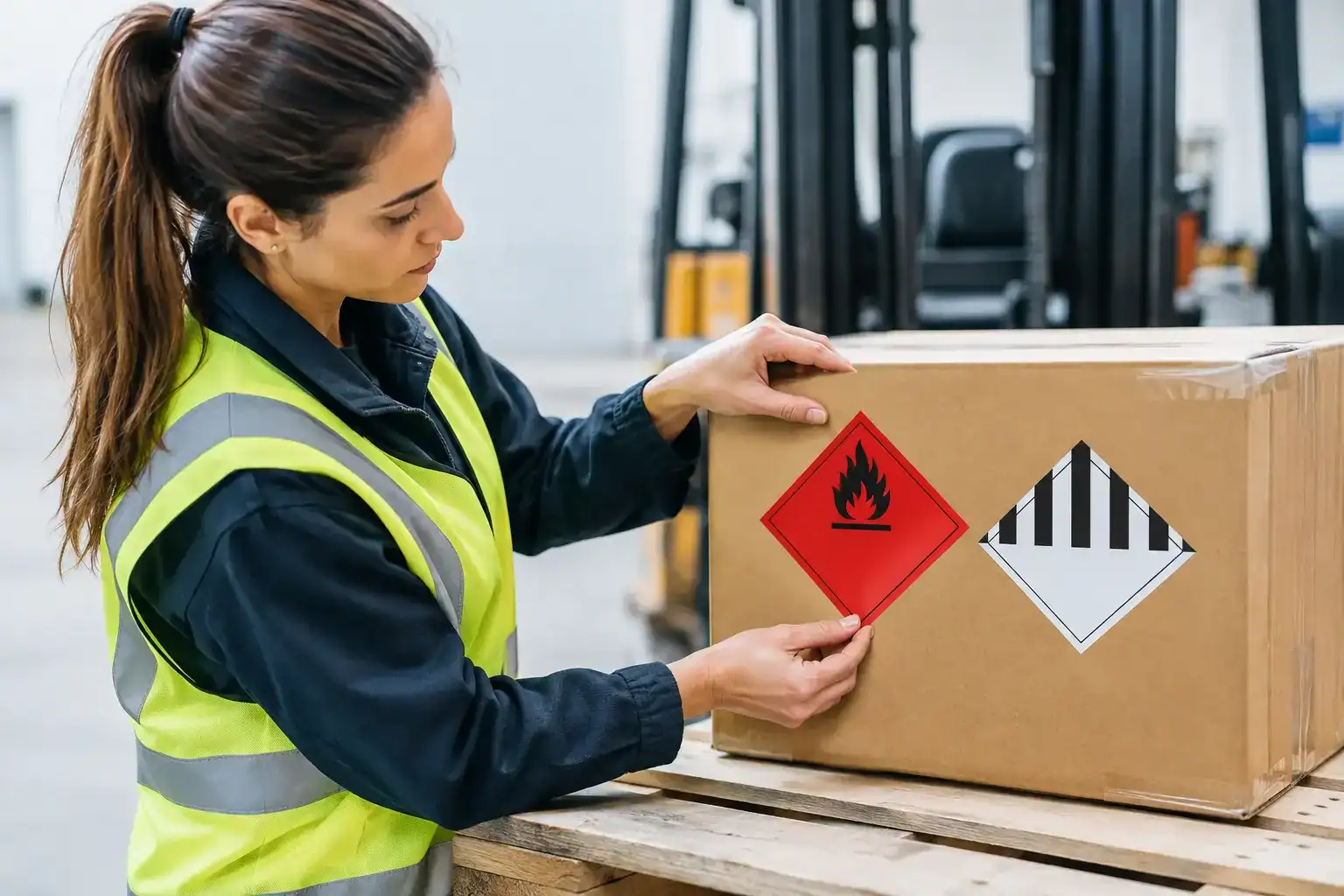
A transport package must allow handlers, drivers and emergency responders to identify the transport hazard without opening it. The appropriate diamond-shaped dangerous goods class label is central to this requirement.
Apply the correct class and subsidiary risk labels
Use the label for the primary class or division shown in the transport classification. Where a subsidiary risk applies, that label must also be displayed. Labels must be durable, clearly visible and placed on the outside of the package so they are not covered by tape, stretch wrap, freight paperwork or another mark.
Do not use faded labels, hand-drawn diamonds or generic hazard stickers as substitutes. A Class 3 flammable liquid label, for instance, communicates a specific transport hazard. A general warning symbol does not meet the same purpose.
The package must also display the UN number and proper shipping name where required. This information must match the shipping documentation and the actual substance inside. A mismatch between a drum label and consignment paperwork can delay freight, trigger a rejected delivery or create serious risk during an incident.
Mark the package, not just the pallet
Each dangerous goods package needs its required marks and labels. A label attached only to stretch wrap or a pallet may disappear when the load is broken down. If drums, jerry cans or cartons are handled separately, the hazard information must remain with each package.
Outer packaging also matters. If smaller dangerous goods containers are packed into a carton, crate or overpack, the outer package needs the required marks and labels unless the marks on the inner packages remain visible. Overpacks may need additional wording to show that dangerous goods are contained inside.
Packaging condition is part of the labelling job. Replace labels when they are torn, chemical-stained, sun-faded or no longer legible. Before applying a new label, remove or fully obscure old labels that could cause confusion. A returned drum carrying labels for two different products is not a minor housekeeping issue.
Know when placards are required
Labels are used on individual packages. Placards are larger hazard displays used on transport units, bulk containers, tanks and certain loads. The placarding requirement depends on the dangerous goods, quantities and transport configuration.
This distinction matters for warehouses and dispatch teams. Putting package labels on a truck does not necessarily meet vehicle placarding rules, and placing a vehicle placard near a drum does not correctly label the drum. Check the ADG Code and your transport procedures before dispatching dangerous goods in bulk or mixed loads.
Workplace labels for hazardous chemicals
Once a chemical is received and used on site, workers need clear workplace hazard information. A supplier container should retain its original label, including the product identifier, hazard pictograms, signal word, hazard statements, precautionary statements and supplier details required for that product.
Keep supplier labels intact wherever possible. Do not decant a chemical into an unmarked spray bottle, solvent tin or food container. This is one of the most common and avoidable chemical safety failures in workshops, warehouses and maintenance areas.
Label decanted chemicals straight away
If a hazardous chemical is transferred from its original container into another container, label the new container before it enters service. The label should identify the chemical and communicate the relevant hazards and safe handling requirements. Use the SDS and the original supplier label as the source of truth.
For short-term use, there can be limited exceptions where a worker decants a chemical for immediate use and keeps it under their direct control. That does not apply to a bottle left on a bench, placed in a cleaner’s trolley, handed to another worker or stored for the next shift. If it can be set down or used by someone else, label it.
Secondary containers need to be compatible with the product. A correct label on an unsuitable bottle does not make the arrangement safe. Use containers designed for the chemical, keep caps secure and avoid reusing food or drink packaging.
How to label dangerous goods without creating confusion
A practical labelling process reduces errors when goods arrive, move through storage and leave site. It should be controlled by trained staff rather than left to guesswork at the dispatch bench.
Use this sequence for each product line:
- Confirm the product identity against the purchase order, container and current SDS.
- Verify the ADG transport classification, including UN number, proper shipping name, class, subsidiary risk and packing group where applicable.
- Check whether the package requires class labels, handling marks, orientation arrows, marine pollutant marks or other transport marks.
- Apply labels to clean, dry external surfaces where they can be seen during handling.
- Confirm the workplace container label remains legible or produce a compliant secondary-container label before decanting.
- Record the product in the hazardous chemical register and make the SDS available to workers.
The exact marks required depend on the product and transport method. Limited quantity consignments, aerosols, lithium batteries, marine pollutants, infectious substances and temperature-controlled goods can have specific marking rules. Where there is uncertainty, obtain advice from a competent dangerous goods professional or the carrier before shipping.
Check label placement, durability and storage compatibility
Labels only work when people can see and trust them. Place them on a surface that is not normally hidden by handles, closures, bands or pallet restraints. Do not position labels across seams where they can split when the carton flexes.
In industrial settings, labels may face rain, chemical splash, UV exposure, abrasion and oil residue. Use labels suited to the environment, and inspect them during routine stock checks. A label that survives dispatch but fails after two months in an outdoor chemical store is not fit for purpose.
Clear labels also support safe segregation. Staff need to identify flammables, oxidising agents, corrosives and toxic substances quickly when placing stock in cabinets, stores, spill pallets or bunded areas. Labels do not replace a documented dangerous goods segregation assessment, but unreadable labels make that assessment impossible to follow in practice.
For flammable liquids, ensure containers are correctly labelled before they are placed into a flammable liquids storage cabinet. For corrosives and other liquid chemicals, use suitable bunding or spill containment based on the chemical, container volume and site risk assessment. Keep compatible spill response materials nearby, but do not assume one general-purpose spill kit is suitable for every chemical hazard.
Common labelling mistakes to avoid
The most frequent failures are simple: using an old label, omitting the UN number, covering a label with tape, decanting into an unlabelled bottle, or relying on a product name that does not identify the hazard. Another common issue is treating the SDS as paperwork rather than a working document. If the SDS changes, the classification, label elements or storage controls may change with it.
Also check imported stock carefully. A label prepared for another market may not meet Australian requirements or may use information that conflicts with the Australian SDS. Do not relabel products from memory. Confirm the local classification and supplier information first.
A reliable dangerous goods labelling system is built into receiving, storage, decanting and dispatch, not added after a near miss. Keep current SDSs, train the people handling chemicals, inspect labels as part of routine housekeeping and replace damaged labels before they become a safety decision made under pressure.