Marine Containment for Spill-Ready Operations

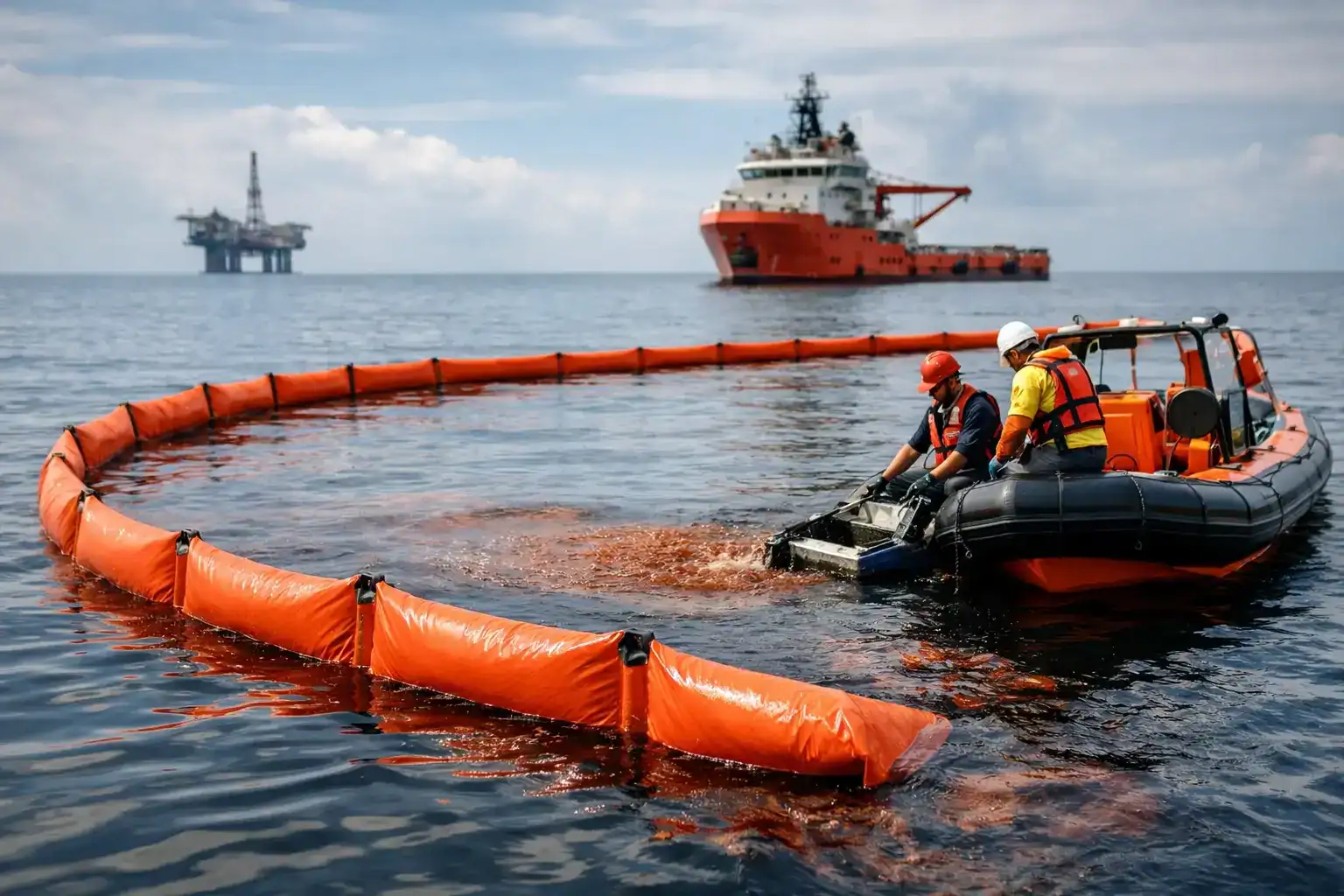
A small sheen beside a berth can become a shoreline incident quickly. Wind, tide, vessel movement and rainwater drains can carry oil, diesel or chemicals well beyond the original release point. Effective marine containment gives operators time and control: time to stop the source, recover the pollutant and protect sensitive waterway areas before the spill spreads.
For marinas, ports, boatyards, fuel facilities, construction projects near water and industrial sites with waterfront access, containment equipment should be selected before an incident occurs. The right boom, absorbent and recovery equipment depends on the material released, the water conditions and the likely path of the spill.
What marine containment is designed to do
Marine containment is the use of physical barriers and recovery materials to limit the movement of pollutants on waterways. It is most commonly associated with oil and fuel spills, but the same response planning principles apply where chemicals, hydraulic fluid, paints or contaminated runoff may reach water.
The first objective is source control. Shut down the transfer, isolate damaged equipment, plug or temporarily seal the leak where it is safe to do so, and prevent more material entering the water. Containment then keeps the released material within a manageable area. Recovery products, such as oil-only absorbent pads, rolls and socks, are used after the spill has been corralled.
Containment is not a substitute for stopping the leak. A boom placed around an active discharge may reduce the immediate spread, but it can be overtopped or bypassed if the release continues, currents increase or the boom is poorly positioned. Spill response works best as a sequence: stop, contain, recover, store waste safely and report or escalate as required by the site plan and relevant authority requirements.
Choosing marine containment equipment for the site
There is no single boom suitable for every waterfront operation. Buyers should start with the credible spill scenarios on their site rather than choosing based on length or price alone. A marina refuelling pontoon, for example, faces different risks from a vessel maintenance yard with stormwater outlets and lifting equipment near the water.
Oil-only absorbent booms
Oil-only booms are suited to hydrocarbons such as diesel, petrol, lubricating oil and hydraulic oil. They repel water while absorbing oil, making them practical for small spills, sheens and final clean-up around a contained area. They are also useful around outfalls, boat ramps and refuelling points where a minor release needs immediate attention.
Absorbent booms do have limits. They are not intended to hold back a high-volume release in moving water, and they should not be used for unknown chemicals simply because they float. Once saturated, they must be removed and managed as contaminated waste under the site’s waste arrangements.
Floating containment booms
Floating containment booms create a barrier on the water surface. They are generally used to divert or corral floating pollutants, protect a shoreline, isolate a work area or contain a release during fuel transfer. A boom’s freeboard, draft, connection strength and ballast all influence how it performs.
Higher freeboard can assist where chop and wave action are present, while sufficient skirt depth helps reduce oil passing underneath. However, deeper skirts also create more drag in current. In fast-flowing water, a boom set directly across the current can fail because water pressure forces it under or carries product around the ends. An angled deployment that guides oil towards a collection point is often more effective, provided the site response plan allows for it.
Spill kits and supporting absorbents
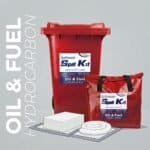
A marine spill kit should support the first response, not sit in a store room waiting for instructions. For fuel docks, vessels, workshops and waterside plant, this commonly means oil-only pads and rolls, absorbent socks, disposal bags, gloves and clear response instructions located close to the risk.
General-purpose absorbents can be appropriate for workshop spills on land, but they are not the default choice for oil on water. Chemical absorbents may be required where the substance is corrosive or otherwise hazardous. Always identify the product involved from its safety data sheet and assess whether personnel need additional PPE before beginning recovery.
Site conditions determine whether a boom will work
A well-made boom can still perform poorly if the deployment area has not been assessed. Tidal range, current, wind direction, wake from passing vessels, water depth, debris and access for responders all matter. The practical question is not just, “Can we put a boom here?” It is, “Can we deploy, anchor and recover it safely in the conditions likely during a spill?”
At a calm enclosed marina, a lightweight boom may be appropriate and can be deployed quickly by trained staff. At an exposed wharf or coastal worksite, the equipment may need stronger connections, appropriate anchoring and a trained contractor or specialist response provider available for larger incidents. Planning for a calm-day deployment is not enough.
Map likely escape routes as part of the assessment. These may include stormwater outlets, slips, culverts, channels, neighbouring berths, mangroves, beaches and public access areas. Identify boom deployment points, anchor locations, equipment storage and safe access paths before an emergency. If a spill occurs at night or during poor weather, the team should not be deciding these basics for the first time.
A practical marine spill response sequence
Personnel should follow the site’s documented emergency procedures and only work within their training and capability. For a manageable release, the response generally follows a clear order:
- Raise the alarm, assess immediate hazards and notify the appropriate supervisor or emergency contact.
- Stop the source if it can be done safely, including stopping pumps, closing valves or securing damaged containers.
- Protect people first by controlling ignition sources, restricting access and wearing suitable PPE.
- Deploy containment upstream, upwind or around the release according to water movement and the planned collection area.
- Use compatible absorbents to recover the pollutant, then package contaminated materials for compliant disposal.
- Record the incident and make any required notifications promptly.
The details will vary according to the pollutant, quantity, location and environmental sensitivity. A petrol release presents vapour and ignition hazards that demand a different approach from a small hydraulic-oil leak. An unknown substance should be treated cautiously until it has been identified. Do not send unprotected staff onto pontoons, vessels or unstable banks simply to deploy a boom faster.
Storage, inspection and training are part of containment
Marine spill equipment must be accessible, dry where required and easy to identify. A locked container at the opposite end of a large facility may technically hold the right products, but it does little for a spill at the fuel berth. Position equipment close to credible risk points while protecting it from UV exposure, weather damage, theft and vehicle impact.
Inspect stocks routinely. Check boom connectors, ropes, anchor points, storage bags and reels for damage. Confirm that absorbents have not been used for minor clean-ups without replacement. Verify that gloves and other PPE are available in suitable sizes and remain fit for use. Expired, damaged or incomplete kits create uncertainty at the exact moment workers need clarity.
Training should include a practical deployment exercise, not only a toolbox talk. Teams need to understand how to connect sections, where to position the boom, how to prevent gaps at structures and how to recover saturated absorbents without spreading contamination. Drills also expose operational issues, such as a boom that is too heavy for the available crew or an equipment cabinet that cannot be reached when a gate is locked.
Build a response capability that matches the risk
For minor recurring risks, a well-stocked oil-only spill kit, accessible absorbents and staff training may be the right level of preparation. Higher-risk fuel handling, marine construction or bulk transfer operations may require dedicated floating boom, anchoring equipment, formal response arrangements and a clearer escalation process. The right investment depends on credible spill volume, water movement, environmental exposure and the consequence of product leaving the site.
Spillmaster supports worksite buyers with practical spill control, absorbent and containment equipment selected around real operational needs. Start with the release most likely to occur at your site, then make sure the equipment, access and trained people are ready before the water carries the problem elsewhere.