Battery Acid Spill Guide for Safer Worksites

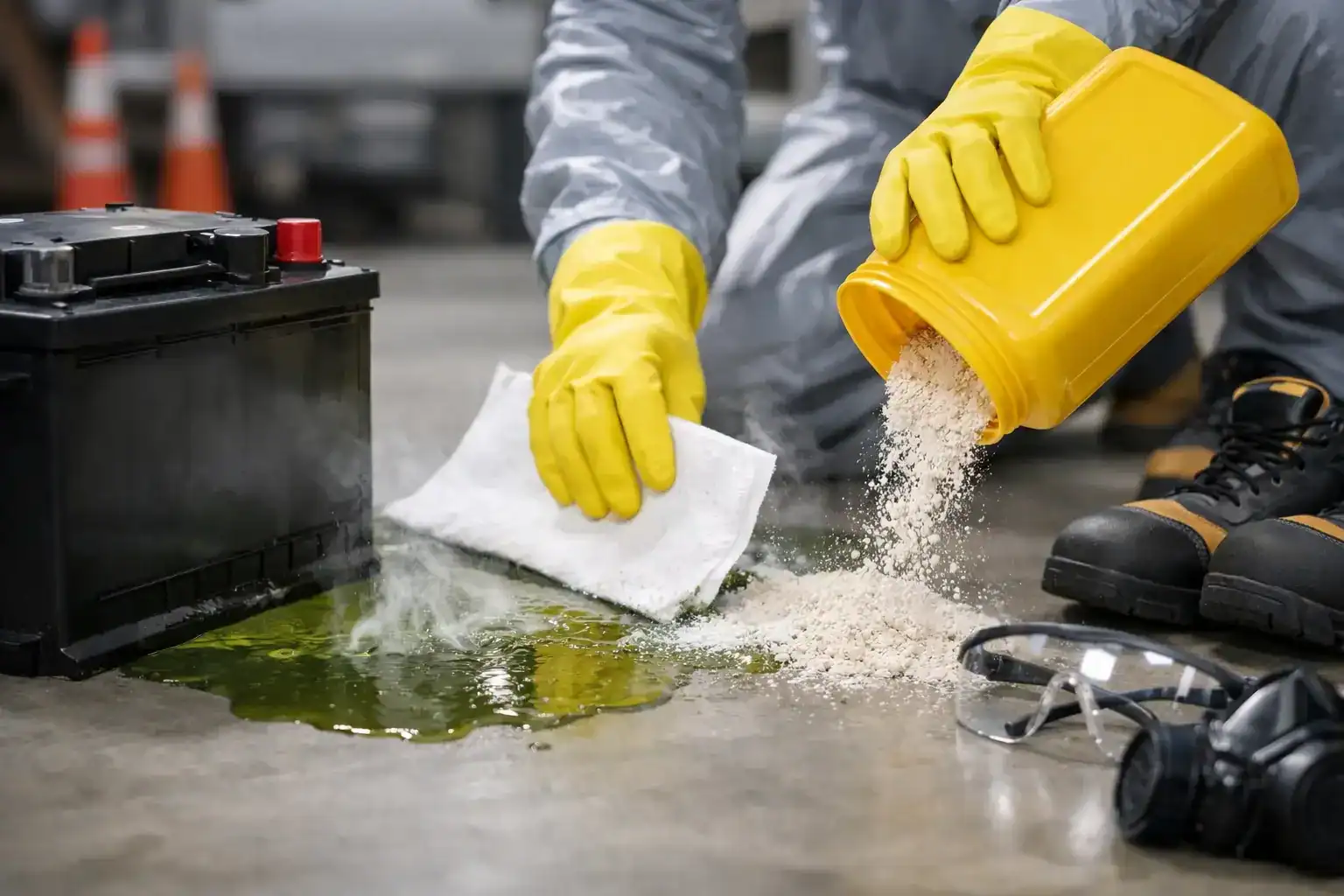
A leaking forklift battery, damaged vehicle battery or failed UPS unit can turn a routine maintenance task into a corrosive chemical incident quickly. This battery acid spill guide is designed for Australian workplaces that need a controlled, practical response – one that protects workers, prevents contamination and supports site compliance.
The first decision is not which absorbent to grab. It is whether the substance is genuinely lead-acid battery electrolyte, how far it has travelled, and whether your team is equipped and authorised to deal with it. A small, contained spill in a battery charging bay can often be managed with the right kit and procedure. A spill entering a drain, involving an injured person, or producing smoke or heat needs immediate escalation.
Identify the battery and the immediate risk
Most conventional automotive, marine, forklift and standby-power batteries contain sulphuric acid electrolyte. It is corrosive, can burn skin and eyes, damage concrete and metal, and react with incompatible materials. During charging, lead-acid batteries can also generate hydrogen gas. That creates a separate ignition risk, particularly in enclosed charging areas.
Do not assume every battery incident is a straightforward acid spill. Lithium-ion batteries use different electrolytes and may present toxic fumes, thermal runaway or fire hazards. If a lithium battery is swollen, hot, smoking, hissing or burning, keep people clear, isolate the area and follow your emergency response arrangements. Do not apply a lead-acid spill procedure to a lithium battery event.
For a suspected lead-acid spill, check the battery label, the site chemical register and the safety data sheet before starting clean-up where it is safe to do so. The safety data sheet should confirm the hazards, required personal protective equipment, compatible neutralising agent and waste handling requirements.
Battery acid spill guide: first response actions
Speed matters, but rushing in without protection can create a second casualty. Restrict access to the area and keep unprotected workers away. If the spill is indoors, improve ventilation where this can be done safely and remove ignition sources if charging gases may be present.
A trained responder should then work through these actions:
- Check for injured people first. Flush acid splashes from skin or eyes immediately with clean running water and seek urgent medical attention. Remove contaminated clothing while flushing, where safe to do so.
- Wear suitable PPE before approaching the spill. This generally includes chemical-resistant gloves, splash goggles or a face shield, protective clothing and enclosed footwear. Select PPE against the product’s safety data sheet, not by appearance alone.
- Stop the source only if it is safe. Upright a tipped battery, place a damaged battery in an appropriate acid-resistant containment tray, or prevent further leakage using compatible containment equipment. Never take unnecessary risks to save a battery.
- Protect drains and low points before treating the spill. Use drain covers, bunding socks or compatible absorbents to stop acid travelling into stormwater, sewer lines or adjoining work areas.
- Notify the responsible supervisor or emergency contact under your site spill plan. If the spill is beyond your team’s capability, has reached a drain or waterway, or creates an immediate threat, contact emergency services and the relevant environmental authority as required.
The response area should remain controlled until the surface has been cleaned, inspected and declared safe.
Contain first, then neutralise with the correct agent
For lead-acid electrolyte, use a chemical spill kit that is compatible with corrosive liquids. General-purpose oil-only pads are not suitable for an acid spill. They are designed to repel water and absorb hydrocarbons, not to neutralise or safely manage corrosive chemicals.
Place compatible absorbent socks or booms around the outside edge of the spill first. This prevents spread while you work from the perimeter towards the centre. Protect nearby drains before the liquid reaches them. In a battery room, also check beneath racks, cable trenches, floor joins and equipment bases, where acid can migrate unnoticed.
Apply an acid-neutralising absorbent or neutraliser in accordance with its product instructions and the safety data sheet. Add it carefully to avoid splashing. A suitable neutraliser will help bring the acid towards a safer pH while absorbing the liquid, but the reaction can fizz or generate heat. Stand clear of the immediate reaction area and do not over-apply product in a confined space.
Never pour water directly onto concentrated battery acid. Water can spread the contamination and may cause heat and splashing. Likewise, do not use sawdust, rags, paper towel or an unknown absorbent as a substitute for a compatible chemical spill product. These materials can be ineffective, make waste handling harder and leave corrosive residue behind.
Once the neutraliser has completed its reaction, use chemical-resistant tools such as a scoop, scraper and collection container to recover the material. Test the affected surface if your procedure requires it. The aim is not simply to make the puddle disappear. It is to confirm that corrosive residue has been removed from the floor, equipment and any crevices where it could continue causing damage.
Treat recovered material as hazardous waste
Neutralised absorbent, contaminated PPE, damaged packaging and debris may still require disposal as hazardous or controlled waste. Do not place them in general rubbish bins unless your waste contractor and site procedure specifically permit it.
Place waste into compatible, labelled containers with secure lids. Keep the containers upright and protected from weather while disposal is arranged. Your waste provider may need details of the original product, estimated quantity, neutralising agent used and whether the battery itself is damaged.
Damaged lead-acid batteries should be stored in a suitable acid-resistant tray or bunded area until they can be sent to an approved battery recycler. A battery that appears empty can still contain enough electrolyte to leak during handling or transport. Keep terminals protected against short circuit and avoid stacking batteries where they could topple or crack.
If acid has reached soil, stormwater, a sewer connection or a waterway, treat this as an environmental incident rather than a normal housekeeping issue. Contain the release if safe, retain records and follow the notification requirements that apply to your state, territory, local authority and site licence conditions.
Clean-up is only complete after inspection and reporting
A clean-looking floor is not necessarily a safe floor. Acid can etch concrete, corrode steel fixings and damage forklift components, chargers, racking and drainage infrastructure. Inspect the spill location after clean-up, including nearby equipment and the underside of batteries or trays. A repeat leak can occur if a cracked case, loose vent cap or overfilled cell is returned to service.
Record the incident while the facts are clear. Include the battery type, source of the leak, approximate volume, location, controls used, personnel involved, waste disposal route and any environmental exposure. This record helps demonstrate that the spill was managed under your workplace procedures and can reveal recurring faults, such as poor battery handling or inadequate charging-area containment.
It is also worth reviewing why the spill occurred. Forklift battery spills commonly stem from overfilling, rough handling, damaged connectors, poor lifting methods or charging in an unsuitable area. Vehicle battery leaks may point to vibration, poor restraint, impact damage or a failed battery case. Correcting the underlying cause reduces the chance that the next incident is larger.
Set up battery areas for a faster response
Battery charging and maintenance locations should be designed around the likelihood of a spill, not treated as ordinary storage spaces. Keep a clearly marked chemical spill kit close enough to reach without crossing the contaminated area. The kit should include acid-neutralising absorbent, compatible pads and socks, disposal bags or containers, drain protection, chemical-resistant gloves, eye and face protection, and clean-up tools.
The right capacity depends on the batteries handled and the worst credible spill, not the amount of floor space available. A workshop servicing small vehicle batteries may need a compact corrosive spill kit. A forklift fleet, telecoms room or renewable energy site may require larger quantities of neutraliser, bunding and backup stock. Where batteries are charged or stored in volume, permanent containment such as spill pallets, trays or bunded flooring provides a more dependable first line of defence.
Inspect spill kits routinely. Neutraliser that has been used, PPE that has deteriorated, and missing drain covers are all failures waiting for the wrong day. Make battery spill response part of induction and refresher training, including when workers must stop and call for specialist help.
A battery spill is manageable when the response equipment matches the chemical, the team understands the limits of its training, and containment is already in place. Spillmaster supplies practical corrosive spill response, bunding and PPE equipment so worksites can prepare before a leaking battery tests their procedures.