Do Spill Kits Expire? What Sites Need to Know

A spill kit can look complete on a warehouse wall while being unfit for the job it was bought to do. So, do spill kits expire? The short answer is that the kit itself does not usually have one universal expiry date, but individual components can deteriorate, become contaminated, go missing or no longer suit the hazards on site. A spill kit is only compliant and useful if it can be deployed quickly and safely during a real incident.
For Australian workplaces, the practical question is not simply whether a date on the cabinet has passed. It is whether the absorbents, PPE, disposal materials and instructions remain suitable for the liquids handled on site, and whether the kit is stocked to its stated capacity. Regular inspection is the control that turns a purchased kit into reliable spill-response equipment.
Do spill kits expire in the usual sense?
Most empty spill kit bins, cabinets and bags do not expire in the same way as food, medicines or some chemical products. A sound polyethylene bin or durable carry bag may provide years of service if it is protected from harsh weather, UV exposure, forklift damage and chemical contamination.
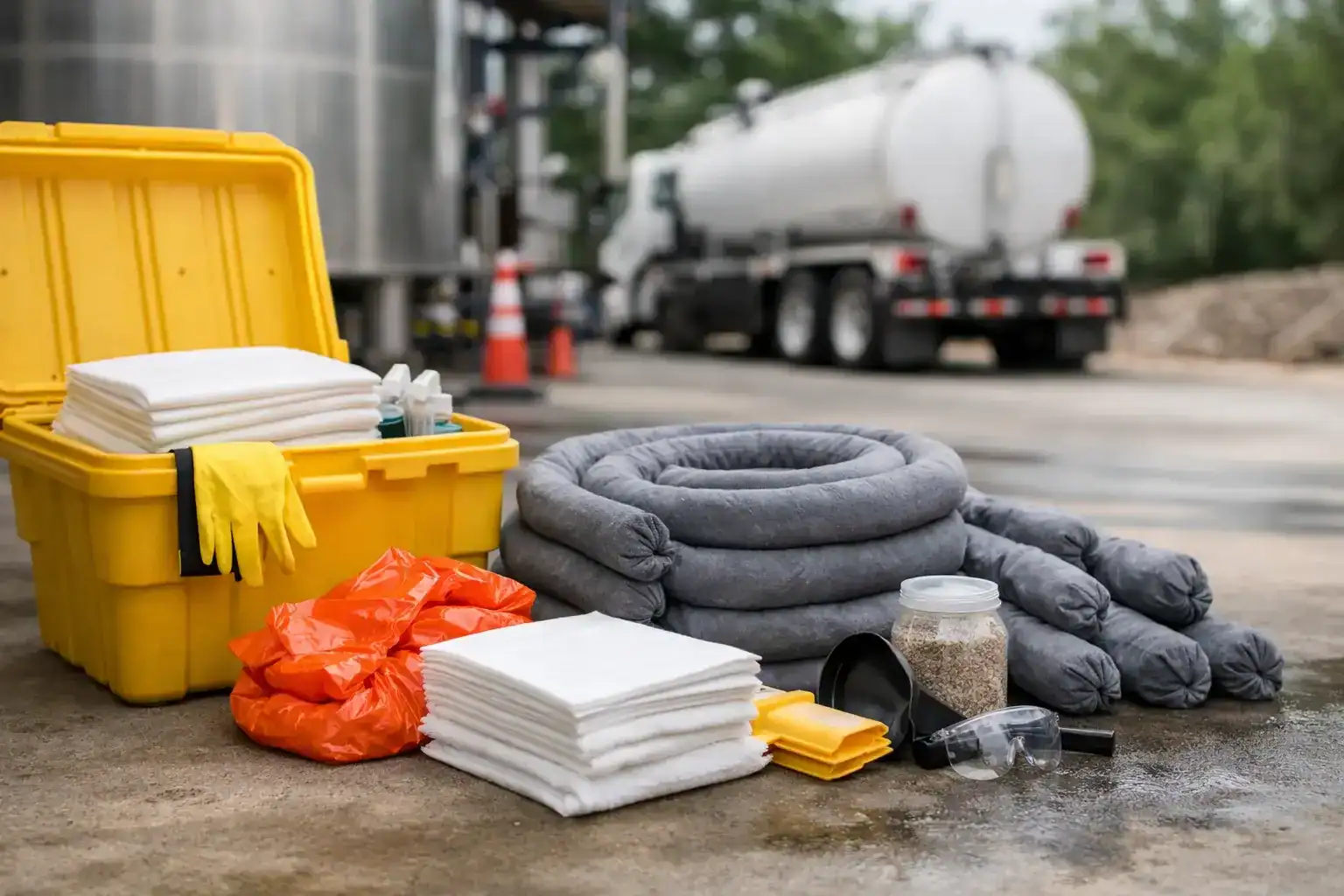
The contents need closer attention. Absorbent pads, socks, pillows and loose absorbent can lose effectiveness when they are wet, dirty, degraded by sunlight or exposed to incompatible substances. Gloves can perish, tear or become unsuitable for the chemicals currently used at the workplace. Disposable PPE, labels, ties and disposal bags may also be removed during minor clean-ups and never replaced.
Some components may carry manufacturer date markings, shelf-life advice or storage requirements. Follow those instructions where supplied. If a component has a stated expiry date, treat that date as a replacement trigger rather than assuming the rest of the kit must be discarded.
What causes a spill kit to become unserviceable?
Time is only one factor. Storage conditions and site behaviour are usually the bigger reasons a kit fails an inspection. A kit stored outdoors beside a wash bay, for example, can suffer moisture ingress and UV damage even if it was purchased recently. A kit inside a busy workshop may gradually be raided for rags, gloves and pads until the container is well below capacity.
Absorbents deserve particular scrutiny. Oil-only absorbents are designed to repel water and recover oils and fuels, making them useful around marine, stormwater and outdoor fuel-handling areas. General-purpose absorbents suit many workshop liquids, coolants, oils and non-aggressive chemicals. Chemical absorbents are intended for hazardous chemical spills and must be selected against the substances on site. Using the wrong absorbent is not an expiry issue, but it can make a nominally full kit unsuitable from day one.
Check for hard, brittle, stained, wet or mould-affected absorbents. Pads or socks that have already been used, even lightly, should not be returned to the kit. Their absorption capacity is no longer known, and they may introduce incompatible residue into the next response.
PPE should also be reviewed against the current Safety Data Sheets and risk assessment. A box of old gloves is not automatically adequate protection. Chemical resistance varies by glove material, chemical concentration, contact time and task. If the site has introduced a new solvent, acid, fuel blend or cleaning chemical, reassess the kit contents rather than relying on its original specification.
The difference between shelf life and inspection frequency
A fixed annual replacement program can be useful for budgeting, but it should not replace inspections. A sealed, correctly stored refill may remain in good condition beyond a year, while a kit positioned near a loading dock could need attention every week. The appropriate interval depends on the site, the materials handled and how often kit contents are used.
For many workplaces, a monthly visual check is a sensible baseline. High-risk areas such as chemical stores, fuel bays, laboratories, marine facilities and dispatch zones may require more frequent checks. Inspect after every spill response, after severe weather if the kit is outside, and whenever chemicals or processes change.
Document the inspection. A simple checklist or tag should record the date, inspector, condition of the container, missing items and corrective action. This provides evidence that the equipment is being maintained and prevents the common problem of several people assuming someone else has ordered the refill.
Check the kit where it is stored
Start with access. The kit should be visible, clearly identified and free from pallets, parked equipment or stored stock. In an emergency, a kit locked in a cupboard, buried behind cartons or located on the other side of a large facility may be no better than no kit at all.
Then confirm the container is intact. Look for cracked wheels, broken lids, faded labelling, damaged hinges, water inside the bin and corrosion on cabinets. Mobile kits must be easy to move across the actual surfaces on site, including rough concrete, grates and outdoor areas.
Finally, compare the contents with the kit inventory. Count critical response items rather than judging the kit by how full the bin appears. A few missing absorbent socks can materially reduce the ability to stop a spill reaching a drain.
A practical spill kit inspection checklist
During a routine inspection, confirm that the kit contains the correct absorbent type and stated capacity for its location. Check that pads, socks, pillows and loose absorbent are clean, dry and packaged or protected from dust and moisture. Inspect drain covers, booms, plugs and other containment items for damage or distortion.
Also check that suitable PPE is present, clean and within any manufacturer shelf-life guidance. The kit should include adequate disposal bags, ties and labels so used material can be contained for disposal. Instructions and emergency contact details need to be readable, especially where casual staff, contractors or shift workers may be first on scene.
There are four questions worth asking at every inspection:
- Can a worker reach and deploy this kit without delay?
- Is it suitable for the liquids and volumes currently handled here?
- Are all consumable items clean, dry and available in the required quantity?
- Has the response process, including waste disposal and incident reporting, been communicated to staff?
If any answer is no, the kit needs corrective action. That may mean ordering a refill, replacing selected components, relocating the kit, adding drain protection or upgrading to a larger capacity. Replacing the whole kit is necessary only when the container is damaged, the contents are extensively degraded or the kit is fundamentally wrong for the site hazard.
When should spill kit contents be replaced?
Replace used absorbents immediately after a response. Do not wait for the next scheduled inspection. The same applies to contaminated gloves, damaged tools, used disposal bags and any drain cover or boom that cannot be cleaned and returned to service in line with its instructions.
Replace unopened contents when they show physical deterioration, have been stored outside recommended conditions, are contaminated, or have passed a manufacturer-stated expiry or shelf-life date. If packaging is torn and the contents have been exposed to water, dust or chemical vapour, replacement is generally the safer decision.
There is also a compliance-driven reason to replace contents: the workplace risk has changed. A general-purpose kit that once suited a maintenance workshop may no longer be sufficient after bulk chemical storage is added. Likewise, an oil-only kit near a diesel tank is not a substitute for chemical spill response equipment where corrosives are handled nearby. Match each kit to the credible spill scenario in that area.
Refills are often the better maintenance option
A spill kit refill is often the most economical way to restore a kit after use or inspection. It retains the existing bin, cabinet or bag while replacing the consumable response materials. This reduces waste and helps sites maintain a consistent kit layout across multiple locations.
Refills work best when the original container remains sound and the hazard profile has not changed. Keep the inventory list with the kit and order like-for-like contents where appropriate. If the kit has been repeatedly used for a different liquid than intended, stop and reassess before refilling it. Adding more pads does not correct a poor kit selection.
For multi-site businesses, standardising kit types and refill schedules can simplify procurement and training. Workers learn where key items are located, supervisors can inspect against one consistent list, and procurement teams can hold suitable replacement stock. Spillmaster supplies spill kits, refills and individual absorbents to support that practical maintenance approach.
Store kits so they last and perform
Store spill kits close to likely spill points, but away from direct rain, prolonged sunlight and vehicle impact where possible. Outdoor kits may need weather-resistant storage or additional protection. Do not place them where a spill is likely to block access, such as directly beside the only chemical decanting point.
Keep the surrounding area clear and ensure signs remain visible. Staff should know the difference between a minor spill they can manage safely and an incident that requires escalation, isolation of the area or emergency services. A kit supports a response plan. It does not remove the need for training, appropriate PPE or safe waste management.
The most useful rule is straightforward: do not judge a spill kit by its purchase date or by a quick glance at the bin. Judge it by whether a worker can use it, right now, to contain the specific spill your site could reasonably face. That is the standard worth maintaining.