Safety Can Review for Safer Fuel Storage


A safety can review should start where incidents usually start: at the point someone needs to refuel a generator, clean a part or transfer a small volume of solvent. The container has to be practical enough to use properly, clearly suited to the liquid inside and in sound working order. A cheap or damaged can may appear adequate until a vapour release, splash or static ignition turns a routine task into a reportable event.
Safety cans are portable containers designed for controlled storage and dispensing of flammable liquids. They are not interchangeable with any plastic container, drink bottle or unlabelled tin kept in the workshop. For Australian worksites, selection and use should align with the substance safety data sheet, site risk assessment and applicable requirements for handling flammable liquids, including AS 1940 where relevant.
What to assess in a safety can review
A useful review looks beyond whether the can still holds liquid. It considers the substance being stored, the work being performed and the condition of every component that controls the release of liquid and vapour.
Start by confirming the intended contents. Petrol, diesel, kerosene, oils and solvents do not carry the same fire risk or compatibility requirements. A can suitable for a flammable solvent may need features that are unnecessary for diesel, while a container used for corrosive chemicals must be made from a compatible material. The product label and safety data sheet should guide the decision, not habit or convenience.
Capacity matters as well. Larger cans reduce the number of refill trips, but they are heavier, harder to control and more likely to be overfilled. A size that allows one person to carry and pour safely is often the better operational choice. If workers routinely decant from a large drum, a dedicated dispensing arrangement and suitable secondary containment may be safer than repeatedly filling portable cans.
Check the safety features, not just the body
A fit-for-purpose safety can generally incorporates a self-closing lid or cap, a controlled pouring arrangement, pressure relief or flame-arresting protection where specified, and a durable handle. The exact design depends on the product and liquid, but the principle is consistent: liquid should only leave the can when the operator deliberately opens it, and vapour should not be allowed to escape unchecked.
Inspect the lid, seals, spout, trigger mechanism and handle closely. Look for cracked seals, distorted threads, stiff springs, corrosion, dents around closures and evidence of leaks. A blocked or damaged vent can cause erratic pouring and splashing. A cap that does not close fully allows vapours to build up in a poorly ventilated store, vehicle tray or workshop.
Do not repair a compromised safety can with tape, silicone or improvised fittings. Temporary fixes are rarely chemical-resistant, rarely vapour-tight and can make a container harder to assess later. Remove it from service, empty it using an approved site process and replace it.
Match the can to the substance and task
The best safety can is not necessarily the one with the highest capacity or lowest purchase price. It is the one that suits the liquid, the transfer method and the working environment.
For fuel handling, consider whether the can will be carried across uneven ground, used near vehicles, transported in a ute or stored near ignition sources. For solvents in a maintenance area, controlled dispensing and minimising vapour exposure may be the priority. In marine, mining and remote operations, impact resistance, clear labelling and access to spill response equipment deserve extra attention because a replacement may not be immediately available.
Material compatibility is a non-negotiable check. Some chemicals can soften plastics, degrade seals or react with unsuitable metals. Use the safety data sheet and supplier specifications to confirm compatibility before introducing a new liquid to an existing container. Never assume that a can which previously held fuel is suitable for a degreaser, pesticide or chemical waste.
Colour coding can help teams identify container purpose, but it is not a substitute for a compliant label. Every container should identify its contents and associated hazards clearly. Where a safety can is used for decanted hazardous chemicals, site labelling procedures need to be followed. Workers should not have to smell or guess what is inside.
Storage conditions can defeat a good safety can
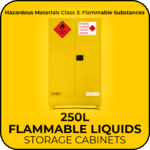
Even a compliant, well-maintained can can create risk when stored badly. Keep flammable liquids away from heat sources, hot work, sparks, electrical equipment and direct sunlight. Storage areas should be ventilated, controlled and kept clear of drains. The quantity stored and the location will affect whether a flammable liquids storage cabinet, bunded area or another engineered storage solution is required.
Avoid leaving safety cans on benches, floor areas or vehicle trays where they can be knocked over. Store them upright with caps secured, and keep incompatible substances separated. If a leak occurs, secondary containment helps prevent the liquid reaching drains, soil or waterways while the response is underway.
Transport requires the same discipline. Secure cans against movement, keep them upright and protect them from impact. Do not carry leaking, unlabelled or overfilled containers. Before placing a can in an enclosed vehicle space, consider vapour accumulation and site transport procedures. A short trip between sheds still creates exposure and ignition risks.
Prevent static and uncontrolled dispensing
Static electricity is a consideration when transferring flammable liquids, particularly in dry conditions or around non-conductive equipment. Follow workplace procedures for bonding and earthing where required. Decant slowly, maintain control of the nozzle or spout and avoid splash filling. Never dispense fuel or solvent near naked flames, smoking areas, grinding work or operating engines.
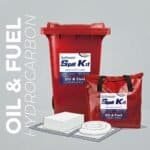
Good housekeeping also reduces risk. Keep an appropriate spill kit close to fuel stores, maintenance bays and decanting points. Workers need to know where it is, what absorbents are suitable for the liquid and how to isolate a spill before it spreads. A safety can controls the source; spill response equipment controls what happens if that control fails.
Build safety can checks into routine inspections
A safety can review is most effective when it is part of a regular inspection routine rather than a response after a leak. The frequency depends on use. A can used daily in a workshop deserves frequent visual checks, while stored emergency fuel containers may be checked during scheduled site inspections. Record inspections where this supports your safety management system, especially for higher-risk areas.
Workers should be able to identify the signs that require a can to be taken out of service: visible leakage, a missing or damaged cap, unreadable labelling, corrosion, cracks, swollen material, a faulty closure or uncertainty about the contents. Clear authority to stop using unsafe equipment is more valuable than a checklist that no one acts on.
Training should cover the practical sequence of carrying, opening, dispensing, closing and returning the can to storage. It should also address what not to do, including topping up equipment near ignition sources, transferring liquid into unapproved containers or leaving a partially open can for the next shift. These behaviours are often where otherwise sound equipment is defeated.
When replacement is the safer decision
Safety cans are consumable safety equipment in the sense that their service life depends on condition, exposure and use. There is no value in extending the life of a container that cannot close securely or whose history is uncertain. Replacement cost is minor compared with a fuel fire, worker injury, environmental clean-up or interrupted operation.
When purchasing replacements, specify the liquid, preferred capacity, required dispensing method and storage environment. Confirm that the can is suitable for the intended application and ensure the accompanying spill control and storage arrangements are adequate. Spillmaster can assist buyers in matching practical spill response and containment equipment to fuel-handling areas where portable containers are used.
A sound safety can is a simple control, but it only works when the liquid is identified, the closure functions properly and the can is stored and handled with discipline. Review the cans already on site before the next refill task, not after the first leak.