Chemical Aprons for Safer Hazardous Work

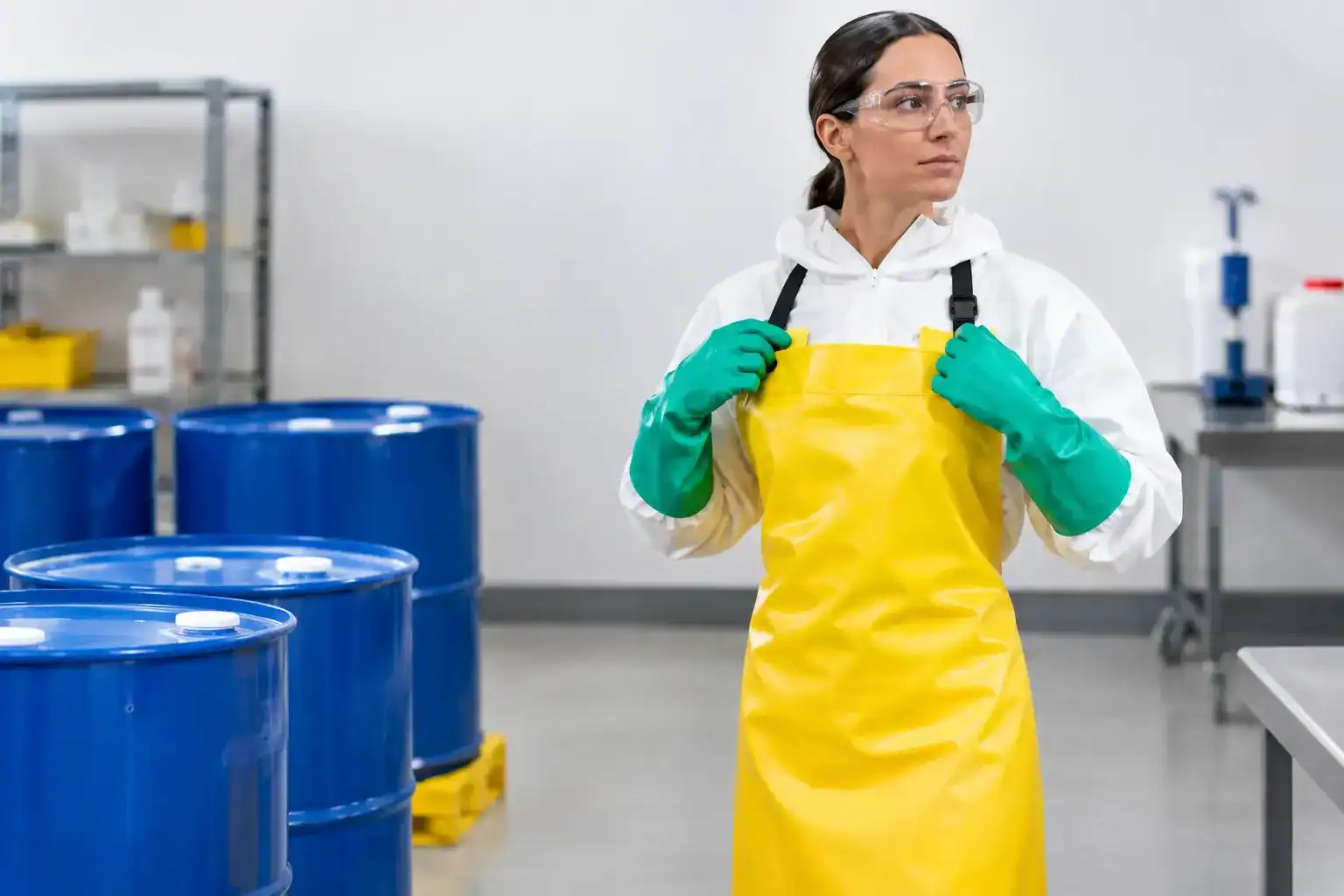
A chemical splash during drum decanting or wash-down can soak through ordinary workwear before a worker has time to step back. Chemical aprons provide a practical outer barrier across the torso and upper legs, reducing contact with hazardous liquids during routine handling, transfer, cleaning and spill response. They are not a substitute for selecting the right gloves, eye protection and clothing, but they are an essential part of a task-specific PPE system.
For Australian worksites, selection should begin with the chemical and the task, not with the apron’s colour, thickness or price. The right apron for diluted detergent in a workshop may be unsuitable for concentrated acid, solvent, caustic or fuel. A clear selection process helps protect workers, control contamination and support safer day-to-day operations.
What Chemical Aprons Are Designed to Do
Chemical aprons are worn over work clothing or chemical protective garments to shield the front of the body from liquid splashes, drips and incidental contact. Common applications include chemical mixing, laboratory work, parts washing, battery maintenance, water treatment, cleaning, agricultural chemical handling, fuel transfer and spill-kit deployment.
An apron is generally intended for splash protection rather than prolonged immersion or pressurised spray. If a task involves a credible risk of chemical jetting, heavy saturation, vapour exposure or contact from all directions, an apron alone does not provide enough protection. The PPE assessment may require chemical coveralls, sleeves, boots, respiratory protection, a face shield and other controls.
This distinction matters. PPE is the final line of defence after safer procedures, closed transfer systems, ventilation, bunding and other engineering controls have been considered. An apron supports those measures. It does not make an unsuitable process safe.
Start With the Chemical, Not the Apron
The safety data sheet is the first reference point when selecting chemical protective PPE. Check the product identity, concentration, physical form, exposure routes and recommended protective equipment. The chemical may behave very differently when heated, mixed, diluted or used in a confined area.
Then compare the hazard with the apron manufacturer’s chemical resistance information. This information should identify the apron material and indicate its performance against specific substances. Broad descriptions such as “chemical resistant” are not enough on their own. Resistance varies according to the chemical, concentration, temperature, contact time and condition of the material.
Permeation is particularly important. A material can look intact while a chemical gradually passes through it at a molecular level. For tasks involving regular or sustained contact, use manufacturer data to assess breakthrough time and degradation, then establish a replacement interval that suits the job. Do not assume a thicker apron automatically offers suitable resistance.
Where the site uses several products, record approved PPE against each task or chemical group. This gives supervisors and workers a clear reference and reduces the risk of someone grabbing a general-purpose apron for a high-consequence job.
Choosing Chemical Apron Materials
Different apron materials suit different exposure profiles. There is no universal chemical apron, so selection depends on what is being handled and how it is handled.
PVC aprons are widely used for wet work and many industrial cleaning, wash-down and general chemical-handling tasks. They can offer good protection against a range of water-based liquids and are typically easy to wipe down. Their limitations need to be checked where strong solvents, oils, fuels or highly aggressive chemicals are involved.
Rubber and neoprene aprons are often selected where improved resistance to particular acids, alkalis, oils or chemicals is required. The suitability still depends on the exact substance. A material that performs well against one acid may not be appropriate for another chemical or concentration.
Nitrile and multilayer barrier materials can be used in more demanding applications, particularly where compatibility data supports their use. These materials may provide broader resistance, but they can cost more and may be less comfortable for extended wear. The right choice balances protection, expected exposure and practical wearability.
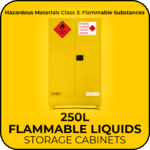
For work involving flammable liquids, also consider the ignition risks around the task. An apron should not be treated as protection against fire or flash exposure unless it has been specifically designed and rated for that purpose. Control ignition sources and store hazardous liquids in suitable compliant storage systems rather than relying on PPE to manage a preventable risk.
Coverage, Design and Fit Matter
An apron’s protective value is not only about its material. Length, width, neck coverage, fastening method and freedom of movement all affect real-world performance. A short apron may leave thighs exposed during decanting, while an apron that is too wide or poorly secured can snag on equipment or create a trip hazard.
Full-length bib aprons are suitable for many standing tasks involving splash risk across the chest, abdomen and legs. For bench work, a shorter style may be adequate if the worker remains behind a splash guard and the lower-body risk is low. For higher splash risk, choose an apron with sufficient length and side coverage, then pair it with compatible sleeves, gloves and footwear.
Fastenings should allow the wearer to adjust the apron securely without creating pressure points. Quick-release features can be valuable where rapid removal may be necessary after contamination. Avoid apron designs with exposed absorbent fabric components if they could retain hazardous liquids.
Fit testing is not limited to respirators. Workers should trial chemical aprons while carrying out representative movements: reaching into a bunded area, operating a pump, lifting a container, crouching to inspect a spill pallet or handling absorbents. If the apron rides up, restricts movement or exposes gaps between gloves and sleeves, the system needs adjustment.
Match the Apron to the Whole PPE System
Chemical protection fails at the joins. An apron may resist the liquid, but exposure can still occur through inadequate gloves, open cuffs, unprotected footwear or poorly fitted eye protection.
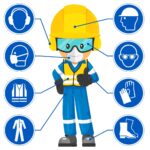
For splash-prone tasks, workers commonly need chemical-resistant gloves selected for the same substance, safety eyewear or goggles, and a face shield where there is a risk of significant splash. Footwear must also suit the environment. Chemical-resistant boots may be required where spills can reach the floor or where workers stand in contaminated areas.
Consider how the apron overlaps other PPE. Gloves should extend far enough to protect the wrist and forearm. If sleeves are used, the overlap should direct liquid away from the body rather than create a channel into the glove. Goggles and face shields protect different areas, so a face shield should not automatically replace sealed eye protection where splashes are likely.
Contaminated PPE must be removed carefully. A worker who pulls an apron over their head after a splash can transfer chemical residue to their face, hair or clothing. Set out a removal sequence, provide a suitable place for contaminated items and make washing facilities immediately accessible.
Inspection, Cleaning and Replacement
Chemical aprons should be inspected before every use. Check for cracks, pinholes, tears, brittle areas, softening, swelling, discolouration, damaged seams and contaminated fastenings. Pay close attention to folds and creases, where damage can be missed.
Clean reusable aprons in accordance with the manufacturer’s instructions and the chemical’s safety data sheet. A contaminated apron should not be taken into lunchrooms, vehicles or office areas. If the contamination cannot be safely removed, or if the apron has degraded, remove it from service and dispose of it through the appropriate waste process.
Storage also affects service life. Keep aprons away from direct sunlight, heat sources, sharp edges and incompatible chemicals. Do not hang them where they can be contaminated by leaking containers or exposed to forklift traffic. Simple storage controls reduce premature damage and make PPE easier to inspect before use.
Disposable aprons can be useful for low-volume, short-duration splash tasks or where cross-contamination is a concern. They are not automatically suitable for aggressive chemicals. Check their compatibility, avoid reusing them unless the manufacturer permits it, and ensure used items are treated as contaminated waste where required.
Put Selection Into Site Procedures
A purchasing decision should translate into a usable procedure. Identify the approved apron for each recurring task, keep it close to the point of use and train workers on when it is required, how it is worn and what signs mean it must be replaced. Supervisors should also check that workers are not substituting a damaged or unsuitable apron simply because it is nearby.
Chemical apron requirements should sit alongside spill response arrangements. During a spill, workers may need to isolate the area, use suitable absorbents and prevent chemicals entering drains. The PPE selected for planned handling work may not be enough for an unknown release, particularly if the product is unidentified or fumes are present. Escalate where the risk exceeds the site’s trained capability.
Spillmaster supports worksites with practical PPE and spill-control equipment for the hazards they manage every day. Selecting equipment by chemical compatibility and task exposure helps ensure that protection is ready when routine work does not go to plan.
The most useful chemical apron is the one that workers can wear correctly, inspect easily and trust for the chemical in front of them. Make that decision before the container is opened, not after a splash reaches the floor.