What Is a Chemical Berm and When Do You Need One?

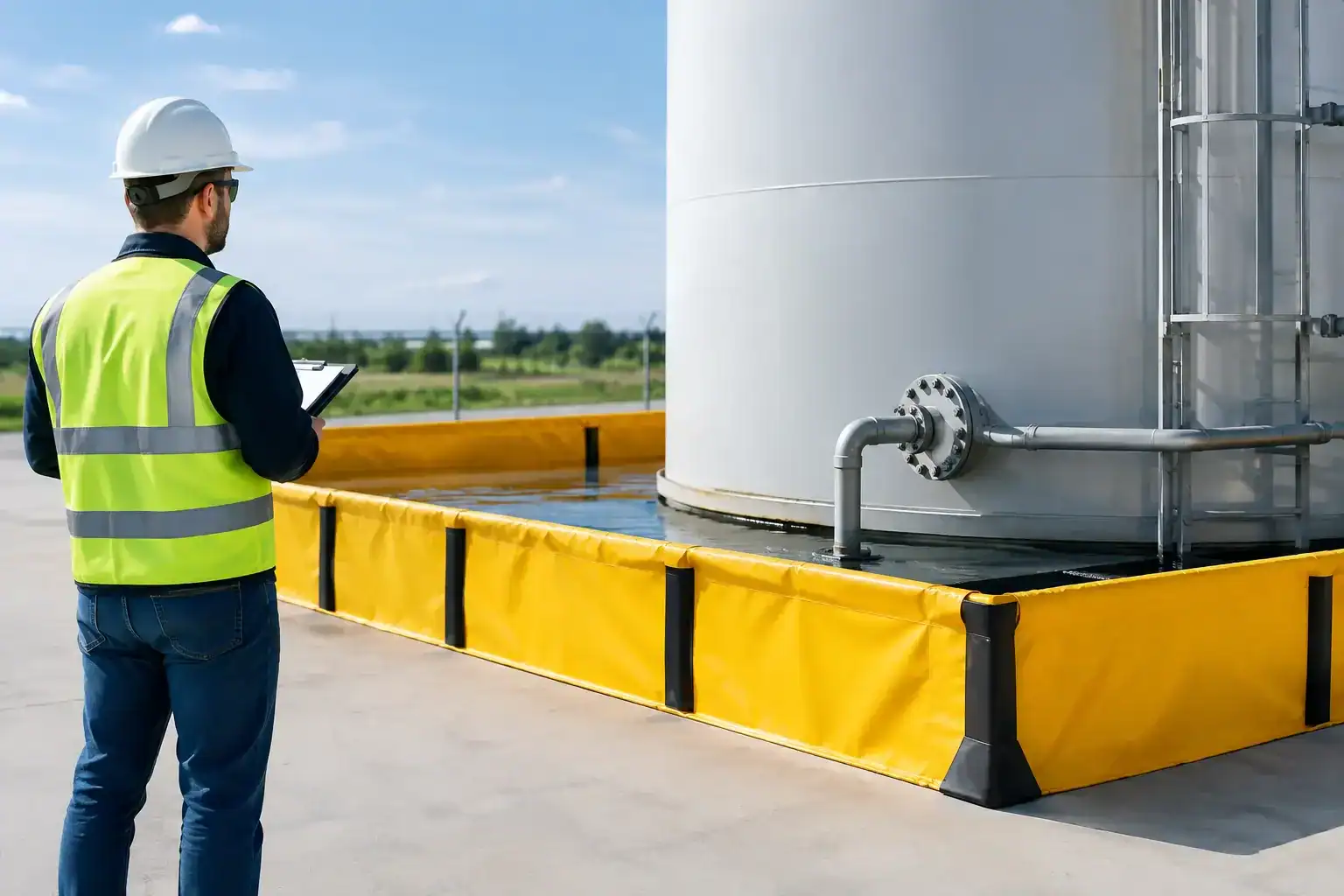
A leaking drum rarely stays where it starts. Liquids can travel under racking, across concrete joints and straight towards a stormwater drain before anyone has time to deploy absorbents. So, what is a chemical berm? It is a physical containment barrier designed to stop or redirect a spill, creating a controlled area where leaked chemicals, oils or other hazardous liquids can be recovered safely.
For warehouses, workshops, fuel-handling areas and temporary work zones, a chemical berm is a practical layer of spill control. It does not replace safe storage, inspection routines or a suitable spill kit. It gives your team valuable time to contain a release before it reaches drains, soil, waterways, stock or pedestrian areas.
What Is a Chemical Berm?
A chemical berm is a raised edge or enclosure that holds liquid within a defined space. It may be permanently installed as part of a bunded storage area, or portable for use beneath equipment, around drums, at wash-down points or during transfer operations.
The term is often used broadly. Some chemical berms are constructed from concrete, steel or masonry as permanent bunding. Others are flexible PVC, polyurethane, rubber or fabric systems with foam, collapsible or drive-over sidewalls. The right option depends on the chemical involved, the expected spill volume, site traffic and whether containment is needed continuously or only for a particular task.
Its purpose is straightforward: keep the spill contained at the source. Once contained, workers can isolate the area, identify the substance, use compatible absorbents or recovery equipment, and arrange disposal in line with the site procedure and the product’s Safety Data Sheet (SDS).
Chemical Berms, Bunding and Spill Pallets
These terms are related, but they are not interchangeable in every application.
Bunding generally refers to secondary containment around stored hazardous liquids. A bunded room, hardstand or enclosure is commonly designed to retain a defined volume if a container fails. It is a fixed, engineered control suited to ongoing chemical storage.
A spill pallet is a ready-made bunded platform for drums, jerry cans or intermediate bulk containers. It captures leaks, drips and minor spills beneath the containers. For many workplaces, it is the simplest way to add secondary containment to small-scale liquid storage.
A chemical berm is usually more flexible. It can create a temporary containment zone around plant, vehicles, drum decanting areas or awkwardly shaped workspaces where a rigid spill pallet will not fit. Portable berms can also be deployed during maintenance shutdowns, field work and emergency response.
The practical distinction is this: a spill pallet contains storage containers from below, a permanent bund contains an established storage area, and a berm creates a barrier around a space or activity. Some sites need all three.
Where Chemical Berms Are Used
Chemical berms are most useful where there is a credible pathway between a liquid release and the environment or workplace operations. That includes areas with drains, unsealed ground, shared accessways or neighbouring stock.
Common applications include:
- drum decanting and chemical transfer areas
- temporary storage of fuel, oils or process chemicals
- plant and vehicle maintenance bays
- wash-down and decontamination activities
- mobile refuelling, marine and field operations
- emergency containment around a leaking vessel or damaged package
In a workshop, for example, a low-profile portable berm can sit beneath a vehicle during hydraulic repairs. At a chemical transfer point, a berm can define the work zone and contain a hose failure or overfill. At a remote site, a deployable berm may provide the only practical secondary containment available for temporary fuel handling.
How a Chemical Berm Controls Spill Risk
Containment is only one part of spill response, but it is often the control that makes the rest possible. Without a barrier, liquid spreads. The larger the surface area, the more absorbent material is required, the harder the clean-up becomes and the greater the chance of contamination leaving the site.
A correctly selected berm limits the spread and depth of a spill within its walls. This can protect stormwater drains, reduce slip hazards and prevent incompatible substances from reaching other materials. It also helps responders work from the outside in, rather than chasing liquid across the floor.
However, berms have limits. They are not designed to make an unsafe task safe by themselves. A berm can be punctured, overtopped or damaged by forklifts and vehicle tyres. It may also be unsuitable for highly aggressive chemicals if the material is not compatible. Containment capacity must allow for the largest credible release, rainfall where the berm is outdoors, and any displacement from equipment placed inside it.
Choosing the Right Chemical Berm
Selection should start with the liquid, not the product shape. Check the SDS, especially the handling, storage and accidental release information. Consider chemical compatibility with the berm material and whether the spill may include mixed substances such as oil, coolant, solvent or contaminated water.
Capacity matters just as much. A berm that is too small may contain minor drips but fail during a drum rupture or transfer incident. Work out the likely release volume, then allow a safety margin. If the area is outdoors, consider rainwater management so containment capacity is not lost before an incident occurs.
When comparing options, assess these operational factors:
- the chemical type and compatibility requirements
- required containment volume and freeboard
- vehicle, forklift or pedestrian access across the berm
- base condition, including cracks, gravel, uneven ground and drainage points
- whether the berm will be permanent, temporary or part of an emergency response kit
- how recovered liquid and contaminated absorbents will be removed and disposed of
Drive-over berms can be useful where vehicles must enter and exit regularly, but they still need to be positioned and used according to manufacturer instructions. For a fixed chemical storage zone, a spill pallet or purpose-built bund may deliver better day-to-day control. For irregular work or mobile operations, a foldable or foam-wall berm is often more practical.
Set-Up Matters as Much as Product Choice
A portable chemical berm must sit on a suitable surface. Clear sharp debris, inspect the base and make sure the berm is fully opened or assembled before starting the task. If a hose, pump or container is placed inside, account for its footprint and ensure it will not press against the wall or reduce usable capacity.
Keep drain covers, compatible absorbents, waste bags or drums, and appropriate PPE close to the work area. A berm contains the liquid, but responders still need the right equipment to stop the source and recover the material. For unknown chemicals or significant releases, isolate the area and follow the site emergency procedure rather than relying on routine clean-up equipment.
Inspection should be part of normal housekeeping. Check for tears, worn seams, chemical staining, UV damage and deformation of foam or flexible sidewalls. Do not store a contaminated berm away without cleaning or managing it properly. Residue can create exposure risks during the next deployment and may be incompatible with the next substance handled.
Compliance Considerations for Australian Worksites
Australian duty holders are expected to manage hazardous chemical risks and prevent releases that could harm workers or the environment. The exact controls required depend on the substance, quantity, site layout and applicable state, territory and environmental requirements.
A chemical berm can support those obligations by providing secondary containment, but it should sit within a broader control plan. That plan may include segregated storage, labelled containers, spill response procedures, trained workers, drain protection and documented inspections. If your site stores prescribed quantities of dangerous goods, additional requirements may apply to storage design and containment capacity.
Avoid treating a portable berm as a substitute for compliant permanent bunding where ongoing storage demands engineered controls. Conversely, do not assume a permanent bund will cover temporary work occurring elsewhere on site. The best arrangement is usually matched to the task, the liquid and the consequence of a release.
A Practical Control for Real Spill Scenarios
The value of a chemical berm is not in the barrier alone. It is in the time and control it provides when a seal fails, a drum is knocked, a hose splits or a transfer goes wrong. Choosing compatible containment, positioning it before work begins and keeping response equipment close turns a potential site-wide clean-up into a manageable incident.
For high-risk tasks, treat the berm as part of the set-up checklist, not an item retrieved after the spill has already reached the drain.