How to Store Solvent Rags Safely at Work

A rag used to wipe down a spray gun, degrease a bearing or clean up a fuel splash can remain hazardous long after the job is finished. The question of how to store solvent rags is therefore not a housekeeping detail. It is a fire prevention, exposure-control and waste-management requirement that needs a clear site procedure.
Solvents can produce flammable vapours, while some oil and solvent residues can generate heat as they oxidise. A loose pile of used rags in a corner, open bucket or general rubbish bin creates an unnecessary ignition and contamination risk. The correct storage method depends on the solvent, the quantity involved and the site’s waste arrangements, but the basic controls are consistent across workshops, warehouses, maintenance areas and fuel-handling sites.
Start with the solvent’s safety data sheet
Before choosing a container, identify what the rag has absorbed. Check the current safety data sheet (SDS) for the product used, along with its label and your site chemical register. The SDS identifies key hazards such as flammability, toxicity, corrosivity and any special disposal requirements.
Do not treat all used rags as the same waste stream. A rag contaminated with mineral turps, acetone, petrol, adhesive, paint, hydraulic oil or a corrosive chemical may require different handling. Mixing incompatible residues can create reactions, increase vapour release or make disposal more difficult.
The SDS should inform your procedure, but it should not be the only reference point. Follow your state or territory WHS requirements, environmental obligations, dangerous goods controls and the instructions issued by the container manufacturer. Where site conditions are complex, involve the person responsible for hazardous chemicals or environmental compliance before setting up a collection point.
How to store solvent rags between use and disposal
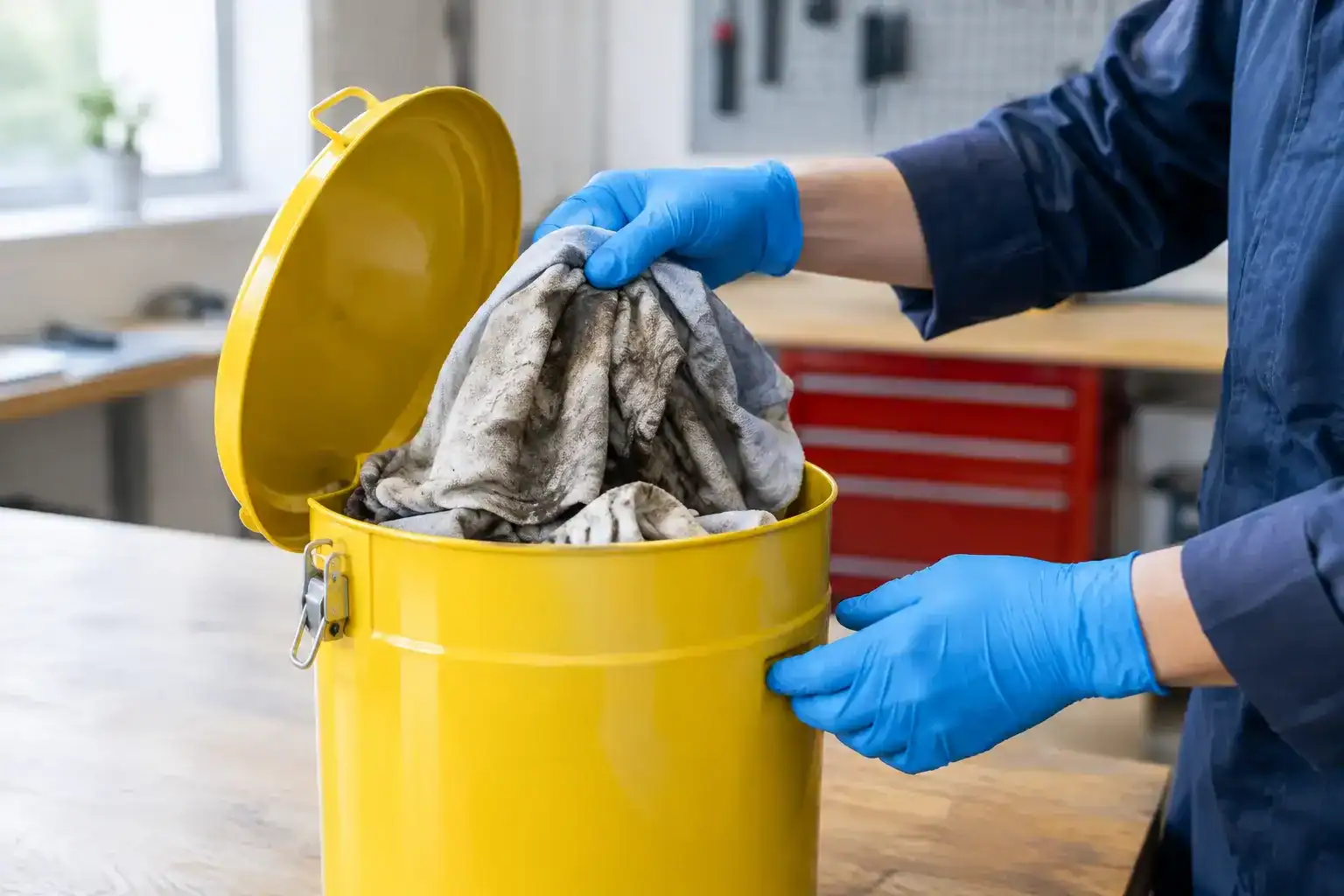
Used solvent rags should go directly into a purpose-designed, compatible waste container with a tight-fitting, self-closing lid. Metal oily-waste cans are commonly used because they are durable, help contain vapours and prevent rags being left exposed. Select a container suited to the materials being collected and the expected volume of waste.
The lid matters. It reduces vapour release and helps limit the oxygen available if residues begin to heat. Staff should not have to prop a lid open, force it shut or reach into a deep container to dispose of a rag. Position the container close enough to the task that it will actually be used, while keeping it out of traffic routes and away from operational hazards.
Never leave solvent rags on benches, machinery, vehicle floors or inside a ute tray. Do not place them in cardboard boxes, plastic shopping bags, open drums or ordinary rubbish bins. These options offer little vapour control, are easily knocked over and can expose cleaners, contractors and other workers to an unidentified hazard.
For small jobs, use the same principle: collect the rag in a sealed, compatible container as soon as practical. Do not let a few rags accumulate because the job appears minor. Small quantities of volatile solvent can still produce a flammable atmosphere in an enclosed work area.
Keep waste containers correctly located
Place solvent-rag containers in a cool, well-ventilated designated area, away from direct sunlight, hot surfaces, welding, grinding, electrical ignition sources and smoking areas. Keep them clear of drains, stormwater pits and unprotected edges where a dropped container could spread contamination.
A flammable liquids storage cabinet is designed for packaged chemicals, not automatically for every type of waste container. Whether a closed rag container can be stored in or near a cabinet depends on the waste classification, container approval, cabinet instructions, site risk assessment and local requirements. Do not use a cabinet as a catch-all rubbish store.
For larger volumes or higher-risk operations, a dedicated hazardous-waste area with suitable bunding and fire controls may be required. The objective is to prevent a leak from reaching drains or soil and to keep incompatible wastes apart.
Control ignition, vapours and spontaneous heating
There are two separate risks that are often confused. Flammable solvents create vapours that may ignite if they reach a spark, flame or hot surface. Oily rags, particularly those contaminated with drying oils or certain finishes, can also generate heat through oxidation and may self-heat when piled together.
That is why tightly controlled collection is essential. Do not compact rags into a container, and do not overfill it. A container with a self-closing lid should close fully every time. If rags are dripping, review the work method. Excess liquid should be prevented at the source where possible, and free liquids must not be managed as though they are merely rag waste.
Good ventilation reduces routine exposure to vapours but does not make poor waste storage acceptable. Similarly, a fire extinguisher nearby is a necessary workplace control, not a substitute for removing fuel and vapour hazards.
Label containers so no one has to guess
A worker, cleaner or waste contractor should be able to identify the container and its hazards immediately. Label solvent-rag containers clearly with the contents or waste description, relevant hazard information, the work area or department, and the date where this supports your disposal schedule.
Keep labels legible and replace them when they are damaged by oil, solvent or weather. If several different solvent systems are used on site, establish separate collection containers where necessary. For example, paint-shop rags should not automatically be mixed with rags from cleaning fuel equipment or responding to a chemical spill.
Staff also need a simple escalation process. If a container becomes hot, bulges, leaks, produces strong vapours or has an unknown substance placed inside it, isolate the area and report it immediately. Do not open a suspect container casually to inspect the contents.
Set a disposal schedule, not a storage habit
The safest used rag is one that does not remain on site longer than necessary. Arrange regular collection by an authorised waste provider or use an approved industrial laundering service where the rag type and contamination allow it. Your disposal route must match the materials collected and the requirements in the SDS and waste contractor agreement.
Do not put solvent-contaminated rags in general rubbish, recycling bins or kerbside waste. Do not wash them in a workplace sink, hose them down outside or send them home with employees. These practices can spread flammable residues, contaminate wastewater systems and transfer responsibility to people without the right controls.
Frequency depends on the operation. A busy maintenance workshop may need daily removal from work areas and frequent external collection, while a low-volume task may use a smaller container collected under a scheduled waste service. The right interval is the one that prevents overfilling, avoids unnecessary accumulation and fits the site risk assessment.
Build the procedure into daily work
Even the right safety can will fail as a control if people do not use it. Include solvent-rag handling in induction training, task instructions and toolbox talks. Demonstrate where containers are located, what can go into each one, what must be kept separate and who to notify when the container is full or damaged.
Supervisors should inspect collection points as part of routine housekeeping. Check that lids close, labels are readable, containers are not corroded or dented, and the surrounding area is free from loose rags and spills. Keep suitable absorbents and PPE accessible for the materials used in that work zone.
For spill-response rags, consider whether disposable absorbents are a better control than reusable cloth. It depends on the chemical, likely spill size, disposal arrangements and cost over time. Reusable rags can reduce consumable use, but only if a compliant laundering or waste process is already in place.
A practical solvent-rag system is simple: identify the contamination, place the rag straight into a compatible closed container, keep that container away from ignition and drains, and remove waste on schedule. When those controls are easy to follow, workers are far more likely to follow them – and a routine clean-up task stays exactly that.