Drain Wardens for Fast On-Site Spill Protection

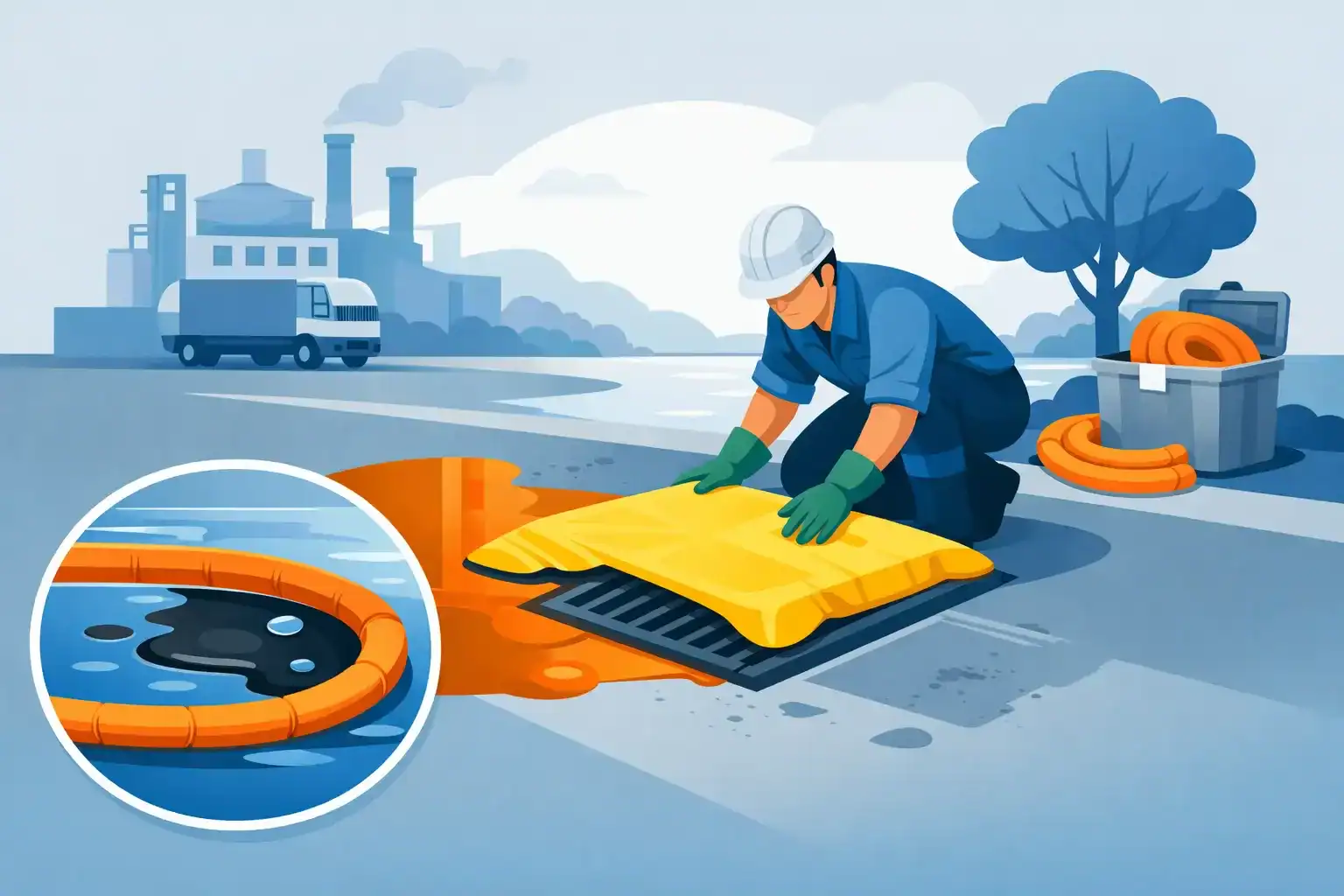
A spill does not need to be large to create an environmental incident. If oil, fuel, coolant or chemicals reach a stormwater drain, they can leave the site quickly and enter waterways. Drain wardens provide a fast first line of defence by covering drain openings while a spill is contained and cleaned up.
For workshops, warehouses, loading areas, fuel-handling locations and outdoor hardstands, drain protection should be positioned as close to the risk as the spill kit itself. The right product can buy valuable time, but only when staff can locate it, deploy it safely and understand its limitations.
What are drain wardens?
Drain wardens are temporary drain covers designed to stop or reduce the flow of spilled liquid into stormwater drains. They are commonly made from flexible polyurethane or similar non-absorbing materials that conform to a flat surface and create a seal around a drain grate or opening.
Unlike absorbent pads and socks, a drain warden does not soak up the spill. Its job is source control at the drainage point. Once the drain is protected, workers can use absorbents, booms, bunding or a compatible spill kit to contain and recover the liquid from the surrounding area.
They are most commonly used on concrete, sealed asphalt and other relatively smooth surfaces. A cover may not seal effectively over heavily cracked pavement, uneven grates, loose debris or standing water. That is why drain protection needs to be selected for the conditions on site, not simply stored to meet a checklist requirement.
Where drain wardens make the most difference
Outdoor drains are an obvious priority, particularly where rainwater systems discharge beyond the property boundary. However, indoor drains also need assessment. A drain connected to trade waste or sewerage may require a different response plan from a stormwater drain, and staff should know the difference before an incident occurs.
Drain wardens are particularly useful in areas where mobile plant is parked, drums are decanted, vehicles are serviced, fuels are transferred or dangerous goods are loaded and unloaded. They also suit temporary higher-risk work, such as maintenance shutdowns or contractor activities, where hoses, containers and equipment are moved through unfamiliar areas.
A practical site assessment should identify drain locations, likely spill paths and the products stored or handled nearby. In many cases, the nearest drain is not the only concern. Liquids can travel along fall lines, footpaths, joints in concrete and vehicle routes before reaching a second drainage point.
Selecting the right drain protection cover
The cover must be larger than the drain opening and any surrounding grate. A small cover placed over a large frame leaves an easy path for liquid to bypass the seal. Measure the full area that needs to be covered, then allow enough overlap for the product to sit flat on the surface.
Material compatibility matters as well. Many flexible drain covers are suitable for oils, fuels, coolants and a range of common industrial liquids. That does not mean every cover is appropriate for every chemical. Check the product specifications and safety data for the substances used on site, especially where corrosives, solvents or unknown liquids may be involved.
Storage location affects performance in a real incident. A drain cover locked in a distant store is unlikely to be deployed before liquid reaches the drain. Keep covers in spill response stations near exposed drains, loading bays, refuelling points and chemical handling areas. Where drain sizes vary across a facility, a selection of sizes may be more useful than relying on one oversized cover.
Deploying drain wardens during a spill
A drain warden should be applied early, provided it is safe to approach the spill. Workers should wear suitable PPE for the substance involved and avoid stepping through liquid unnecessarily. Remove loose stones, leaves and rubbish only if this can be done without spreading contamination, then place the cover carefully over the drain and press it down around the edges.
The priority order is usually to stop the source where possible, protect drains, contain the spill and recover the liquid using compatible absorbents. This sequence can change where there is an immediate fire, vapour, exposure or traffic hazard. In those circumstances, follow the site emergency procedure and escalate to trained personnel.
Once in place, monitor the cover. Heavy rainfall, uneven surfaces, vehicle movement and a growing spill can compromise its seal. Use absorbent socks or booms upstream to direct liquid away from the drain, and consider temporary bunding where runoff continues to build.
Maintenance and response planning
Drain covers should be inspected as part of routine spill kit checks. Look for tears, hardening, contamination, curled edges and damage from poor storage. After use, clean reusable products only where the manufacturer instructions and site procedures allow it. Contaminated wash water must never be directed into the drain the cover was intended to protect.
Training should be short, practical and specific to the site. Teams need to know which drains are stormwater, where drain wardens are stored and which spill response equipment is compatible with the hazards they handle. A simple drill around a loading bay or workshop drain often reveals whether equipment is accessible and whether the response sequence is understood.
Drain protection is not a substitute for good storage, preventative maintenance or compliant bunding. It is the contingency measure that prevents a manageable spill from becoming an off-site pollution event. Place the right cover near the right drain, keep it ready for use and make sure the people on shift know exactly what to do.