How to Dispose Absorbents After a Workplace Spill

A used absorbent pad can look harmless once the visible spill is gone. It is not. The material may now contain oil, fuel, solvents, acids, coolant or another contaminant that changes how it must be handled, stored and removed from site.
Knowing how to dispose absorbents correctly starts with the substance they have absorbed, not the absorbent product itself. A pad used to clean up a small hydraulic oil leak has a different waste pathway from a sock saturated with flammable solvent or a chemical spill kit used for a corrosive liquid. Treating all used absorbents as ordinary rubbish creates unnecessary risk for workers, waste contractors and the environment.
Start with the absorbed substance
Before bagging or moving used pads, rolls, socks, pillows or granules, identify what was spilled and how much material has been recovered. Check the product label, safety data sheet (SDS), site chemical register and any process information available. The SDS can help identify relevant hazards including flammability, corrosivity, toxicity and environmental harm.
The key question is simple: what has the absorbent become after use? Clean, unused absorbent may be suitable for reuse or disposal as general waste, subject to local waste rules. Once it has contacted a hazardous substance, however, it should be managed as contaminated waste until an authorised waste provider confirms the correct classification and disposal route.
Do not rely on appearance or smell alone. A solvent-contaminated pad may dry quickly but still present a vapour, fire or health hazard. Oil-contaminated granules can continue to release hydrocarbons if they are exposed to rain or placed in an unsuitable bin.
Match the waste stream to the spill type
Used absorbents are commonly generated from oils, fuels, coolants, paints, solvents, acids, alkalis and other industrial chemicals. The waste classification may depend on the particular chemical, its concentration, the quantity absorbed and the requirements that apply in your state or territory.
For example, absorbents used on non-hazardous liquids may be accepted as general solid waste by some facilities. Absorbents contaminated with fuels, oils, solvents, pesticides, corrosives or regulated chemicals may require collection and treatment as hazardous or prescribed industrial waste. There is no one-bin answer that applies to every site.
Where a spill contains an unknown substance, manage the used absorbents conservatively. Isolate the material, prevent exposure to water and arrange advice from a qualified waste contractor or environmental adviser before disposal.
How to dispose of absorbents safely
Safe disposal is a controlled process. The clean-up is not complete when the floor looks dry. It is complete when the recovered material has been packaged, labelled, stored and transferred appropriately.
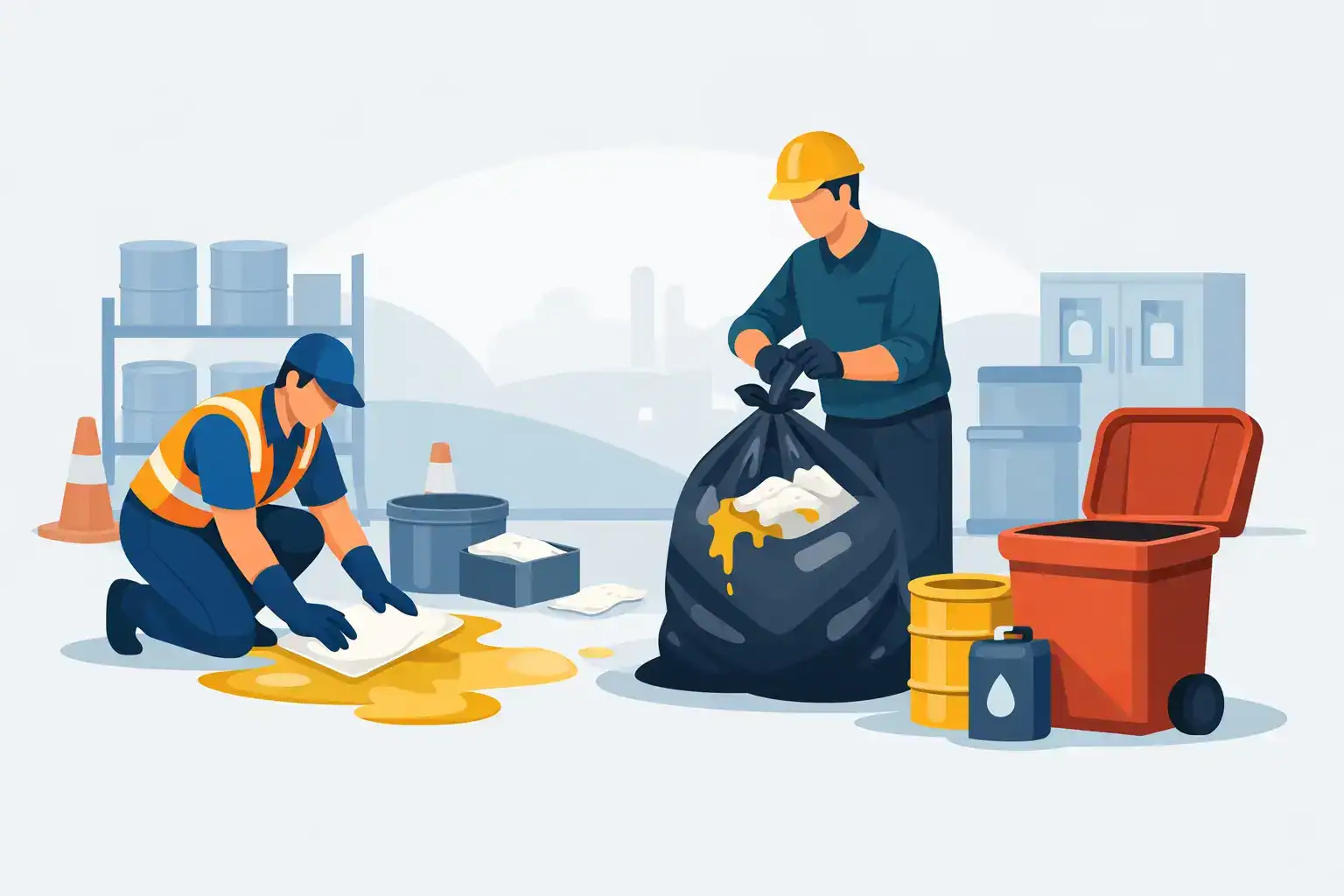
First, wear the PPE specified for the spilled substance. This may include chemical-resistant gloves, safety glasses or goggles, protective clothing and respiratory protection where vapours or dusts are present. The absorbent itself can carry the same hazards as the original liquid.
Next, place saturated absorbents into a compatible, leak-resistant container. For many routine spill responses, a heavy-duty waste bag placed inside a lidded drum or suitable overpack is practical. Sharp debris, broken glass or heavily soaked material may require a more durable rigid container. Never overfill bags or drums, and ensure lids can be fully secured.
Clearly label the container with the waste description, the contaminant, relevant hazard information and the date. Site procedures may also require the source area, waste code or responsible person. Good labelling prevents a common failure point: a contractor or staff member finding an unmarked drum and having no safe way to assess it.
Keep the packaged waste in a designated, secure area until collection. Protect it from rain, heat, ignition sources, vehicle impact and unauthorised access. If the waste is flammable, store it away from incompatible materials and follow your dangerous goods storage arrangements. Do not leave contaminated bags beside a general waste skip, on a loading dock or in an uncovered outdoor area.
Finally, use an authorised waste contractor or disposal facility that accepts the specific waste stream. Provide accurate details about the spilled product and the quantity of used absorbent. If transport documentation, waste tracking or consignment records are required in your jurisdiction, complete them before the waste leaves site.
Disposal methods to avoid
A quick clean-up can become a reportable incident if the waste is handled carelessly. Used absorbents should never be put down drains, washed into stormwater, burnt on site or left where rain can carry contaminants into soil or waterways.
Avoid placing contaminated pads, socks or granules into general rubbish unless the waste has been assessed and the receiving facility has confirmed it is acceptable. General waste collections are not designed to manage every chemical-contaminated material, particularly those that are flammable, corrosive or environmentally hazardous.
Do not compact waste bags containing oil or chemical absorbents. Compaction can rupture packaging, release liquids and create exposure for waste collection staff. Similarly, do not mix different contaminated wastes simply to save container space. Mixing incompatible chemicals can cause heat, gas generation, fire or make disposal more expensive.
Consider the absorbent type, but prioritise contamination
Absorbent selection affects spill response performance, but contamination determines disposal. General-purpose absorbents are often used for oils, coolants, water-based fluids and non-aggressive chemicals. Oil-only absorbents are designed to repel water and recover hydrocarbons from land or water. Chemical absorbents are intended for more aggressive or unknown liquids, depending on the product specification.
All can become regulated waste once used. A white oil-only pad used on diesel is still diesel-contaminated waste. A chemical spill pillow used on acid must be treated according to the acid and any reaction products, not because the pillow is colour-coded.
Loose absorbent granules deserve extra care. Sweep them thoroughly, using equipment that will not spread the contamination. Transfer the recovered material into sealed containers rather than open bags where practicable. Fine granules can create dust, and loose material is more likely to escape during handling and transport.
Keep records that demonstrate control
For workplaces that routinely handle oils, fuels or chemicals, disposal records are part of good spill management. Keep the SDS for the spilled substance, incident details, estimated spill volume, absorbent quantity used, waste classification advice, collection dockets and disposal certificates where provided.
These records support environmental compliance and make internal reviews more useful. If a similar spill happens again, the team can see which absorbents worked, how much waste was generated and whether the current waste arrangements are suitable. They also give procurement and safety teams evidence for selecting the right spill kit refills, storage containers and waste contractor arrangements.
Build disposal into the spill response plan
The best time to decide where contaminated absorbents will go is before a spill. Site spill plans should identify the location of spill kits, the relevant PPE, temporary waste containers, the person authorised to arrange collection and the contact details for approved waste providers.
Training should cover more than deploying pads and socks. Workers need to know when to stop, escalate, isolate drains, check an SDS and package recovered material. A practical drill that includes waste labelling and temporary storage often reveals gaps that a desktop procedure misses.
For sites with regular maintenance leaks or fuel-handling activities, keep appropriate replacement absorbents and compatible waste containers close to the work area. Spillmaster supplies absorbents and spill-control equipment suited to common industrial spill risks, helping teams maintain a ready response rather than improvising under pressure.
When the spill has been contained, take the extra few minutes to identify the contaminant, secure the used material and document its removal. That final step protects the people handling the waste next and keeps a minor spill from becoming a larger compliance problem.