Can Solvents Ignite? Workplace Fire Risks

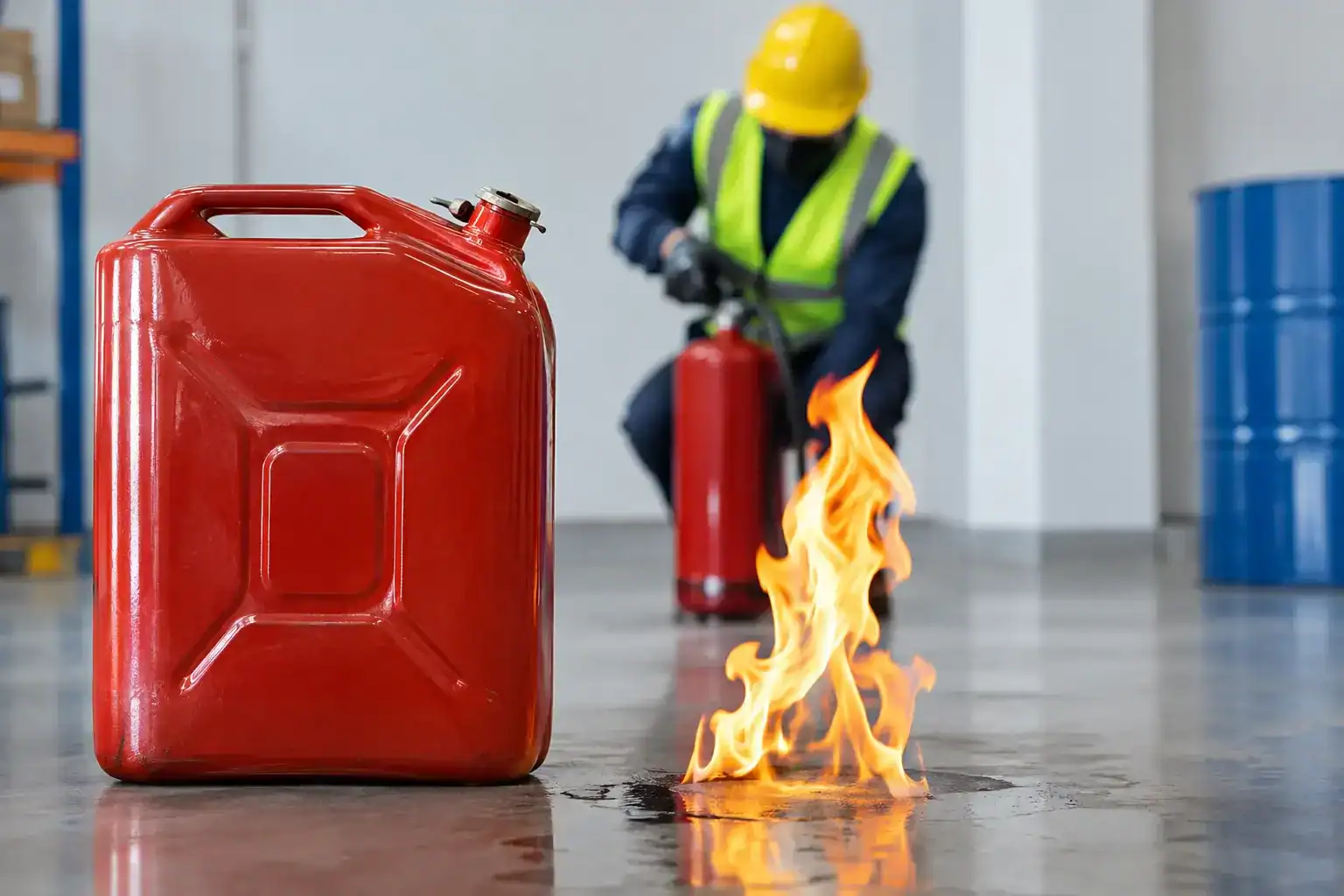
A rag left beside a parts washer, an open drum decanting station, or a small solvent spill near a battery charger can create a fire risk quickly. Can solvents ignite? Many can, but the more precise answer is that their vapours often ignite first. Understanding that difference is essential when selecting storage, managing spills and setting safe work procedures.
Can solvents ignite in normal workplace use?
Many common industrial solvents are flammable liquids. Examples can include acetone, toluene, methylated spirits, thinners, mineral turpentine, xylene and some cleaning or degreasing products. They may not look dangerous when sitting in a sealed container, but once opened, poured, sprayed or spilled, they can release vapour into the surrounding area.
Solvent vapour can mix with air and travel away from the source. If that vapour reaches an ignition source at the right concentration, it can flash back to the container or spill. A flame is not required. Sparks from switches, electric tools, forklifts, welding work, static discharge, vehicle engines and hot surfaces may be enough.
Not every product described as a solvent has the same risk. Water-based cleaners and high-flash-point products may be less likely to ignite under ordinary site conditions. The safety data sheet (SDS) and product label should always determine how a substance is classified, stored and handled. Do not assume a product is non-flammable because it is used for cleaning.
Why vapour creates the main hazard
A liquid solvent only burns at its surface. Vapour, on the other hand, can spread through a work area and reach an ignition source that is not immediately obvious. In enclosed spaces, pits, drains, sumps and low-lying areas, vapours from products heavier than air can accumulate rather than disperse.
Flash point is a useful indicator. It is the lowest temperature at which a liquid gives off enough vapour to form an ignitable mixture with air. A low-flash-point solvent can create a flammable atmosphere at ordinary Australian ambient temperatures. Higher temperatures increase evaporation and generally increase the volume of vapour released.
For ignition to occur, three elements must come together: a flammable vapour-air mixture, oxygen and an ignition source. Removing any one of these elements reduces the risk. In practice, this means containing the liquid, controlling vapours, preventing sparks and flames, and maintaining suitable ventilation.
The concentration matters as well. Vapour must sit between its lower and upper explosive limits to ignite. This is not a practical safety margin to rely on. Concentrations can change rapidly during decanting, spraying, cleaning or spill response, particularly where airflow is inconsistent.
Where solvent ignition risks are commonly missed
The obvious risk is a leaking drum near welding or grinding. More routine activities can be just as hazardous. Decanting from a 20-litre drum into a smaller container can release vapour and generate static electricity. Spraying solvent onto machinery can produce a fine mist that is easier to ignite than a pooled liquid.
Workshops should also consider contaminated materials. Used absorbent pads, wipes, rags and PPE may retain flammable solvent after a small spill or cleaning task. Leaving these materials in an open bin allows vapour to escape. Disposal arrangements need to match the substance involved and local site procedures.
Battery charging areas, portable heaters, electrical cabinets, hot work zones and internal combustion equipment should be kept separate from flammable-liquid handling. Drains are another concern. A spill that enters a drain can move vapour or liquid to an uncontrolled location, creating both a fire and environmental incident.
Storage controls that reduce fire risk
Safe storage starts with knowing what is on site and how much is being held. Keep an up-to-date chemical register, retain accessible SDSs and separate flammable liquids from incompatible substances such as oxidisers. Store only the quantity needed for operations in the immediate work area, with bulk stock held in an appropriate designated location.
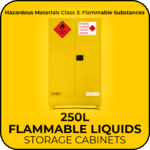
A compliant flammable liquids storage cabinet, such as the 100L Flammable Liquids Storage Cabinet, provides a controlled place for smaller containers and frequently used stock. It helps reduce exposure to ignition sources, contains minor leaks and keeps hazardous products clearly segregated. The cabinet must be correctly located, labelled, maintained and used within its stated capacity. A cabinet is not a reason to overstock a workshop or store incompatible chemicals together.
For drums and larger containers, bunding and spill pallets, including the 4 Drum Spill Pallet-Bund, provide secondary containment. This is particularly useful where a leak could spread across a warehouse floor, enter drains or reach ignition sources. Secondary containment does not eliminate flammability, but it can limit the area of a spill and support a faster, safer response.
Australian workplaces should align controls with applicable WHS obligations, dangerous goods requirements and relevant standards, including AS 1940 where it applies. Site conditions, quantities and state or territory requirements can affect the required approach. If there is uncertainty, seek competent dangerous goods or safety advice before changing storage arrangements.
Handling solvents without creating an ignition source
Good controls depend on the task. A maintenance worker cleaning a small component has different exposure to a team transferring product from drums, but both need a deliberate process. Use closed containers wherever possible and keep lids fitted when products are not actively being used. Avoid transferring solvent into unlabelled drink bottles, food containers or makeshift vessels.
When decanting flammable solvents, use suitable equipment and minimise splashing. Bonding and earthing may be required to control static during transfer operations, especially with larger volumes or low-conductivity liquids. Ensure the method is appropriate for the product, container type and task rather than treating earthing as a one-size-fits-all control.
Ventilation must remove vapours effectively, not simply move them towards another worker or ignition source. General ventilation may be adequate for low-volume work in an open area, while enclosed or repeated use may require local exhaust ventilation and equipment rated for hazardous areas. Never use ordinary electrical equipment where a flammable atmosphere may be present unless it is suitable for that classification.
PPE remains necessary, but it is not the primary control for fire risk. Chemical-resistant gloves, goggles or face protection and suitable protective clothing should be selected against the SDS and task assessment. PPE protects the worker from splash and contact exposure; it does not stop vapours igniting.
What to do when a solvent spill occurs
Treat a solvent spill as both a chemical and potential ignition incident. The first priority is to stop work and keep people away from the area. Remove ignition sources only if it is safe to do so. Do not start vehicles, operate switches or use powered equipment in a vapour-affected area without assessing the risk.
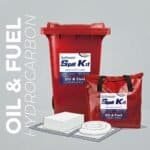
If the spill is small, trained personnel can use an appropriate spill kit to contain and absorb it. The 15L Chemical Spill Kit is one option to consider, subject to confirming absorbent compatibility with the specific solvent and its safety data sheet (SDS). For flammable liquids, response equipment should be readily available near storage and handling areas, rather than stored at the far end of the facility. Use compatible absorbents, prevent entry to drains and place recovered waste into a suitable closed container for disposal.
A practical response sequence is to isolate the area, stop the source if safe, protect drains, contain the liquid, recover contaminated absorbents and ventilate the space before normal work resumes. Larger spills, spills in confined spaces, or incidents with strong vapour levels should be escalated under the site emergency plan. Fire and emergency services may be required where there is a credible risk of ignition, exposure or environmental release.
Do not wash solvent into drains with water. It can spread the product and shift the hazard to another part of the site. Likewise, do not assume a spill is safe because the visible liquid has been absorbed. Vapours may remain until the area has been ventilated and assessed.
Match equipment to the solvent and the work area
The most effective setup is one that supports normal operations, not just emergency compliance. A workshop using small tins of solvent may need a correctly sized flammable liquids cabinet, a compact spill kit, drain protection and closed waste containers. A fuel-handling, marine or warehouse operation may require larger spill response capacity, drum bunding, spill pallets and clear segregation between storage, transfer and hot-work zones.
Check spill kit contents regularly. Absorbents used on hydrocarbons may not be suitable for every chemical, and a depleted kit is of little value during an incident. Teams should know where the kit is, who can use it and when a spill exceeds their authority or training.
Solvent fires are usually preventable when storage, handling and spill response are treated as one control system. Keep containers closed, vapours managed, ignition sources separated and the right containment equipment close to where the work happens.