Chemical Cabinet Reviews for Safer Buying


A five-star rating will not tell you whether a cabinet can safely hold the chemicals used on your site. Useful chemical cabinet reviews look past delivery speed and appearance to the details that affect containment, segregation, access and compliance. For warehouse supervisors, workshop managers and EHS teams, that is the difference between buying storage and buying a solution that works under daily operating conditions.
What chemical cabinet reviews should assess
A worthwhile review starts with the cabinet’s intended chemical class. There is no single cabinet that is suitable for every hazardous substance. Flammable liquids, corrosives, oxidising agents, toxic substances and general workshop chemicals can have different storage and segregation requirements. A cabinet described broadly as a chemical cabinet may be appropriate for one class of product but unsuitable for another.
Assess whether the reviewer has identified the actual material being stored, not just the container size. Safety data sheets provide the starting point. Check the dangerous goods class, subsidiary risks, incompatibilities, container type and the total volume held on site. A 20-litre drum of solvent creates a different storage decision from a shelf of small cleaning-product bottles.
The most useful reviews also describe where and how the cabinet will be used. A cabinet in a controlled laboratory has different demands from one in a busy maintenance bay, fuel store or warehouse. High-traffic areas need reliable doors, clear labelling and practical access. Outdoor or exposed locations may introduce additional weather, corrosion and security considerations.
Start with the chemical inventory, not the price
For flammable liquids specifically, Spillmaster offers 30L flammable liquids storage cabinets and 100L flammable liquids storage cabinets. Confirm suitability for the substances, quantities and site requirements before selecting a model.
Price matters, but it should be assessed after suitability. A lower-cost cabinet can become an expensive purchase if it lacks sufficient sump capacity, cannot accommodate your containers, or needs replacement once the chemical inventory changes. Start by listing the products that will be stored, their volumes and the number of users who need access.
Consider the likely growth in stock as well. Procurement teams often size cabinets against the current order, then find there is no safe capacity for routine deliveries or seasonal demand. Allowing sensible space around containers also makes inspections easier and reduces the chance of damaged labels, leaking caps or awkward handling.
Internal shelf layout is part of this assessment. Adjustable shelves are valuable when container heights vary, while shelf load ratings matter for drums, jerry cans and concentrated products. Check whether the cabinet has a liquid-tight base or integrated sump, and whether the stated capacity reflects usable storage space rather than the cabinet’s external dimensions.
Read construction claims carefully
Cabinet specifications should explain the construction rather than rely on broad phrases such as heavy-duty or industrial grade. Look for the steel thickness, door arrangement, hinge design, shelving, corrosion-resistant finish and the method used to contain spills at the base. These details affect service life, particularly in workshops and facilities where cabinets are opened frequently.
For flammable-liquid storage, fire performance is a central consideration. Review the cabinet against the applicable Australian requirements for your stored substances, site and jurisdiction. Many workplaces use the requirements of AS 1940 as a reference point for flammable and combustible liquids, but the appropriate arrangement depends on the product, quantity and location. Do not assume that yellow paint alone indicates a compliant flammable liquids cabinet.
For corrosive chemicals, material compatibility deserves the same level of attention. Acids, alkalis and aggressive cleaning agents can attack unsuitable surfaces and fittings. Polyethylene-lined or purpose-designed corrosive storage may be appropriate in some applications, while other products require separate storage because of the reaction risk if a leak occurs.
A review should also identify what is not included. A cabinet may require a separate venting approach, additional signage, a padlock, spill-control equipment or a site-specific bunding measure. Those are not necessarily faults, but they need to be understood before purchase and installation.
Capacity means more than litres
The stated litre capacity is useful, but it is only one measure. Compare it with the number and shape of the containers you use. Tall bottles may not fit beneath fixed shelves. Wide jerry cans can reduce practical capacity. Drum storage may need a different cabinet configuration entirely, especially where decanting or dispensing is involved.
Door style also changes day-to-day usability. Self-closing doors can support controlled storage in areas with regular foot traffic, while manually closing doors may suit lower-access locations where personnel can reliably close and secure the cabinet. The right choice depends on work practices, not preference alone.
Think through the handling path. Staff should not need to lift a full chemical container over a high lip, reach around obstructed doors or leave a cabinet open while moving product across a walkway. A cabinet that looks suitable in a specification sheet may create avoidable manual-handling and spill risks once installed.
Check compliance evidence, not marketing wording
Good chemical cabinet reviews separate confirmed product features from assumptions. Look for clear information on the standards the cabinet is designed or tested to meet, the product’s chemical-use limitations and the manufacturer’s instructions. If a listing uses terms such as compliant, approved or certified, establish what those terms refer to and whether they apply to your use case.
Compliance is also a site responsibility. Cabinet selection is only one part of managing dangerous goods. Site quantities, separation distances, ignition sources, ventilation, emergency planning, placarding, access controls and local regulatory requirements can all affect the final storage arrangement.
For this reason, the best buying decision combines cabinet specifications with a review of the safety data sheet and your workplace risk assessment. If there is uncertainty about segregation or quantity thresholds, seek advice from a competent safety professional rather than relying on a generic product description.
When a general chemical cabinet is the wrong option
General-purpose storage is often misunderstood as mixed-chemical storage. It is not. Different chemicals should only share a cabinet when their compatibility and applicable storage requirements have been checked. Separate storage may be required for:
- flammable liquids and oxidising agents
- acids and alkalis
- chemicals that react with water or release toxic gases
- substances with incompatible dangerous goods classes or subsidiary risks
This is where the review process needs to be specific. A cabinet can be well made, correctly sized and competitively priced, yet still be the wrong choice because incompatible materials are being stored together. Segregation is not an optional upgrade after a spill or inspection finding.
Compare like-for-like before approving a purchase
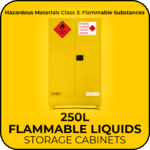
For larger flammable-liquid storage requirements, compare the specifications of Spillmaster’s 160L flammable liquids storage cabinet and 250L flammable liquids storage cabinet, alongside your chemical inventory and site risk assessment.
When comparing two cabinets, use the same criteria for both. Record the chemical class, external and internal dimensions, storage capacity, sump capacity, shelf rating, door type, locking method, construction, applicable standards information and lead time. This prevents a cheaper, smaller or less suitable cabinet from appearing equivalent on price alone.
It is also sensible to include the operational extras in the comparison. Consider delivery access, installation location, required signage, spill kit placement and whether staff need training on the new storage arrangement. For multi-site buyers, standardising suitable cabinet types can simplify replacement orders, inspections and staff familiarity.
Specialist suppliers such as Spillmaster can help buyers identify storage categories quickly, but final selection should always be matched to the substances and conditions on site. A clear chemical inventory makes that process faster and reduces the risk of ordering a cabinet based on colour, capacity or a vague product label.
Set the cabinet up to perform
A cabinet only provides value when it is used as intended. Position it on a stable, level surface away from incompatible materials and known ignition sources where relevant. Keep labels visible, maintain clear access, avoid overloading shelves and inspect the sump, door operation and cabinet finish as part of routine workplace checks.
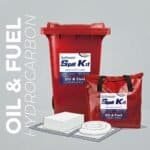
Keep absorbents and suitable spill-response equipment close enough to be useful, without blocking access to the cabinet. If a leak occurs, staff need a practical response path: stop work where safe, isolate the area, use the appropriate PPE and containment materials, and follow the site’s emergency procedure.
The strongest chemical cabinet review is one that tests the purchase against real work: what is being stored, who uses it, what could leak, and what must happen next. Answer those questions before ordering, and the cabinet becomes a dependable part of your site’s safety controls rather than another item waiting to be replaced.